

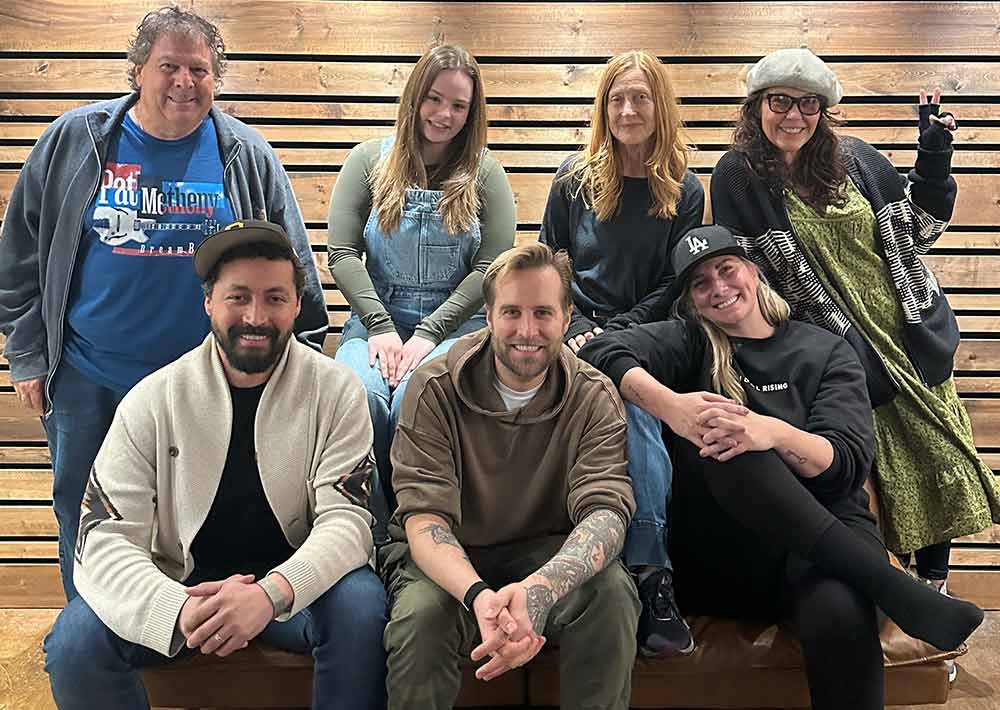
Mike Meiers: “You’re going to meet potentially lifelong collaborators.”
With Hitmakers Live coming to the UK, its founders explain how songwriting retreats can transform your creativity, confidence, and craft
This October, Hitmakers Live will come to the UK for the first time, led by songwriting mentors Mike Meiers and Judy Stakee. Meiers is an Emmy Award-winning composer, producer, and the founder of Songwriting For Guitar, while Judy Stakee spent 30 years as Senior Vice-President of Creative at Warner Chappell Music, signing and developing artists including Sheryl Crow, Katy Perry, and Gavin DeGraw.
Together, they have developed a distinctive and successful approach to songwriting retreats, combining focused creative practice with direct feedback, collaboration, and the space to step outside familiar routines. Here, they discuss why that environment is so productive, how songwriters can make the most of it, and why they’re so excited to be bringing all of their expertise to the UK later this year…
Find out more about the Hitmakers Live UK Retreat
How did the two of you meet and start working together?
Judy: “I was a music publisher for 35 years or so. I did these retreats at Warner Chappell. I would take a couple of writers from Nashville, from Florida, a couple from overseas, the UK or Latin America… some rock writers, some pop writers and did retreats with them. Then, I started my own company and I started doing these retreats. On one of the retreats in 2017, Mike showed up.
“He was living in Pittsburgh and he came up to me on the second day, and said, ‘I’m a guitar player, and I’m a teacher, and I see that there’s not really a music section. If you would like me to teach something to the class, I’m here.’ At these retreats, I pray that I get three guitar players, because if you get all people that don’t play… it’s harder to co-write when you don’t have a musician in the room.
“I gear it towards music and I play piano, but I don’t teach musicality. I don’t teach rhythm; I don’t teach any kind of tips like that. It’s more about the emotion of the music. I immediately went, ‘Thank you, but I’ve got everything planned out.’ He turned and walked away, but for some reason I went, ‘Hold on,’ I said, ‘What would you teach?’ And he turned around, and he came back…”
Mike: “At that point I was maybe three years into the idea of doing songwriting seriously. I was teaching songwriting and really wanting to do it for a living, and I had very little knowledge of how to make that happen. TV and film were starting to get a little traction, but I was in that period that everyone can relate to, the middle where not a lot’s happening, and you’re not sure if you should you stop, keep going, retool…

A magazine to keep. An archive to explore.
Get the latest edition, 40+ back issues, 3,200+ website articles and expert insights for songwriters
“I wasn’t sure what was going to happen, and there was something about Judy that I enjoyed, plus the background of what she had done. When I heard all these people: Sheryl Crow, Julian Bonetta… and she explained some of the retreats that she hosted for Warner Chappell, all these weird pairings of really famous person with really famous person that are in two different genres but write together and create a hit song, it was like, ‘That’s amazing.’”
Judy: “Back in 2017 I was the only game in town. I was doing 12 or 13 a year with 20 to 30 people at each one.”
Mike: “Ours had at least 25, it was a pretty packed retreat. Judy’s right, there were some people with guitars, but I could tell there was a level of discomfort and I felt like I had something that I could share. Judy was like, ‘Thank you, but no thank you’ Like, ‘I love it, but I don’t know who you are,’ which is understandable. You know, there’s a very clear, structured system, and who am I to jump in and be like, ‘I can provide the answer.’”
What did you answer when Judy asked what you’d teach?
Mike: I said, ‘Well, there are three things I think are pretty pivotal for songwriters to understand if they want to communicate with guitars: voicing, rhythm, and technique,’ and she was like, ‘Okay, cool.’
Judy: “He took a few more minutes to explain each one, and I went, ‘That’s amazing.’ I don’t have to play an instrument to understand that language, and that language, as a non-musician, is going to help me to communicate with my musicians in the room. That’s what spoke to me. I gave him half an hour the next day.”
Mike: “And it was great. I did the half hour and then, after the retreat, Judy was like, ‘This is awesome, we should chat more.’ From there, I started speaking for an hour at Judy’s retreats, every single year. Every time that she had one, whether I was Zoomed in or if I was in Nashville and she was there, I would be there. It was great. I explain guitar how Judy explains story. It was great to be a part of those retreats, and I got to hear things that were very important to be reiterated in my own brain about story.”
Judy: “That’s what really has come out of this, a great partnership. He is also good with lyrics and artist development, but I’ve had a little bit more experience. He’s a musician, I’m not. I can play the piano, put sheet music in front of me and I’m pretty good, but I’m not Mike.
“We meet in the middle, and we have the same intention when we teach. There’s a lot of people who think that they’re teachers out there but they talk at kids, but it’s asking questions, it’s, ‘By the way, what would you teach?’ that leads you to other things. I really love his teaching style. It goes well with mine. We complement each other.“

Review: Pro7ect’s 2023 Songwriting Masterclass
Witnessing the virtues of auto-tune, foraging for melodies and embracing co... Read More+Interview: Greg Haver
Following a stint with Pro7ect’s latest songwriting retreat, the awar... Read More+How to know when you’re stuck in a rut and how to get out
Every songwriter hits walls. Mike Meiers shares five clear strategies to re... Read More+


Judy Stakee: “Sheryl Crow was an A+ student.” Photo: Emily Magers
What is it about retreats, both back in your Warner Chappell days and now, that you think gets the best out of songwriters?
Judy: “It’s getting them out of their everyday routine, getting them to see that when you’re in your everyday routine, you’re in your box: ‘I have breakfast here, and I have lunch here, and this is when I do this, and this is when I produce this.’ To be creative, you have to break the box open. I always say, don’t tear down your walls, build doors and windows through them, but to be creative, you need to have those doors and windows open so that you can imagine something and create something that hasn’t been there before.
“When you’re in a box: these are your tools, this is what you’ve got, this is all you know. At our retreat, all of a sudden, I put you with two other people that you’ve never met, and in three hours you have to get to know these people, and you have to write a great song… you get out of your box and you learn to fly.”
Mike: “It’s that right there. It’s giving structure. Most of the time in our creative life, we usually write on inspiration and convenience, and we write when we have the time. A retreat basically shatters all of that. It just says ‘No, you’ve got this little bit of time, you have to write, and it has to be a full song.’
“It’s a clear structure, and you have someone coming in throughout the entire process, listening to the development, giving advice on what’s needed. That’s the point. It immediately starts to reframe and restructure. To get a couple of days of that, that slowly starts the wheels of a consistent songwriting routine in your framework, because if you go to a retreat, it’s because you desire something that’s not yet a reality; your current system won’t allow you to get to that next level.
“That means you need a new system, and our retreats give a very compressed, fast-tracked timeline to get yourself to that position. Otherwise, you could spend years spinning your wheels, doing the exact same thing, hoping for different results – it’s just not going to happen.”
Judy: “That’s the other thing – you’re away for five days with coaches who have nothing else to do but be there for you; reimagining your story and showing you how to reconstruct everything.”
“Mike is over there after he’s heard the song once, going, ‘But what if you did this to it?’ showing them that it can be done, they don’t have to take weeks and weeks and weeks. We’re giving them tools and tips, so that they can turn over their songs, get more product done.”
Mike: “How you get to great songs is, you have to write a lot of songs, and the sooner you can get to that point, that’s going to be amazing. That’s the point that I was at when I was going to Judy’s retreat, because I was in this grey period. I just didn’t feel good about the process, and I think everybody finds themselves in those positions.”
Judy: “Mike is one of my success stories: somebody that came to my retreat, and he’s now won an Emmy, he’s now my partner, he’s got a big business and… So, you are one of my big successes, actually, Mike.”
Mike: “And you are a huge part of me feeling more confident. That’s the thing, too, a good coach should also be able to highlight what you do well. We think about what we lack, and what are we not doing well, but a good instructor/coach should be able to look and be like, ‘Yes, you need work on this, but you do this really well’.
“Most of the time, we’re not thinking that, it’s just become the norm, and we’re just like, ‘Oh well, that’s what I always do.’ We try to brush it off, but a coach should be able to be like, ‘No, that’s a strength you could leverage to your advantage.’”
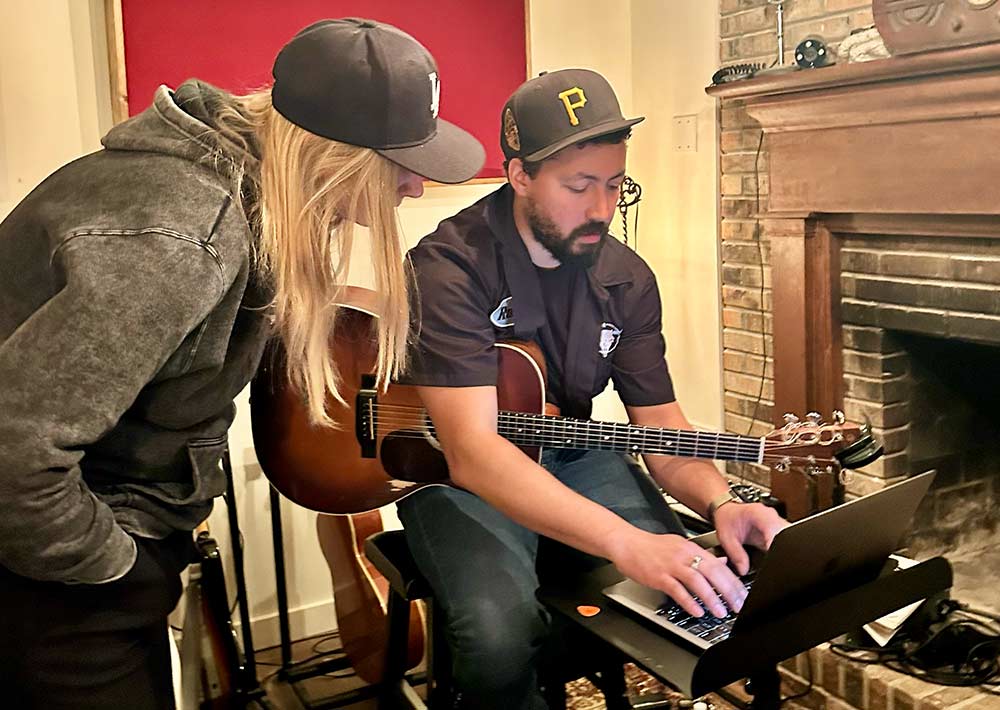
Judy: “We’re taking care of everything, so that you can learn and write.”
What is the right mindset to bring and what are some of the things songwriters can do in advance to make sure they get the most out of their time with you two on a retreat?
Judy: “For me it’s, you show up and you do your best. You show up with an open mind and an open heart. Not everyone’s going to be like-minded, but to have an open mind, to go in there and at least have the openness to digest what has to be offered…
“The first retreat I did post Warner Chappell; I did it in France in 2015. I got over there, and there was a 60-year-old man that had come on the retreat. He got off the bus, and he was just like, ‘Prove to me that it was worth coming.’ We start with yoga on my foundational retreats, and the first morning we got him into a handstand, and this is a tall guy who hadn’t done a handstand since he was six, if ever. We got him in a handstand, and after he did that yoga, we hadn’t even started writing but his smile… he was like, ‘Oh my god, that was so much fun.’
“So, again, it’s not even the writing; it’s body, mind, and soul that you are coming to a retreat for. When you can get somebody back in their body, it’s easier to get their mind and their soul to follow, so that’s the preparation. But maybe you don’t stress yourself out the week before you go, maybe you take the day before off work. If you’re already going to take five days off of work, why not six, so that you can prepare. Maybe you pack a week before, instead of the night before, and then, of course, reading both of our books is a good idea.”
Mike: “I love this. This is why Judy and I are a good balance, because she goes deep into the spiritual, and I’m usually like, ‘Let me tell you…’ I get that if somebody’s never done a retreat before, it can seem intimidating, and also be like, ‘How do I know this is going to be good for me?’ And this is where I’m more of a facts and figures person. Based-off of people that we’ve had and the results that we’ve seen them have, the key common factors that will guarantee success is to be a great student.
“If you can come to this being, ‘Hey, I don’t know that much, but I’m willing to try what you say,’ you are ultimately going to do much better than a huge percentage of folks that try to figure it out on their own and think that what they do is amazing. Being a great student, that’s everything.”
Judy: “Sheryl Crow was an A+ student, because every time she turned around and was like, ‘Okay, I did that homework. What else do you want me to do?’ That was my barometer, as far as signing people. If they are an A+ student, it’s so much easier to guide them. When you have somebody who’s just doing subpar work, it’s like… I’ll work as hard as you work.”
Mike: “When they apply themselves and they start adding into the process, the beautiful thing for us is that’s where we can be the most helpful, because we can see you actually doing it, and then advise, like, ‘Oh, this is what you need to do right here. Okay, that’s not bad, but next time do this.’
“As you’re adding, that’s where we can be the most helpful. Then the song gets even better, and you can see them get excited. The confidence that they so want in their writing sometimes comes by doing the most uncomfortable thing. Confidence doesn’t come from doing the easy thing. If it did, we’d all be confident.”
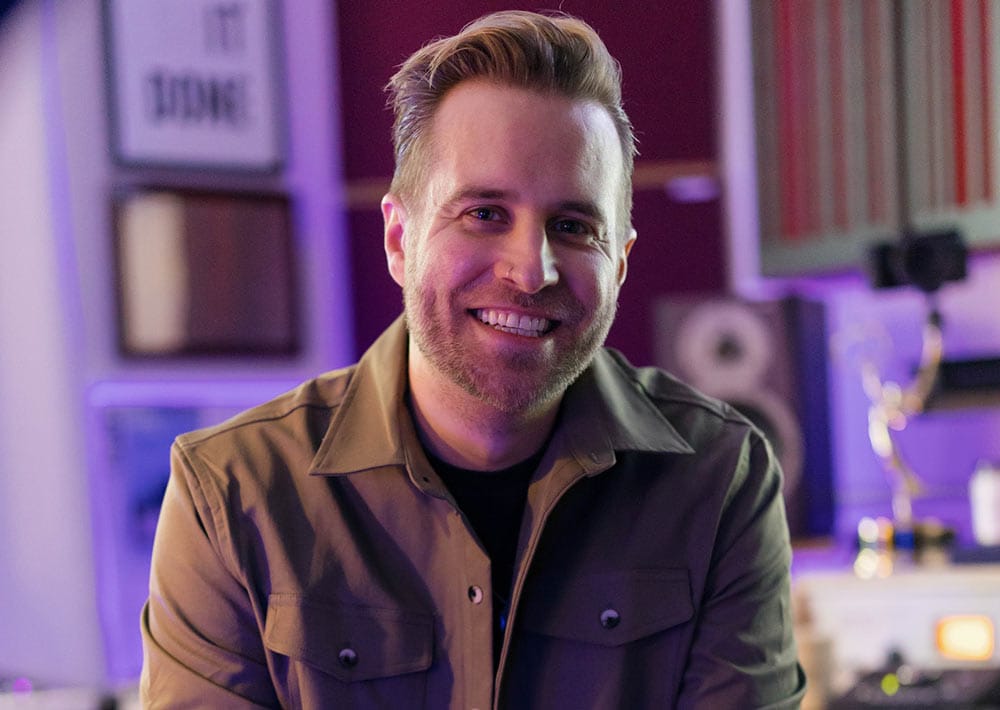
Mike Meiers: “A good coach should also be able to highlight what you do well.”
Judy: “That’s the beauty of having the five days at a retreat: we’re giving you these tools, and you get to try it. ‘Oh, it didn’t work.’ Okay, let’s try it again. ‘Oh, now it’s okay.’ You need a few days to create the habits, to get them connecting.”
Mike: “You’re going to meet new people, you’re going to form bonds and friendships, you’re going to share stories with each other, and every day it just gets a little bit stronger, and that’s exciting to see. Some of my best collaborations came from Judy’s retreat, things that I’ve done that I’ve thrown myself into that were a little awkward or uncomfortable – if I skipped that, I probably would have missed on some of the best opportunities possible.”
Are there achievements that your students have had that you would hold up as shining lights?
Judy: “I had a student, Emma, who got her song in the finals of Eurovision last year. I think she was Top Five, she was up there. Another one, Nell, has been writing diligently for the last couple of years, and had songs on artists that got streamed a million times. She’s done that, and now she has landed a publishing deal.”
Mike: “Nell has established herself as a super strong lyricist, especially in the country realm, which is a really tough industry. The reasons she’s probably gotten to the position to get a publishing deal is that after our retreat she was like, ‘I’m moving to Nashville.’
“That retreat was the kick in the butt she needed to go, ‘I’m not going to be a doctor, I’m gonna go after songwriting.’ She built up an independent career through relationships and networking and everything that Judy advised. As a lyricist she had millions of streams with independent artists to where it was obvious that she should get a publishing deal.”
Can you draw a line between her doing the retreat with you, and then getting bigger success?
Judy: “The thing is, I believe that everyone is talented. Not always in songwriting, but if you’re going to be an A+ student, then you’ll likely achieve greatness at whatever you’re creative at. It’s the A+ student that gets you there, you can’t just say, ‘Well, I’m talented.’ I’ve had many meetings with, you know, ‘I’ve got a guitar, and my journal, and I can sing, and I want to be a star.’ It’s like, ‘Okay, this is where you start.’ And those steps are very, very important to take.”
“Emma, I had another consult with her a couple months ago. Even though they’ve done things like Eurovision and all that, they still consult with us, and I’m still advising them. There’s an ongoing relationship.
“Then we had another girl, Christine… She had never written a song, and her son said something to her one night, and she went, ‘Oh my god, that’s a song.’ And she went in and wrote all the lyrics and had the melody in her head and found me and went, ‘I’ve just done this, I have no idea what I’m doing, I have no idea what to do.’ And so, advice/consult every week for a year-and-a-half, and she won the American Songwriter lyric of the year.”
Mike: “Then Jacky… she took Judy’s retreat. I spoke at the retreat, and then there was something in Jacky’s writing, voice, and overall demeanour… she took a lot of what Judy said to heart. Again, this is to Judy’s point, everyone that goes to these retreats, or thinks about it, we all have some innate talent, we have something there but it’s just not formed enough. It’s not shaped. It’s like a baby deer when you see them start to walk. It’s that weird little messy period.
“Jacky did the due diligence. She took in everything that Judy said about storytelling, writing, and development of what makes a compelling song, and then working too on the music side of it, she got better and better. Not only was she getting singles cut, but then co-wrote with someone that got Grammy consideration, which is huge, and that to me is like, ‘Oh, that is someone that I know one day is going to have even bigger success,’ purely because they’re a student, they never get cocky, they are constantly looking to enhance what they have and acknowledges that they have these skills but they have to constantly work at it. Jackie always stuck out to me as someone that is incredibly talented and a killer student.”
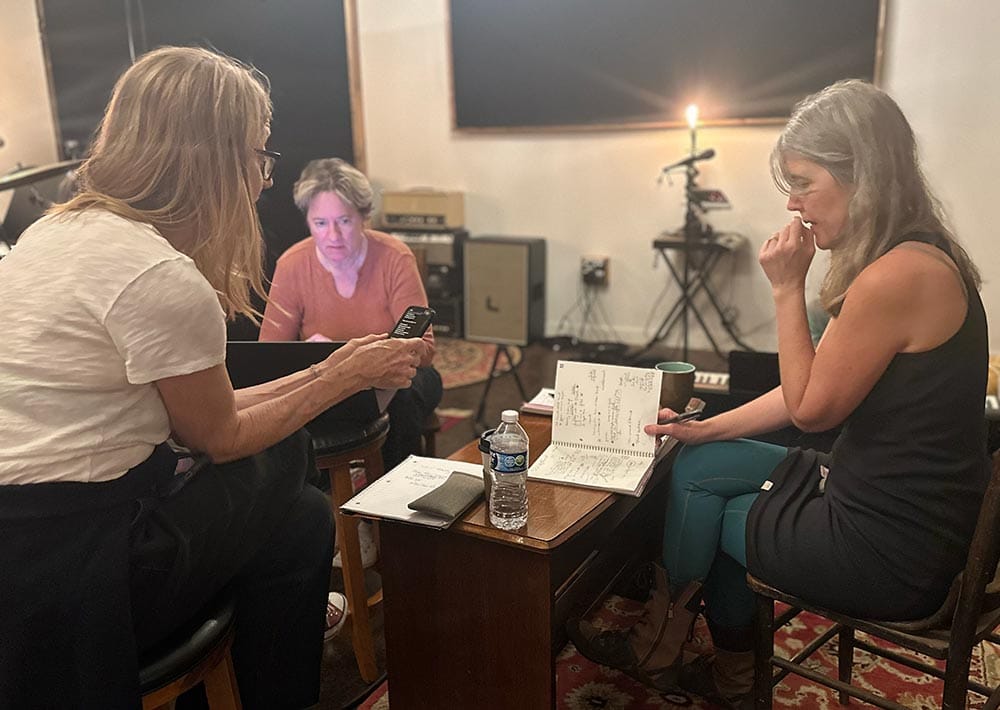
Judy: “I can’t tell you how many songs have been written the night before the next day.”
Let’s talk about Hitmakers UK. We’re all chuffed that you’re coming over here and lending songwriters your expertise for a week. What can people expect?
Mike: “First off, it’s just amazing. This is something we’ve thought about, and I know it’s the reason we’re doing this too; it’s a lot to expect someone to just drop everything and then jump over to the US and then book time in Los Angeles and Nashville. There are so many hurdles. There are already 20 different reasons why it’s hard, you know, as much as it may be on the bucket list to do.
“It’s not necessarily the easiest, so for us it was like, ‘Well, why don’t we just come to you in the UK.’ The thing that people can expect is a revamped process in songwriting that they’re going to reuse for all their future songs, and it’s going to be something that has been refined not only by the retreats that Judy and I have done together, but also the retreats that Judy has done independently and the hundreds of people that I’ve coached independently. It’s wrapping that all up in a little ball.
“We’re giving you a new framework, and this chance to build your network. If you’re collaborating with people here, you’re not collaborating with your average songwriter, you’re collaborating with people that value their craft enough that they’re willing to take time, money, and say, ‘This is important to me.’ Those are the people you want to collaborate with, because they’re not going to be your average collaborator. They’re going to give thought to the process, they’re going to refine what they do well, and bring that into the writing. You’re going to meet potentially lifelong collaborators.”
Judy: “What’s also great about these retreats, is that we set them up so the only thing that the writers have to do is come and write a song. They have to pick out what they want to wear in the morning, but other than that, all they have to do is show up and write a song. Everything else is done for them, their meals, when they eat, where they sleep… everything is taken care of and everyone gets their own room. Where else do you get a chance to do that?
“Where else do you get a chance in life to not have to think about taking care of yourself. We’re taking care of everything, so that you can learn and write. It’s like going back to first grade. You’re going back to school here, to immerse yourself in songwriting.
“Mike and I have done these in Nashville. Three days, immersive, we just slept, ate, and drank songs, and they all came out, completely different people, and that’s one of the reasons we wanted to go over to the UK, but we also wanted to make it a little longer and accessible to a few more people, because this is what works – what works is having the two of us there together. You’re not just getting one person’s perspective; you get both of us.”
Final question: what happens when the songwriting is over for the day?
Mike: “That’s the big thing, that’s where the connections and some of the best conversations happen at retreats; the off hours when you’re hanging out. I think the beautiful space that we are in facilitates that. When you look at where we’re staying, this is where you can workshop songs, share ideas, sit around and share stories, and actually get to know people on a deeper personal level, so that when you get into the next day, you know a little bit more about their story. It’s not like we have a session and then everybody packs up and goes home.”
Judy: “At night, after dinner, we usually will play the songs that everyone sung that day, and then you’re done by eight o’clock and then everyone hangs, everyone’s performing, they’ve got their guitars… I can’t tell you how many songs have been written the night before the next day.”
Mike Meiers and Judy Stakee are bringing Hitmakers Live to the UK from 5-9 October 2026. Find out more from hitmakerslive.com or let us know if you’d like to speak with either Mike or Judy directly
More Like This
Behind the scenes: Feed The Fire songwriting retreat
Reporting back from a creative weekend at a country house in Somerset, with... Read More+Review: Pro7ect’s 2023 Songwriting Masterclass
Witnessing the virtues of auto-tune, foraging for melodies and embracing co... Read More+Interview: Greg Haver
Following a stint with Pro7ect’s latest songwriting retreat, the awar... Read More+How to know when you’re stuck in a rut and how to get out
Every songwriter hits walls. Mike Meiers shares five clear strategies to re... Read More+









More Like This