
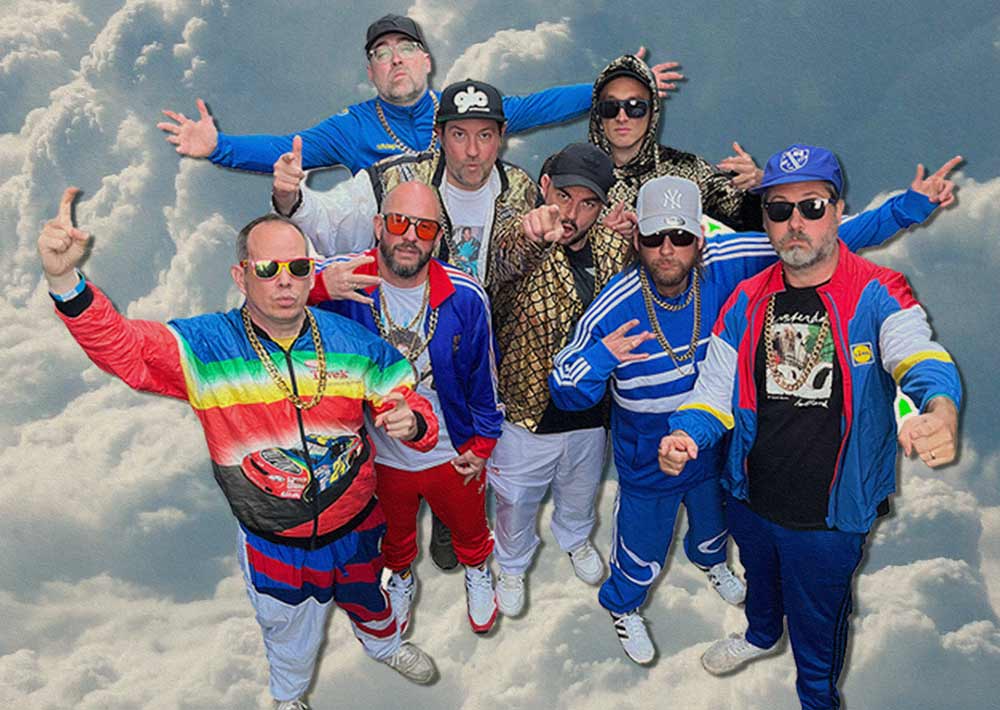
Goldie Lookin Chain’s Rhys Hutchings: “I was the music/beat creator and Eggsy had hijacked my music creation and turned it into an outlet for our stupidity.”
What started with a rapped line in a Newport bedroom ended with a No 3 single nobody quite saw coming
Straight outta Newport, Goldie Lookin Chain have spent more than two decades turning the everyday business of life in the ‘Port into their own peculiar brand of hip-hop. Tracksuits, kebabs, dodgy nightclubs, local slang and all manner of shady characters have supplied the raw material, while their deliberately homespun beats and deadpan, occasionally filthy humour have made them unlike pretty much anyone else in British music. What started as a bunch of mates making music for the hell of it somehow became one of the most unlikely success stories of the 2000s.
And they’re still at it. Back in June, the GLC released their ode to dogs and dog cafés, Puppuccino, and they’re also heading out on their Stairway To Newport 2026 tour. For now though, we’re going back to August 2004, when Goldie Lookin Chain somehow gatecrashed the Top 5 of the UK Singles Chart with Guns Don’t Kill People, Rappers Do. Here, Rhys, aka Dwain Xain Zedong and P. Xain, tells us how one of the group’s most unlikely hits came together…
We were like a rotating door of people coming in and out, adding words, lines, or raps

How we wrote ‘Connected’ by Stereo MCs’ Rob Birch
The frontman explains how their most famous song is a long and winding tale... Read More+How we wrote Robbie Williams’ ‘Millennium’
Robbie’s writing partner talks us through the pair... Read More+How we wrote James Ingram’s ‘I Don’t Have The Heart’ by Jud Friedman & Allan Rich
When the first song you write together knocks Jane... Read More+


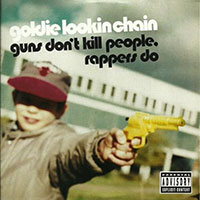
Released: 16 August 2004
Artist: Goldie Lookin’ Chain
Label: Must Destroy/Atlantic Records
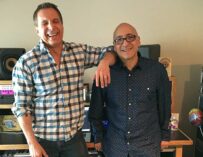
Songwriters: Phil Chen, Rhys Hutchings, David Rowland, Martha Veléz, Mike Vernon, Pete Wingfield, Joseph Edward Wright
Producer: P Xain
UK Chart Position: 3
US Chart Position: –
“It was like 2001 or around that time. We were making tracks in the bedroom of my parents’ house. A few years before, I had sold my car and bought some studio equipment. I had just moved back to Wales after working with a producer around London and the UK. We had made a couple of tracks and I was starting to see the direction we were travelling in.
“We had made some tracks that were vibe-based and one day, when no one else had turned up yet (the space was kinda like a drop-in centre for our group to hang out and smoke weed), I made a track on my own called My DJ… This was where I really thought we should make tracks that were more crafted and themed. Most rap tracks are just words that rhyme.
“So, in that room around 2001, Eggsy, who had always been the first to get up in the mic, said it… ‘Guns don’t kill people, rappers do.’ I don’t remember why he said it, but I heard it and parked it in my brain. I was the music/beat creator and Eggsy had hijacked my music creation and turned it into an outlet for our stupidity.
“But we were getting better and I knew we were fun and satirical and the GDKPRD idea seemed strong but wasn’t something I was just gonna bang out. It needed a crafted chorus and a great beat. So, I parked it and waited.
“It was probably like 2003/4 and my sister had given me a bunch of vinyl for Christmas. I was a vinyl collector/DJ, still am. Within that bunch of vinyl was the track that I sampled [Jive Elephant by Martha Velez]. The second I heard it, I knew. Once I had come up with the chorus, I knew we could turn the concept into something more.
“At that time, I was using Cakewalk on a PC. I had bought an Atari ST and a sampler with the money from the sale of my car, but when I lived in London, I shared a house with Dave Thomas Jr (look him up), he showed me Cakewalk and the potential it had. There was no need for a sampler. I used a thing called Acid to quickly sketch the sample and beats, then migrated over to Cakewalk for vocals, arrangement, and instrumentation. I still work very similar now, just on Mac and Logic… I think I added a bit from a [Yamaha] DX7 (that I lent to someone and it ended up in a skip, I’m still sad about that) and an 808 bass but it was very simple to put together.
A magazine to keep. An archive to explore.
Get the latest edition, 40+ back issues, 3,200+ website articles and expert insights for songwriters
“For me, it’s concept, chorus, then beat. We used to make tracks in an hour. This took a little longer to percolate. We were like a rotating door of people coming in and out, adding words, lines, or raps… when I had the beat and chorus it was time for raps. Eggsy slammed in his raps first. He always was quick. If we were doing it now, I would have marked his homework and trimmed his bit to eight bars, but back then we were having too much fun.
“It was easy. We just did it. If the concept is strong, then you can just write; the struggle might be what not to include. I put the beat on and everyone sat with pen and paper. The ones that are there and write words get on the tracks. I think the intro took the longest; DJ Moneyshot did scratches. We had to wait for him to do that. I remember holding it back from the record company. They were signing us and I was like, ‘I’ve got something. I think you might like it.’ They did.
“We have added a new verse for live. Billy Webb wasn’t in the room when we recorded. And at the time, I would always make my tracks 3:30, so there isn’t a lot of room. Billy had recorded a verse years later on a mix tape, so now we have added it into the live version and I gave Graham the Bear my second rap so we are all on it when we play live – like a dysfunctional family.
“Is it still popular? It’s basically a bumper sticker. I think the ‘Woo woo woo’ part helps… Various places have used/adapted it for ad campaigns. One was in Bristol about putting dog shit in bins. I realised some people in the band think the chorus is, ‘Guns don’t kill people rappers do, so do the police…’ which is not the lyrics. They have been singing this for over 20 years. That sums up the band really.”

Goldie Lookin Chain are currently touring the UK, and you can find dates and tickets at crosstownconcerts.gigantic.com/goldie-lookin-chain-tickets
More Like This
How we wrote Taylor Dayne’s ‘Tell It To My Heart’ by Seth Swirsky
Though eventually a worldwide success, this 80s classic almost ended up in ... Read More+How we wrote ‘Connected’ by Stereo MCs’ Rob Birch
The frontman explains how their most famous song is a long and winding tale... Read More+How we wrote Robbie Williams’ ‘Millennium’
Robbie’s writing partner talks us through the pair... Read More+How we wrote James Ingram’s ‘I Don’t Have The Heart’ by Jud Friedman & Allan Rich
When the first song you write together knocks Jane... Read More+







More Like This