
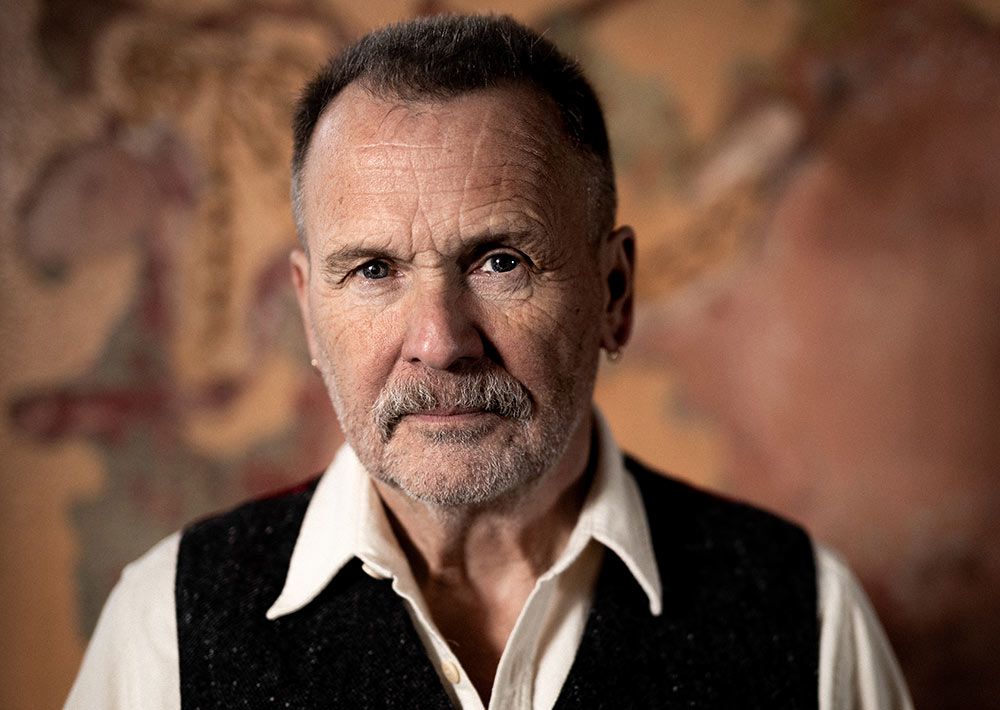
Martin Simpson: “Very rarely does the tune come first, so usually it’s a scrap of lyrics.” Photo: A. Muscroft
Celebrating 50 years since his debut, the folk icon discusses a new album that draws on a lifetime of music
Over five decades, Martin Simpson has established himself as one of British folk’s most respected musicians, combining formidable guitar playing with a deep understanding of the songs and traditions that have shaped his work. Born in Scunthorpe, he has become acclaimed for his acoustic and slide guitar playing, as well as his ability to find fresh meaning in traditional songs. His work takes in English ballads, American blues and roots music, alongside original songwriting that has earned him numerous awards, including BBC Radio 2 Folk Awards album of the year for Prodigal Son in 2008.
His new album, Some Kind Of Jubilee, arrives on Topic Records as he marks 50 years since his debut, Golden Vanity. Rather than simply looking back, Simpson brings together new compositions, reworked traditional material and fresh readings of songs from his own catalogue, with a hand-picked group of collaborators. We spoke to him about a lifetime spent learning songs, and the thinking behind his new material…
Click here for more songwriter interviews
What does a song need to have for you to want to spend time with it, whether you’ve written it yourself or found it in the traditional repertoire?
“It has to have emotional credibility, I would say. Increasingly my motto is, ‘We open hearts,’ and that’s what I want songs to do, whether I’m writing them, whether they are traditional, or whether they’re songs that somebody else has written. It’s all about whether they have the effect that I want a song to have on me.”
Some Kind Of Jubilee brings together newly written songs, traditional material, and songs from your back catalogue. Does each require a different approach when you are arranging and recording it, or do you ultimately treat them all in the same way?
“No, not really. This record was made in two basic sessions. The North Yorkshire sessions were me and Liz Hanks, cellist, Louie Campbell playing various guitars and Ben Nicholls on bass. Everything that we did, with the exception of two songs, was just done live. I was singing and playing, and they were playing along, and it was very much about performances.
“Then we went to California. We took some of that stuff that we’d done in Yorkshire and had Greg Leisz overdub various things, because there were tracks where I wanted very much to have Greg play on them. They were central to my musical picture of the track, but I couldn’t do it live because I needed to have the English guys playing on it first, if you like. Then we did a few overdubs with Greg and a bunch of live stuff. Everything was treated like that, basically. What I was hoping to do, and I think I have done, is really capture proper performance.”
A magazine to keep. An archive to explore.
Get the latest edition, 40+ back issues, 3,200+ website articles and expert insights for songwriters
Did the different recording environments affect the way the songs developed?
“The record was made between the North Yorkshire sessions and the sessions in California, and the different ways of working became part of the process. In Yorkshire, most of the tracks were recorded live with Liz Hanks, Louie Campbell, and Ben Nicholls, so the emphasis was very much on performance. In California, we took some of those performances and added Greg Leisz where I had a particular musical picture in mind, as well as recording some live material there. That allowed the tracks to develop through a mixture of live performance and carefully chosen responses from the other musicians.”
When you begin writing a song, do you tend to start with words, a melody, an image, a guitar part, or something less tangible?
“It depends entirely on the circumstances. Very rarely does the tune come first, so usually it’s a scrap of lyrics, but that can come from a bunch of different places. For instance, a song like Love Never Dies starts with a real-life scene, which I basically rendered into the first verse of the song, and it rapidly followed it up with a chorus in my head. It was there right in front of me. Other times it’s a little bit of nature or something that somebody says. I don’t think there’s one particular way into it.”

Interview: Rhiannon Giddens
Spending lockdown in Ireland with her partner Francesco Turrisi, the North ... Read More+Interview: Nick Ellis
This Liverpool-based songwriter discusses how the unique location his debut... Read More+Interview: Vagabon
Infinite songwriting wisdom: at the end of 2017 we highlighted the brillian... Read More+


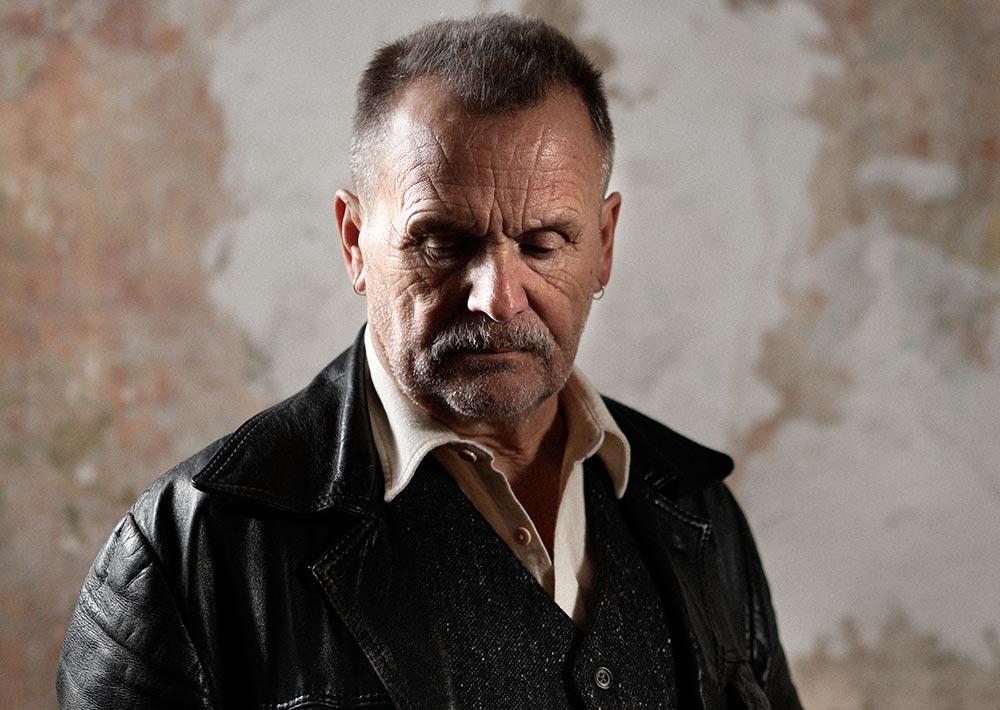
Martin Simpson: “When I first began, I didn’t know I could write songs at all.” Photo: A. Muscroft
What was it about Anne Briggs’ version of The Recruited Collier that made you want to return to this relatively rarely collected song and make it your own?
“Apart from the fact that Anne Briggs’ version of it is a thing of great beauty, it’s a lovely, apparently plain and simple performance, but it’s just great. Hearing it was like hearing it for the first time, despite the fact that I’ve been hearing it since I was probably 15 or 16 years old. It suddenly struck me that it’s a miracle that I’d never done it before.
“Then there was the additional aspect that I was completely taken with the backstory of it appearing in Bert Lloyd’s book, Come All Ye Bold Miners. Bert Lloyd was very famous for his tendency to improve traditional songs, if not completely rewrite them. People had the same opinion of The Recruited Collier. There are some lines in it that I thought, ‘Oh, I bet he wrote that’. I asked people who know. Martin Carthy said, ‘Of course, Bert Lloyd wrote it,’ but John Bowden then told me that wasn’t true and sent me an entire book on my phone, Dialect Ballads Of Cumbria.
“There it was from 1807, I believe. All that Bert Lloyd actually did in the original song was change the man’s profession. He was a peat cutter and a farmer, and Lloyd changed him to a coal miner because otherwise he wouldn’t have fitted in the book. ‘Come all you bold peat cutters and farmers,’ if you see what I mean?”
With a song like that, how do you balance respecting the history and character of the original with the instinct to interpret it through your own musical voice?
“For me, the starting point is whether the song has emotional credibility and whether it moves me. With The Recruited Collier, Anne Briggs’ performance is such a strong and beautiful reference point, while the song’s history and backstory also became part of what drew me to it. The interpretation then comes through the way I perform and arrange it.”
You describe the album as carrying forward, “The accumulated skills of a lifetime.” How have those skills changed the way you write and arrange songs?
“Writing is, in a way, the thing that I’m least confident about, but, once I start, I really get into it, and I really enjoy it. I think my writing is consistent now. I hope it is. In terms of arranging, I don’t know. I just appear to have got better at it. I work very hard at playing and writing and understanding what it is that I’m doing. I have some very clear pictures in my head of how things should be, and I seem to have got better at translating those pictures into the record.”
When you revisit one of your own older songs, what are you listening for?
“Icarus, which was Anne Lister’s song, still is Anne Lister’s song. My guitar arrangement of that was very important to me at the time, 42 or 43 years ago, and it marks a particular stylistic statement. I didn’t want to change it that much because I think it worked. “But when I started to play it, I found there were things that changed, particularly the timing of the accompaniment behind the voice. My singing has really improved in the last couple of years, probably because I stopped drinking, I would think, and so I can do things with my voice that allow the guitar accompaniment to do more. That was a really interesting discovery. “But then, a song like Love Never Dies, I completely changed the approach on the guitar. It’s a completely different way of playing it, quite a bit simpler, I think to allow room for the other instruments on there.”
How much does the character of another musician’s playing influence the way you record a song?
“It doesn’t necessarily. It’s more like I go to record a song with the statement that I want to make, but then I invite other people to basically expand on that with their response to what I’m doing.”
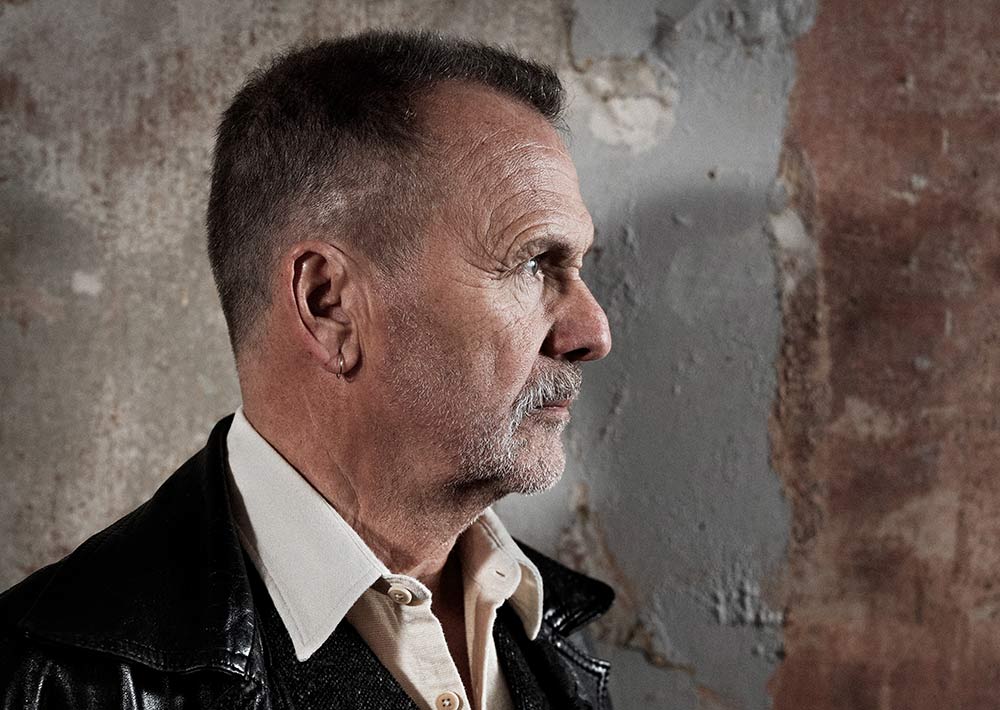
Martin Simpson: “Before I start playing, I’ll think, ‘Right, let’s do something I haven’t done before.’ And then I try to put myself in positions where I am lost.” Photo: A. Muscroft
Do you ever find that a particular guitar tuning, picking pattern, or instrumental idea leads you towards a song?
“I don’t really do picking patterns. In a way, I sort of fight not to, because I spent years learning how to do those things and now I go, “No, I don’t want to do that. That’s not how I play.” It’s more like the song that I’m trying to learn will bring out aspects of my playing. I think it’s really much more that way around.”
What have six decades of listening to and performing traditional music taught you about writing your own songs?
“It’s not just six decades of listening to traditional music. It’s also six decades of listening to the people who came out of the various folk scenes and related scenes. I’ve been listening to writers as well as performers and singers of traditional music since I was a very small kid. And when you grow up listening to Jackson Browne and Bob Dylan and Joni Mitchell and all this traditional music, dare I say it, it makes you not want to write bad songs.”
After 50 years of recording, is there still a sense of discovery when you sit down to write a song?
“There’s a joy in writing and in playing and in arranging. What I’m trying to do is put myself in positions where I am lost. I do quite a bit of teaching guitar, not generally one-on-one but teaching workshops. It’s not the kind of workshop where you get 20 people sitting with their guitars learning something. I don’t allow people to have their guitars out when I’m teaching. What I’m trying to do is get them to internalise the guitar and the music.
“One of the things that I talk about is this really beautiful balance between knowing what you’re doing and understanding what it is that you do, and being absolutely unbelievably lost and having to find your way out. That’s what I do. I think about what I do. Before I start playing, I’ll think, ‘Right, let’s do something I haven’t done before.’ And then I try to put myself in positions where I am lost.
“I just took delivery of an instrument which is utterly whacked. I’ve never played anything like it in my life, and in the last 24 hours I’ve been massively lost and really creative with this new thing. So that’s what I’m looking for.”
When you listen back to Some Kind Of Jubilee, what does it tell you about where you are as a songwriter now that you couldn’t have known when you began?
“When I first began, I didn’t know I could write songs at all. It took me a long time. When you start playing the guitar at the age of 12 and start learning all these wonderful folk songs, and then somebody somewhere suggests that you should write songs, if you’re 14 or 15 years old, you really don’t know your arse from a hole in the ground, emotionally, or in any other way, and you start to try and write songs. I’m not there anymore. I don’t really feel as unqualified as I used to feel. I feel like I’ve got things that need to be said.
“I remember years ago, one of the first songs that I wrote was a song about Australian Aboriginal people called Dreamtime. This is a really, really heavy song. I played it in… I think it was probably the Flower Pot in Derby or somewhere like that. At the end of the gig, there were these two blokes who had some drink taken. They were very, very Derby indeed, and they were really nice guys. At the end of the gig, they said, ‘That song, that song Dreamtime…’ One of them said something to the other, and the other one said, ‘Ah, and it needed to be said…”
Some Kind Of Jubilee by Martin Simpson is out now on Topic Records and he is currently out touring the UK. For music, tickets, and more, go to martinsimpsonmusic.com
More Like This
Discover: Topic Records
On its 80-year anniversary, we explore the scene, icon and players associat... Read More+Interview: Rhiannon Giddens
Spending lockdown in Ireland with her partner Francesco Turrisi, the North ... Read More+Interview: Nick Ellis
This Liverpool-based songwriter discusses how the unique location his debut... Read More+Interview: Vagabon
Infinite songwriting wisdom: at the end of 2017 we highlighted the brillian... Read More+








More Like This