
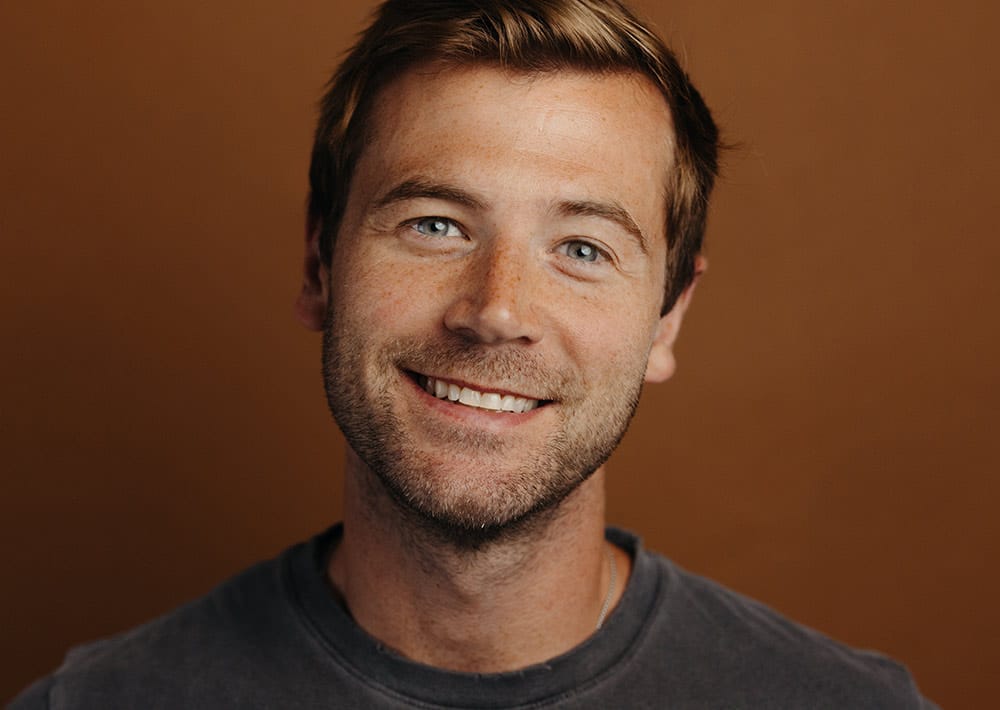
Jimmy Robbins: “The hardest part of writing songs is not writing songs; it’s finding something that is exciting to you.”
The Nashville hitmaker on surviving success, embracing reinvention, and why the thrill of creation itself is the ultimate songwriting reward
Jimmy Robbins didn’t really land in Nashville in any grand way. It was more of a slow convergence: North Carolina upbringing, teenage years spent on the road in pop-punk bands, then the circuit of record deals that carried him through New York and Los Angeles, before eventually settling in Music City in 2012. By then, country was already shifting, opening itself up to a more modern way of building songs, and he found himself right in the middle of it as a co-writer and producer with the knack of helping artists tell their truths in a way that people want to listen to.
What followed is the kind of CV that most people dream of: 11 No 1 singles as a writer, a CMA Triple Play Award, ASCAP Country Song of the Year for Thomas Rhett’s It Goes Like This, CMA Song of the Year for Maren Morris’ The Bones. He’s written and produced across a wide stretch of modern country – Blake Shelton, Keith Urban, Miranda Lambert, Dan + Shay, Kelsea Ballerini, Gabby Barrett – often sitting somewhere between songwriter and track architect. The newest chapter includes Say So, a Dan + Shay co-write shaped by the loss of friend and mentor Ben Vaughn.
Talking to Robbins, what stands out isn’t the list of credits, but his continued commitment to the magic of creation…
How Jimmy wrote Thomas Rhett’s ‘It Goes Like This’ in our Summer issue
Is it harder to stay at the level that you’re at than it is to reach that level?
“I mean, there’s definitely different stages. At the beginning, there’s this awesome… I don’t know, you’re so naive to it, you’re just writing because you love it, and you don’t know what a song can do yet. You don’t go into it with expectations, and that’s a really fun place to be.
“I’ve been here long enough to have a lot of highs and lows. I think it’s harder once you’ve had some success and hit your first dip. With the exception of very rare people like Ashley Gourley, for most of us, you have a good year, then you have a bad year, and then you have a good year. Definitely early on, when it cooled off the first time, that was probably the hardest. You’ve got to push through and get back to a place where you remember that you just love songs. Any time I’ve tried to take a break from this because I feel burnt out, a few days later, I find myself sitting at a piano trying to write a song. You can’t really get away from it if it’s in your blood.”
Those troughs or downs, do they tend to be because there’s a change in the trends, or because the artists that you’ve worked with don’t catch fire? Is there a correlation between the things that work and the things that don’t work?
A magazine to keep. An archive to explore.
Get the latest edition, 40+ back issues, 3,200+ website articles and expert insights for songwriters
“We all have our styles, and there have definitely been pockets of time where what I do naturally was happening more or less in the genre. The trick is to remove your ego, change it up and try to get good at what is happening now.
“When I came to town, I was sort of the poppy kid. I moved to Nashville from LA, I’d had a pop record deal, and I was this outlier. Then, as trends have changed, I’m sometimes the ‘country-est’ dude in the room now, just because I’ve been speaking this language for so long.
“I got to Nashville in 2012, and then my first big song was in 2013. I got here at a time where the format was ready for… maybe the lyric was different from what I was writing in my pop-rock bands, but melodically and stuff, they were kind of the same songs. There’s a bunch of us from that pop-punk world that are here now, like Paul DiGiovanni from Boys Like Girls, who produces Jordan Davis.
“One of my first hits was this song called Whatever She’s Got by David Nail. It’s a fairly southern-country lyric, but if you ignore the words and, instead of it being acoustic, play it on electric guitar, I mean, it’s a pop-punk song.”

How we wrote Little Big Town’s ‘Girl Crush’ by Lori McKenna
A Grammy-winning and six times Platinum tale of jealousy written by The Lov... Read More+5 minutes with… Kelsea Ballerini
The two-time Grammy Award-nominated songstress from Tennessee talks about h... Read More+5 Minutes With… Breland
As he prepares for the release of his debut album, the ‘My Truck̵... Read More+




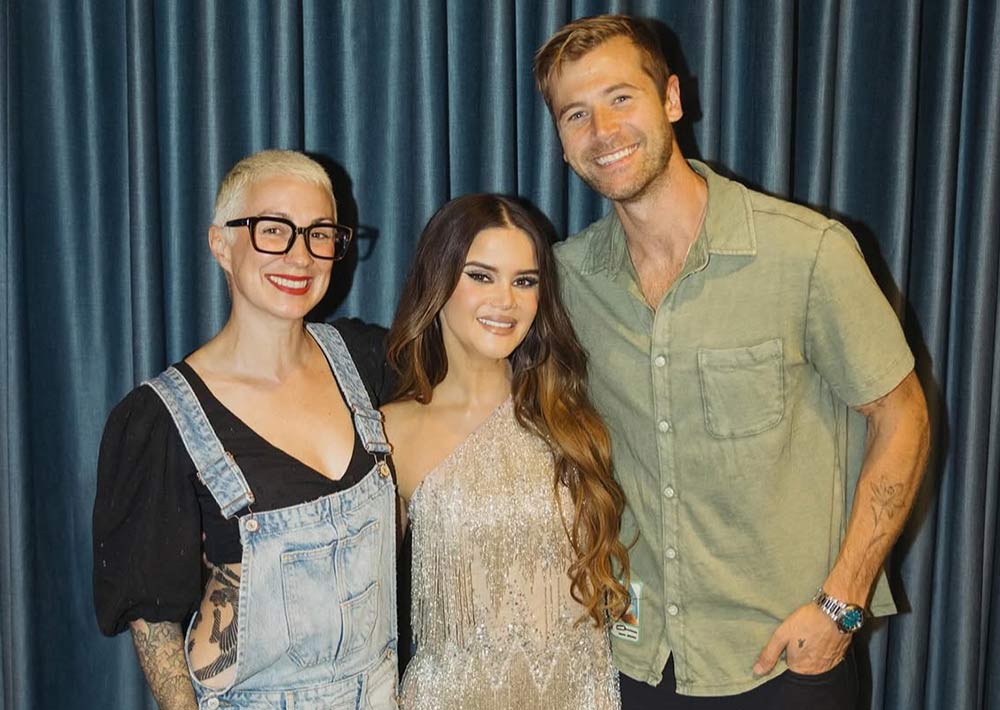
L-R: Laura Veltz, Maren Morris and Jimmy Robbins. Jimmy: “I really think metaphors are what keep us in business.”
Was that intentional? Did you realise that you could keep doing what you were doing, but take off some of the production and change the lyrics?
“It sort of just worked. I didn’t really know what I was doing. They billed me as a producer or a track guy when I got to town, but honestly, I only bought Pro Tools the week before people started calling me a track guy. I didn’t know what I was doing at all, and I used 808 claps because that was the only drum sound I had. The demos were standing out because – prior to me and a couple of other guys at that time in 2013 – everybody was still doing band demos with the session players.
“So, when you had something that sounded a little bit weird, it really cut through the noise. I think there was a chunk of time where maybe a decent song was getting cut because the track was interesting, and that has shifted now. We’re back to a place where it’s really got to be a good song to cut through the noise.”
That suggests a couple of things: one, that you’re a fast learner, and two, that you’re happy to try stuff out new stuff and put your hand up for things…
“Yeah, when I was a kid, my favourite quote was, ‘Leap and the net will appear.’ There have been a lot of times in my life where I was just like, ‘It’s gonna be fine, let’s go.’ I dropped out of school and started touring when I was 14. I’ve done a lot of dice roll choices, and I still feel like I’m faking it. I’ve always felt like somebody was going to be like, ‘Oh, he’s actually not good.’ It just hasn’t happened yet.”
Does it become harder to leap each time, or does it become easier knowing that the net’s always been there?
“Kind of both. Because I have had some success, there’s a ‘comfortability’ in that I’m not waiting for the next song to keep the lights on. There’s some freedom in that, but then it’s also scarier because expectations are a little bit higher. Particularly if I’m in the room with newer artists, the label might have some expectation because of my history or something, so I do feel pressure to deliver. Nobody’s putting that pressure on me, but I definitely put it on myself.”
When you go into a session now, do you have ideas, lyrics, music ready to go, or are you confident enough to go into the room and do it when you’re there?
“Well, it’s funny, I haven’t thought of it as a confidence thing, but that is probably what it is. I am wildly underprepared these days. There was a decade where I would show up to the studio at eight, work on musical ideas for three hours before the writers got there and try to have five or six different things in different tempos to present. I did it every day for a long, long time, and then eventually got so tired of my own ideas that I was like, ‘Well, I’m gonna just stop doing this,’ and it’s been really helpful. I’m probably three years into coming in with nothing, and it makes it way easier for me to enjoy the days.
“There was a period of time where we were really boxed in, we were writing to loops. So, musically, you’re in this four-bar loop for the whole song, but in the past two or three years, country music is getting more musical again. We’re deviating in the pre-choruses, getting a little bit more interesting or weirder with our chord choices, and that’s a hard thing to do in advance.”
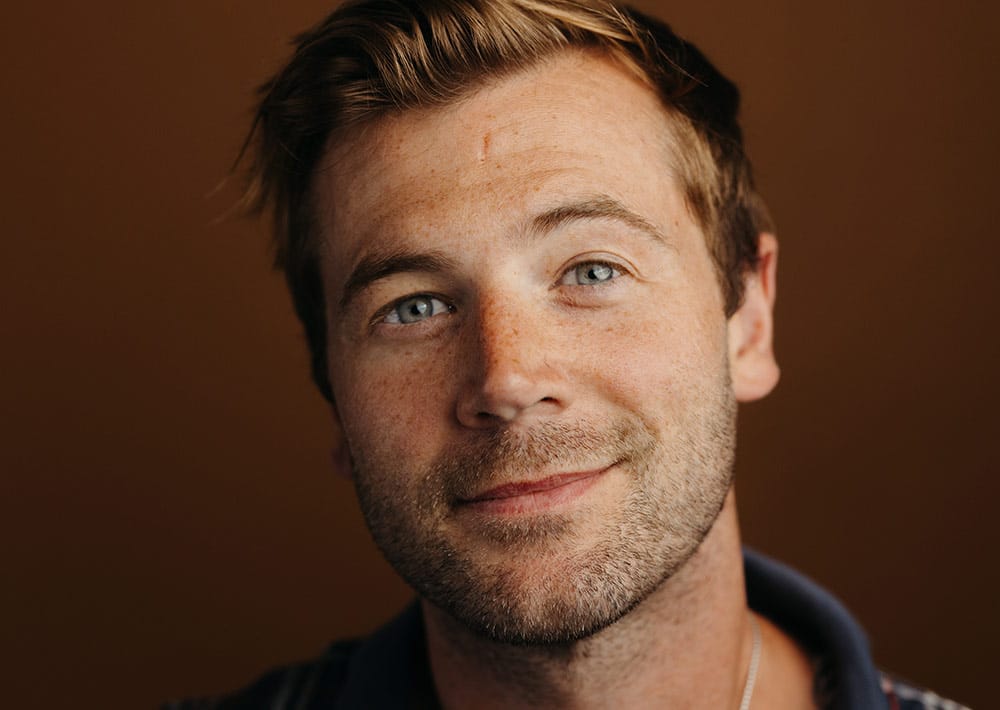
Jimmy Robbins: “Songwriting is finding a new way to describe the same old feeling.”
How did that happen – is there that one song that breaks the mould and then leads the way?
“There were several different artists making some choices. I remember with Morgan Wallen’s last album, he got really excited about this thing that Chris Tompkins was doing. Chris is a good friend of mine, and I think Lies, Lies, Lies was the first song that Morgan got excited about for that album, and it was Chris just doing this Eagles/Fleetwood Mac acoustic guitar thing, where the chordal choices were getting more interesting. I think we all started following that.
“I know that record is not that old, but you know how it works. You start writing for a project sometimes years before it comes out. There was probably other stuff before that, but I definitely felt a shift in town that I would credit to Morgan and to Chris, specifically, where we all felt like, ‘Okay, we can get a little like ‘singer-songwritery’ with this and go to a place that’s different than the 4-1-6-5 thing we’ve been doing for so many years.”
Is there a friction because people may want to work with you because they like something that you’ve done in the past, or because you have a reputation for being able to write a certain sort of song, but you don’t want to be repeating yourself ad infinitum?
“The hardest part of writing songs is not writing songs; it’s finding something that is exciting to you. There are like seven songs. We either love her, or we miss her, or we’re from here, or we’re leaving here… There are only these finite roads you can go down, so it’s… I really think metaphors are what keep us in business. Songwriting is finding a new way to describe the same old feeling, and those are the best days – when you find something that you haven’t said before.”
And how does that typically come about?
“Well, sometimes people have a cool idea. But honestly, more often than not, we don’t have an idea, and we just look at each other, and you just catch up for like a half hour at the beginning… I’ve always felt like songwriters are professional listeners, and you’re just waiting for somebody to say something songy.
“It is very frequent that I’ll meet a new artist, and we’ll talk for 45 minutes and, at the end of the conversation, either me or somebody else in the room will be like, ‘Well, you actually said these three things that sound like songs to me,’ and we’ll go down that path. Thankfully, when you have a really big catalogue, it’s like, if we have the idea, I can usually think of four or five different ways we can go with that idea. I’ve gone down just about every path you can go down. I’m 3,000-4,000 songs deep at this point.”
Wow, that’s insane…
“It’s too many songs.”
Can you think of any examples where that happened: someone said something in the studio or writing session that then inspired a song that we now know?
“Dan + Shay have a single out right now called Say So. That song came from us sitting actually in this room that I’m in right now, talking about our friend Ben, who took his life. That really wasn’t what we were gonna write; I kind of went into that session hoping we were gonna write a bop, something up, and like, ‘Let’s get the single.’
“We didn’t have a title or anything, we were talking and kind of stumbled into the concept of, ‘I just wish he would have said something.’ We were all so caught off guard – the whole town – by Ben’s passing. Everybody knew Ben. He was the head of Warner Chappell, and he was just there for everybody. We were all so surprised that he was hurting so deeply, and that turned into Say So. That’s a heavy example, there are much lighter examples.”
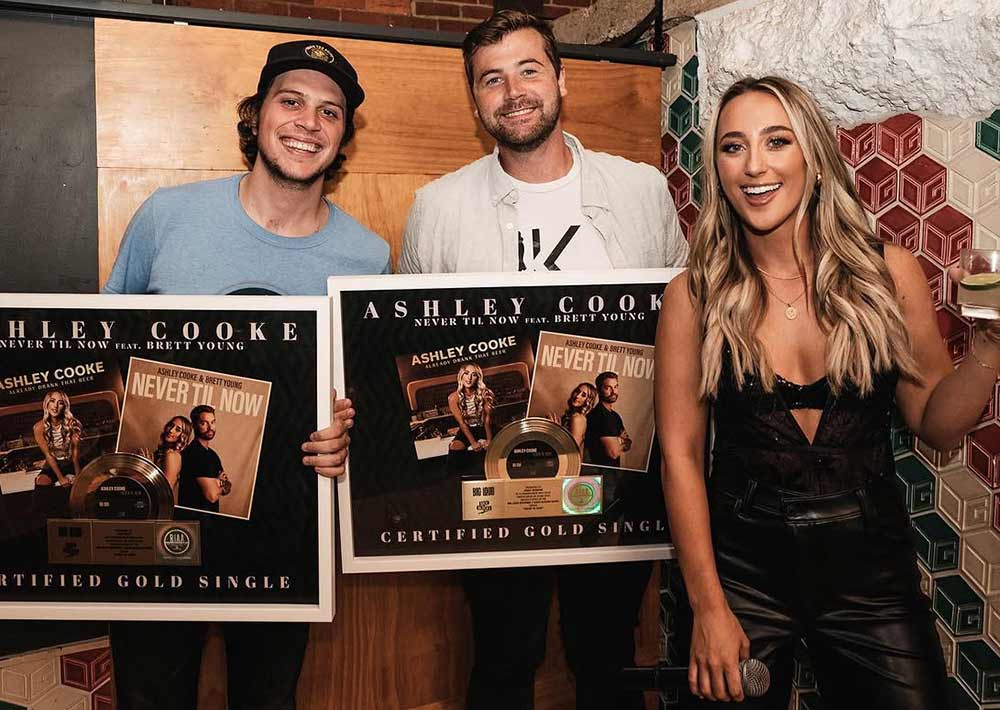
L-R: Matt Roy, Jimmy Robbins and Ashley Cooke. Jimmy: “You can only catch the fish that’s under the boat.”
Does the lyric and the theme tend to then dictate the sound?
“Yeah, but I am a fan of what I call happy-sad songs, which is where it sounds happy but the lyric is heavy, or it sounds a little dark, but maybe the lyric is sexy or fun. Because that’s true in life, you know, we’re all a mess of feelings. It’s usually not just one thing. Happy-sad songs are some of my favourites, where it’s a slamming up tempo, but that dude is sad.
“What’s a good happy sad song? Oh yeah, I mean, I’ll do another Dan + Shay song, Heartbreak On the Map. That’s a really fun, pretty, ‘70s country-sounding song, but dude is so sad, he’s looking everywhere for this girl. Those songs, it sounds like the narrator is trying to make himself feel better, and I like the push and pull of that a lot.”
In terms of that sound and production, how much is that you bringing an idea to the artist or again, is it just a natural thing that happens?
“Probably both. It is generally my role to steer the ship musically, just because, more often than not, people meet at my studio, and there are a lot of days where I’m the only one holding a guitar. Sometimes I’ll know like, ‘Man, the label would love for us to write an up-tempo song today,’ but also, you can only catch the fish that’s under the boat. Sometimes a ballad is what’s in the room, and you’ve got to write it. I have found that I don’t like fighting the room; every room, there is a song in it.
“The best days are the days where you just let it happen, and you write the thing that’s in the room. Sometimes that’s an amazing song, and they needed a tempo, but they come with a ballad because the song’s awesome.”
Do you ever get in trouble for that, being the person who knows what’s wanted and then delivering something different?
“In my experience, people still know that what we’re doing is a magic thing. I haven’t really felt like I’ve disappointed anybody. It’s a weird thing, creativity on demand. I’ve always said that you would never see a painter with a conveyor belt in front of him, doing a painting, and it moves on to the next one… What we do as professional writers really is kind of crazy.
“The secret to it is collaboration. I can write a song by myself, but I wouldn’t write 200 a year by myself. And it’s not being precious about it. When you were asking me to think of songs, it’s actually kind of hard because I move on from the songs so quickly. If you don’t, your heart will just get broken so many times.”
Because they don’t get cut, or because they turn out differently from how you expect them to?
“Probably more so that they don’t get cut. It would be impossible for every song I write to get cut. If you’re even getting 10%, that’s a great batting average.
You said you’d written 3,000-4,000 songs, so that’s still 300-400 songs that are out there…
“Unrelated, I actually counted this morning because they were trying to update my bio for a thing. So, as of this moment, it was 363 major label releases, which is a lot of songs.”
How many No 1s?
“In that, there are 11 that I’ve written, and then a bunch of No 2s and No 3s. And then five more No 1s that I produced that I didn’t write.”
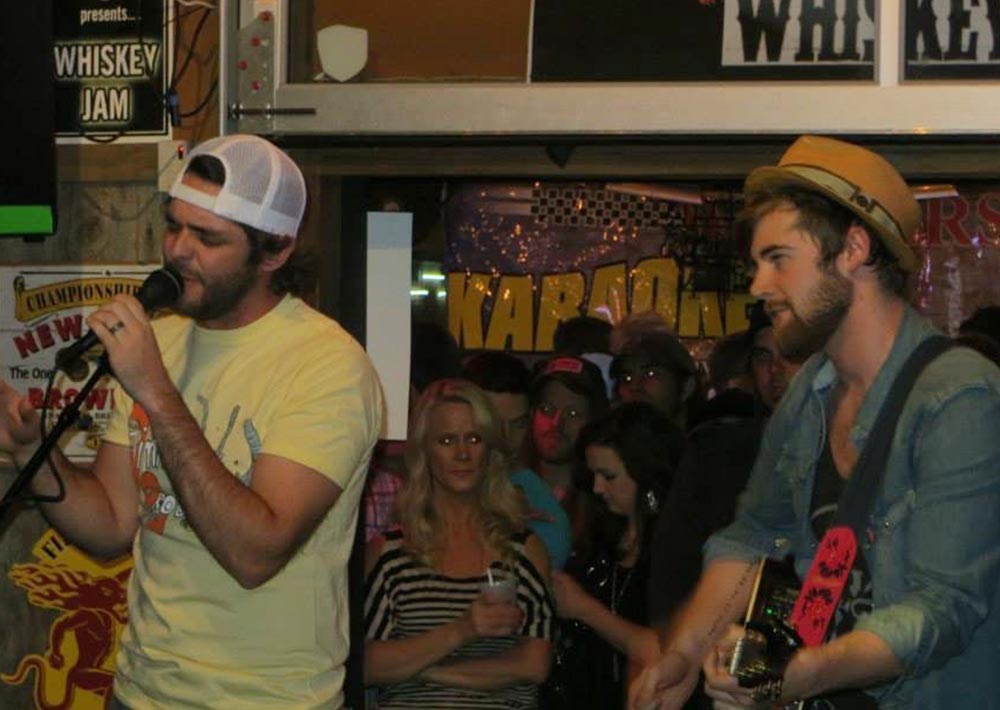
Jimmy Robbins performing with Thomas Rhett. Jimmy: “I’m usually serving somebody else’s dream or vision.”
Do you see writing and producing as two very separate roles, or do they frequently cross over?
“They do cross over, but I think of them as very different jobs. I’ve done albums where I really didn’t write much of the album at all, I just helped as a producer. I think it’s important that we have producers who will cut songs they didn’t write, because there was a chunk of time in Nashville where the writer/producer thing was getting a little like they were only wanting to cut their songs, and I just don’t think that’s good for anybody. I don’t think it’s good for the artist, I don’t think it’s good for the music.
“If somebody hires me as a producer… I’ve rewritten songs and not put my name on them, just to help the song be as good as it could be. I think it’s a different job. But, more often than not, if I’m producing a project, it started with me writing with somebody, and then them liking the demo, or liking the process.”
Do you have songs that you hark back to as the ones that you’re proudest of from a writing point of view?
“I have some, and some of them have not been big, and I’ve been surprised by songs that were big, but I go back a lot to this song… we wrote it so long ago, but this song called Love Triangle for RaeLynn, and that song, it did go to radio and stuff, but it wasn’t massive. It was written about her as a kid being caught in the middle between her parents when they were going through a divorce.
“I think we wrote it well, but I just loved that we wrote about something… I’ve not written another song about that. I hadn’t heard a song about that, from the child’s perspective. Any time we get to chase something unique, it stands out to me. Another one that I’ve always loved is a Gabby Barrett song called Growin’ Up Raising You. For me, that song’s about my daughter. To Gabby, it’s about her daughter, but I just haven’t had the opportunity to write many songs about my kids, so it was fun to do that, because I’m usually serving somebody else’s dream or vision.”
Is that what keeps you inspired, coming up with new ways to write about things, new things to write about? Is that what you’re chasing?
“It is the high of writing a song. Success and hits and stuff, it’s so fleeting. I’ve never had a hit and then been satisfied. It’s always like, ‘Cool, that one’s done. What’s next?’ My favourite feeling is still the end of the day, having made something that didn’t exist before, and then you know, go play it for my wife, or listen to it five times in a row. That’s way better than having a song perform.
“Especially with software, and what we’re able to create so fast now; having a tangible recording that sounds like a record, it’s wild, like, ‘When I had my coffee this morning, this wasn’t a song.’”
What are your ambitions for the next part of your career?
“Man, I don’t know that I have a goal. I’ve kind of done most of the things that I set out to do. It would be nice to win a Grammy. I’ve lost five. It’s an honour to be nominated, that’s what they keep telling me. It’d be sick to win one of those, but at this point, I really get excited by pouring into new talent. It’s always fun to have a song cut by somebody who is already there, but I really enjoy writing sick songs with somebody who’s not put out a record yet, and helping them find a thing.
“I’m tiptoeing into different things now. I’m writing some CCM songs [contemporary Christian music], which is a new thing for me, and spending a little bit more time back in the pop world. I think the main thing for me is I just can’t do the same thing every day. Some people really nail that, they find a lane and they stick in it and have a bajillion hits, but for me to keep going, I just need different.
“I still love it. I’m not that old, but I started doing this professionally at 14. I’m 37, so I’ve been doing it every day for 23 years. It’s been a good run and I’ll keep showing up till they stop calling me.”
Read all about the creation of Thomas Rhett’s iconic It Goes Like This in the latest edition of Songwriting Magazine and keep up to date with Jimmy’s latest adventures in songwriting by following @jammyrabbins on Instagram
More Like This
Interview: Jessie Jo Dillon
ACM’s Songwriter of the Year on her reluctant begi... Read More+How we wrote Little Big Town’s ‘Girl Crush’ by Lori McKenna
A Grammy-winning and six times Platinum tale of jealousy written by The Lov... Read More+5 minutes with… Kelsea Ballerini
The two-time Grammy Award-nominated songstress from Tennessee talks about h... Read More+5 Minutes With… Breland
As he prepares for the release of his debut album, the ‘My Truck̵... Read More+









More Like This