
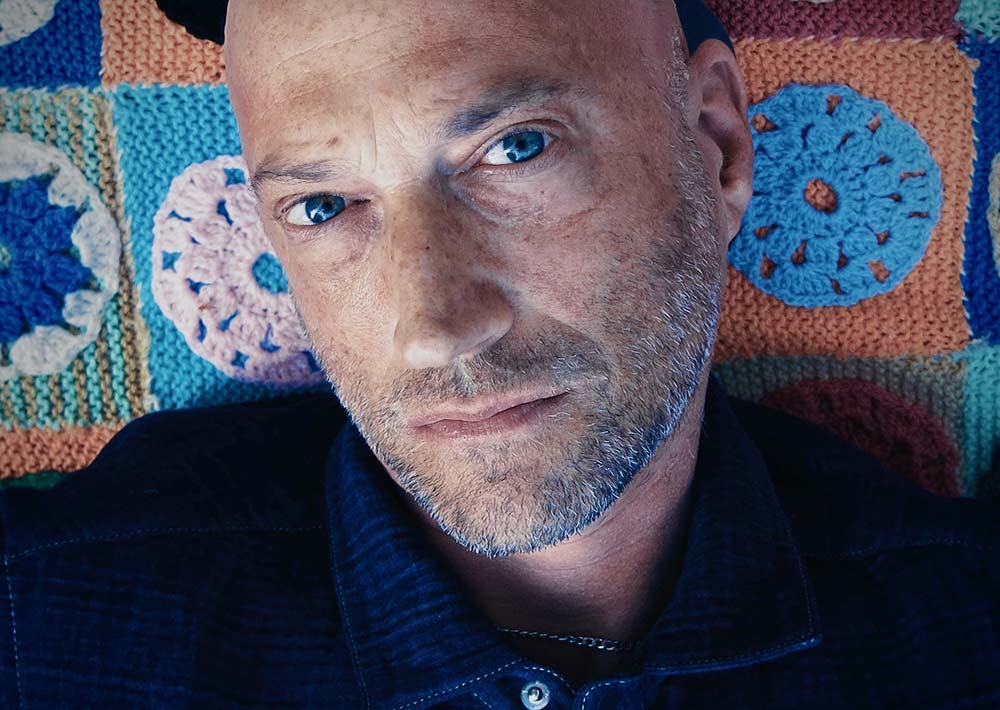
Richard Neuberg: “The particular instrument I use has always had a big impact on my writing, opening up moods and feelings with its own unique character.” Photo: Emma Neuberg
The former Viarosa frontman discusses grief, his process, and returning with The Vine after years living with a debilitating illness
Richard Neuberg is the former Viarosa frontman whose return with The Vine marks his first record after a 16-year hiatus. Previously, with his cult alt-folk/americana outfit, he released the albums Where The Killers Run and Send For The Sea, records that earned critical attention and touring slots alongside artists such as REM and Robyn Hitchcock. After the band dissolved, Neuberg continued working as a producer of some repute from his Oxfordshire studio, before the onset of the severe neurological condition ME/CFS in 2020, which gradually left him largely housebound.
For The Vine, written before Neuberg became ill, he collaborated closely with Johnny Parry and Rowland Prytherch, assembling arrangements of strings, brass and percussion around guide vocals. Sonically, the album moves between fingerpicked intimacy and broader, orchestrated passages, recalling the tonal restraint of Nick Drake and the spectral drama of Scott Walker. Songs such as Everything Dark Is Light and Crow Needs The Pine trace fragile continuities between grief, endurance, and renewal.
In conversation, Neuberg reflects on loss, persistence and craft with the same clarity that gives the album its quiet, searching authority…
Read more interviews with songwriters
Do you hear The Vine as a continuation of your earlier work, or as something that marks a new beginning for you as a songwriter?
“The writing of the album spanned across a period of transition, during which time I arrived at a different kind of voice as a songwriter. After Viarosa, I was searching for a new language to my songwriting, but this took some time, with a lot of material being discarded in the process. My old way of writing began to feel too known and familiar, and I needed to challenge myself more in every way: instrumentation, melody, lyric…
“I also wanted my songwriting to reflect something a little softer and more intimate. The songs written while I was in the band were deeply personal, but their narratives tended to be externalised into something more akin to storytelling. The songs of The Vine, on the other hand, are mostly very intimate pieces, focused in much finer detail on my inner world.
“The transition in songwriting was really helped along by some guitar changes. I found myself playing my semi-acoustic Gibson ES125 much more than my steel-string acoustic – it seemed to open up more space and depth. So, the earlier tracks on the album were written on the Gibson, like Gold In The River and Weed Out the Vine. But it wasn’t until I started playing a classical nylon-string guitar that my songwriting really shifted towards The Vine’s core identity.”
A magazine to keep. An archive to explore.
Get the latest edition, 40+ back issues, 3,200+ website articles and expert insights for songwriters
In what way did it do that?
“The nylon-string released my songwriting; it seemed to suit me so well, enabling new patterns of playing and finger-picking. Although this sounds quite technical, in terms of the focus being on the instrument rather than my intentions as a songwriter, the particular instrument I use has always had a big impact on my writing, opening up moods and feelings with its own unique character.
“So, to answer the first question, the album’s identity revealed itself quite gradually, but it’s not like I just stumbled upon something. I was really searching, even though I didn’t know exactly where I was going.”
When you sit down to write, where does that process usually begin for you?
“My songwriting process is quite an organic one, usually starting with an idea that comes from the guitar. As a kind of meditation, I used to sit with my guitar first thing in the morning and just improvise without any specific goal, try to enter a spirit of play and flow, allowing the unconscious to feel its way and express itself. And more often than not, a motif would arrive, a chordal/finger-picking progression, something like that. My songs would usually begin with that sonic origin, the guitar lighting the spark for melody and meaning to come forth.
“As said already, the tone and character of a specific instrument can have a big influence too, as can a particular tuning. I’ve always used a lot of open tunings. It’s like I give myself over to the nature of the instrument itself, which then leads the way.”
How conscious are you of shaping meaning as you write?
“The earlier stages of songs tend to be instinctual, sometimes with the sonic of a lyric arriving first, seemingly ahead of the meaning, although the unconscious is no doubt making itself known in the words that arrive. So, I can find myself with a heap of images, before I start to develop them with more direction. But once a song is in motion, the essence and narrative potential of it can become clear quite soon, at which point the process shifts into a more intense kind of work, with every syllable being as important as the next, both in terms of its meaning and its music.
“I become quite a rigorous editor, as I’m sure is the case with most writers at this stage of the process, working and reworking the piece until it resolves, and until the words can stand independently from the music.
“There is always the odd song that seems to write itself from the start, with the lyrics and narrative shape unfolding very quickly. This can override the usual process somewhat, and feel less like work, more like finding a book on a shelf that you didn’t know was there.”
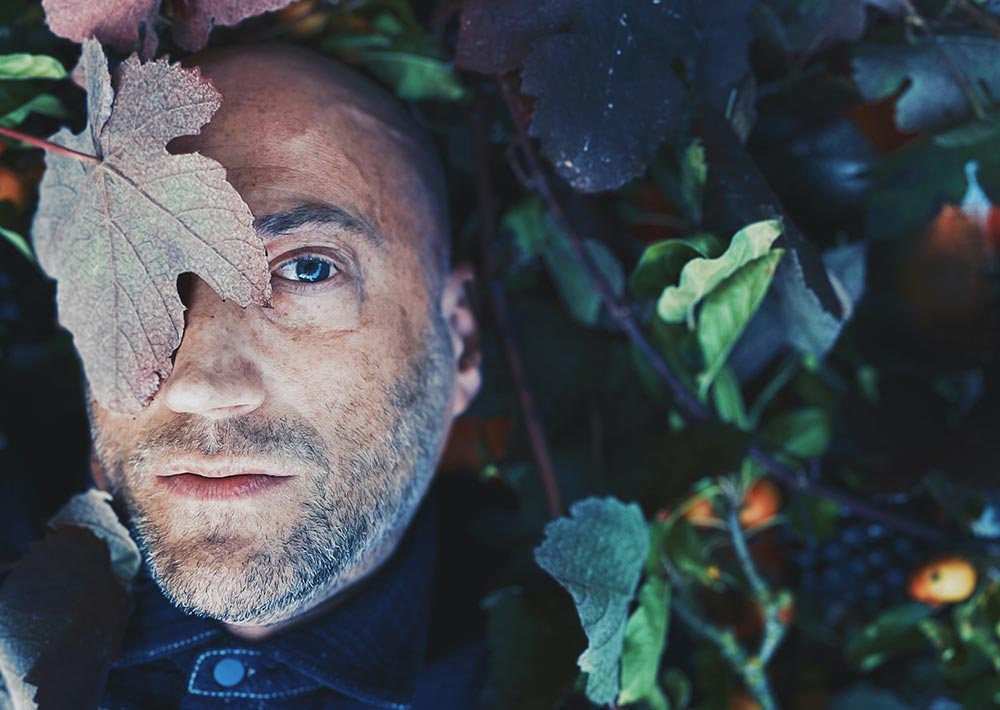
Richard Neuberg: “I’m always trying to connect what might seem very personal to me with something more universal about human nature.” Photo: Emma Neuberg
You’ve described some of these songs as “self-portraits.” When something personal finds its way into a song, how do you decide how directly to approach it?
“Pretty much all of the songs on The Vine are intensely personal. Except for one sociopolitical song, A History, written as I was reeling soon after the Brexit vote/debacle/tragedy. I guess what I was trying to say in terms of things being self-portraits, even though not consciously so, is that even if you’re painting a landscape or writing about something seemingly outside of yourself, it’s inevitably a projection of the internal in some way.
“But The Vine is a very intimate and personal album, about my inner world, and the journey of my life with my wife Emma, as well as being about other close relationships too and how I absorb the world around me. In terms of finding balance between how much is revealed and what might remain more private, I think songwriters are always dancing with that boundary of how direct the language is. So, every word, every line, is weighed up in terms of that balance. And at the same time, I think I’m always trying to connect what might seem very personal to me with something more universal about human nature.”
How do you navigate the space between darkness and hope?
“Even if the subject matter is quite a dark one, if there is no lightness at all in the way that it’s expressed, then I think the one-dimensionality of that can be limiting, as well as being difficult to digest for others. The less nuance there is to an image, the less interesting it usually is, I think, and this balance is not just with the lyric itself, but also with the melody and harmonic structure too.
“Nick Drake had such an exquisite balance between light and dark, and so, despite the melancholy, his songs never feel heavy, not to me at least. Instead, I think the depth of his music embeds itself deeply because the listener opens up to the sweetness, without defending against it.
“I guess I do feel a kind of responsibility to find some lightness within a song, but maybe this has something to do with my need to be accepted, not wanting to be too sombre and scare off the listener, even though the subject matter might be terribly sad.”
Has that influenced your decision-making at all?
“I’ve discarded plenty of songs because they just felt too sad, too raw, too painful. I think I was bolder and, in some way, less compromising when I wrote for Viarosa, less concerned with the intricacies of songcraft and more committed to expressing raw energy in some way. And as the band developed, its sound and identity contained me and gave me confidence in that bold kind of expression. But the years have changed me quite a lot, I think, they’ve softened me and made me more vulnerable in some ways. So, the desire to lighten my palette is wrapped up with all of these different elements.”
Are there songs on The Vine that you feel best capture your current process?
“As I’ve described, most of my songs start from a motif on the guitar, and Bells And Whistles is a pretty good example – I think it was actually the first song I wrote on the nylon-string guitar. I was playing about with various rhythms, and I stumbled upon a pattern that seemed to conjure an interesting world, with something almost circus-like in the swing and waltz of it.
“I remember having a chat with my mum soon before writing it, and me saying that I just wasn’t into bells and whistles, not into making a big fuss or a big show of things, preferring to stay low-key in some way. So that was why that phrase arrived as the second line and does the central motif. As the song developed, it soon became clear to me that it was about the endeavour of the creative life, and the imagery arrived so quickly, the idiosyncrasy of the guitar progression really helping to conjure the unique world of it into being.
“The way the chorus opens out with a call and response between the guitar and the vocal helps it move and open out, I think. And this just seemed to come so naturally, one of those rare songs that seems to write itself.”
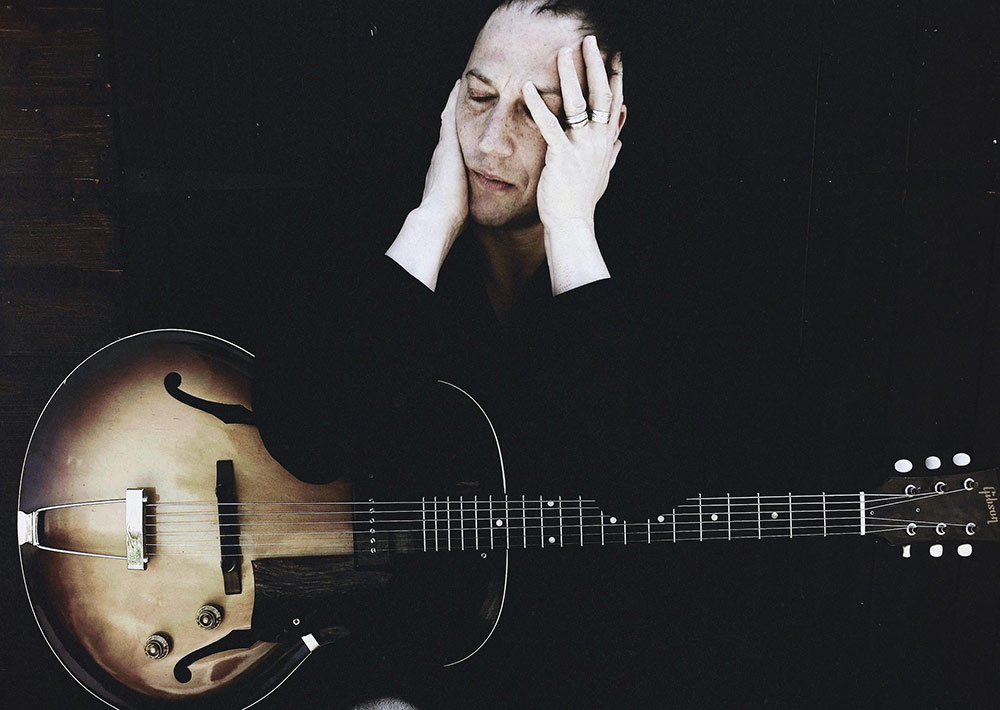
Richard Neuberg: “I think of the voice as a similar anchor in song as it is on the stage.” Photo: Emma Neuberg
Any others?
“Weed Out The Vine was the earliest written and recorded song on the album. I’d been listening to a fair bit of African blues – like Ali Farka Touré and Tinariwen – where the vocal melody often moves along with the guitar riff. And this, combined with playing a rolling triplet arpeggio, seemed to come together and create the mood and melody and rhythm of the verse. And then there’s also something of the African blues in the rolling guitar phrases at the ends of the verses, too.
“There’s a freedom to the song structure; it doesn’t really have choruses, but it just seemed to evolve in its own way. There was a real intention to the lyric. It’s a love song to my wife, and a kind of document of some of the pains that we’ve been through together.
“The recording itself was just supposed to be a demo of the track, and there are some improvised sections, including the last two minutes of the track. I didn’t really know where I was going with it; I was just enjoying the sounds that were coming out of my speakers. The feedback was being helped along by one of the guitar amp mics going through my Culture Vulture unit that distorts the signal in unusual and beautiful ways. I would often record electric guitars like that, with one of the mics facing the back of the amp and then run through the Culture Vulture. As well as the distortion, that mic would add a real heft and weight and beautiful low end to the recording.”
How does collaboration fit into your process?
“I had quite a few songs written for The Vine before I approached Johnny [Parry] about collaborating on the album. I wasn’t thinking much beyond voice and guitar to begin with, but when I started thinking more about the recording of the record, I knew that I wanted to be quite ambitious with it, and I could hear how strings could be the third voice of the record’s landscape.
“I’d met Johnny while touring together in Germany and I’d been bowled over by his work. He’s such a lovely human being, too, so I knew he’d be a brilliant person to collaborate with. Once we’d started working together, it became very clear that the chemistry was really working, and so I did have Johnny more in mind during the writing of the remaining songs. That said, whenever I’m writing on my own, it’s always just me and the guitar in my own little world.”
How about back in the Viarosa days?
“The early days of Viarosa was very much a collaboration with my dear friend Josh Hillman, who played the violin and viola. We’d always loved so much of the same kind of music and so the origin of the band’s sound germinated from that, especially from bands whose sound strongly featured the violin, like The Velvet Underground, The Waterboys, Dirty Three and The Bad Seeds (all things Warren Ellis).
“As the band developed, I certainly had our sound in mind as I wrote, but not really in terms of specific melodies or textures. That’s the beauty of bringing a song to a band, each player expressing themselves and their own interpretations into the sound.”
Do you think about the role of the voice in your writing?
“For my own material, yes, the voice is a kind of anchor – that’s a good word for it – the weight and the body around which all of the other of the elements balance, both in terms of melody and the quality/timbre/density of the voice. I trained and then worked as an actor for a few years before I committed to my music, and I think of the voice as a similar anchor in song as it is on the stage.
“As I’ve spoken about already, when I write, the music and sonic of a lyric is often married to the meaning of it. I’m sure it’s the same with most songwriters, as it is with poets. That’s why poetry needs to be spoken: so much of its meaning is lost when its music remains dormant on the page, without the lilts, modulations, and inflections of intended meaning released through the voice.”
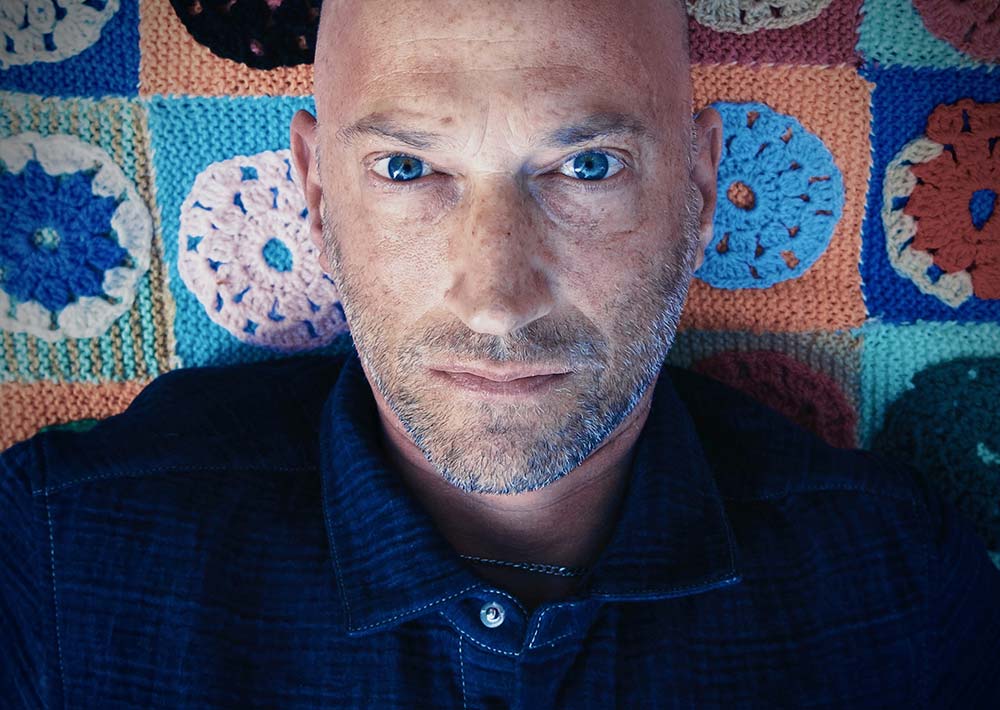
Richard Neuberg: “The strongest songwriters tend to be very specific with their language.” Photo: Emma Neuberg
That’s a very interesting way of looking at it…
“The more a voice knows itself, the more confident and embodied it is in its identity, the more of an anchor it probably is. I’m thinking of voices like Leonard Cohen, Joni Mitchell, Lou Reed, David Bowie… For many artists, it’s not quite like this, of course, there are so many different ways for the voice to exist with the music around it. But the voice has always had a significant role in everything I’ve ever done.
“This is one thing that I’ve found hard about releasing the album, because only three of the eleven tracks have properly recorded vocals on them. The rest are guide vocals, some of them just one take of hurriedly putting down vocals on a dynamic mic before the strings players came in to record. My health hasn’t been good enough to re-record those vocals, so I’ve just had to accept using the guides. Some have said to me that maybe this gives the recordings an extra kind of intimacy to them, but I can’t help but feel that there was much more to come from my vocal performance.”
A large part of The Vine was written and recorded before you became ill. How has that experience affected the way you think about songwriting now?
“Actually, I’ve written very little since my health deteriorated. I’d pretty much finished another album before I became unwell, and I was still working on it a little in the earlier days of the illness. But I haven’t actually been able to play the guitar for several years now; the energy of it pushes me over the edge and triggers intolerable symptoms, even if I play for a short while.
“It’s upsetting to speak about, of course, the guitar has been such a companion in my life, it’s been an anchor and a source of peace and stillness, as well as the home of creation. It’s quite hard to even write these days, in a notepad or on the computer. I use dictation for pretty much all of my writing now, and I’m very grateful to have the option. Of course, I really hope to find a way back to playing and to songwriting. It’s how I’ve made meaning in my life. It’s how I’ve found solace. Being without it has been very hard, alongside dealing with the crushing nature of the illness.”
Looking back across your journey, from your earlier work, through your years as a producer, to this record, what do you feel has remained constant in your approach to songwriting?
“I don’t think much has changed in my approach to songwriting over the years. Keep turning up by the edge of the river, cast out the line, and see what comes back. It’s very much about trusting in that process. There have certainly been times when that trust has fallen away a bit, as it has right now, having not written for a while. But ‘trust in process’ is a fundamental in being an artist I think, and one becomes more accustomed to and confident in that process the more one practises one’s craft. I’ve kept searching and trying to learn from other artists too, and those inspirations have been forever changing over the years.
“I did reach a certain point when I felt like I needed to challenge myself more with my songwriting in all ways: instrument, melody, lyric. And I dedicated myself more to the guitar, working hard on fingerpicking in particular, as well as exploring different melodic and rhythmic structures in how the voice might work together with the guitar. I must acknowledge my dear friend Ed Laurie here, with whom I’ve made a few albums. Ed inspired me with his guitar playing, and with his dedication to the instrument and to his writing. And I might not have embraced the nylon string when I did, had it not been for Ed.
“My approach to how I might produce or record songs certainly evolved and fine-tuned over the years, but that’s a whole other subject…”
What role does environment play in your writing?
“The landscape around me has had a huge impact on my writing, especially since moving away from the city. I was born in London and spent most of my years there before we moved out 15 years ago. Where we live now is raw and rural, on the edge of a moor. And as time has passed in this place, I’ve felt myself and my writing merge with the environment, my molecules changing, absorbing the earth and trees and sky and water around me. “It’s not that I’ve mined my songs from the surrounding landscape, more so that my internal world has found echoes and translation in what’s around me. We are part of the natural world and so it inevitably has the language to express who we are and how we are.
“The strongest songwriters tend to be very specific with their language I think, rooting their imagery in the everyday, physical world around them, rather than just expressing how they might be feeling with abstractions. I always have that in mind when I write.”
Finally, after everything that’s shaped this record, what does the act of writing a song mean to you now?
“The act of writing is all of those things and more; making meaning and transforming experience. The making of marks, whether it be words on a page or lines on a drawing, is very bound up with mortality and the need to make ‘bodies’ of work, in the knowledge that the body itself is transient.
“Joni Mitchell’s album Blue had a huge role in my childhood and in later life too, for all sorts of reasons. Especially the title track, which had some sad prophecy in it too. Some of the lines – “Songs are like tattoos…” and “… Ink on a pin, underneath the skin, an empty space to fill in” – are connected with what I’m saying about the act of creation in the face of mortality.
“There’s actually something of this in the very first line of The Vine – “Stars under your skin”, which refers to the tattoos of stars my sister had on her toes. Inspired by the song Blue, my sister Anna and I got tattoos together in our early teens, quite soon after our father died. We were trying to make meaning, I think, from the loss that we were experiencing. This same kind of act, the need to make marks, then evolved into what drove us as artists, although Anna had very few years in which to express her artistry – she died when she was 20. I’ve carried her with me since then, in many ways endeavouring to create for the both of us.”
Richard Neuberg’s new album The Vine is out now. Find out more via richardneuberg.com
More Like This

Zucchero: My Songwriting Hero, Bono
The ‘father of Italian blues’ waxes lyrical about ... Read More+Interview: Mark Lanegan
Screaming blues messiah: the alt-rock godfather talks about his new album &... Read More+5 Minutes With… Bess Atwell
The Brighton-based singer-songwriter on finding in... Read More+








More Like This