
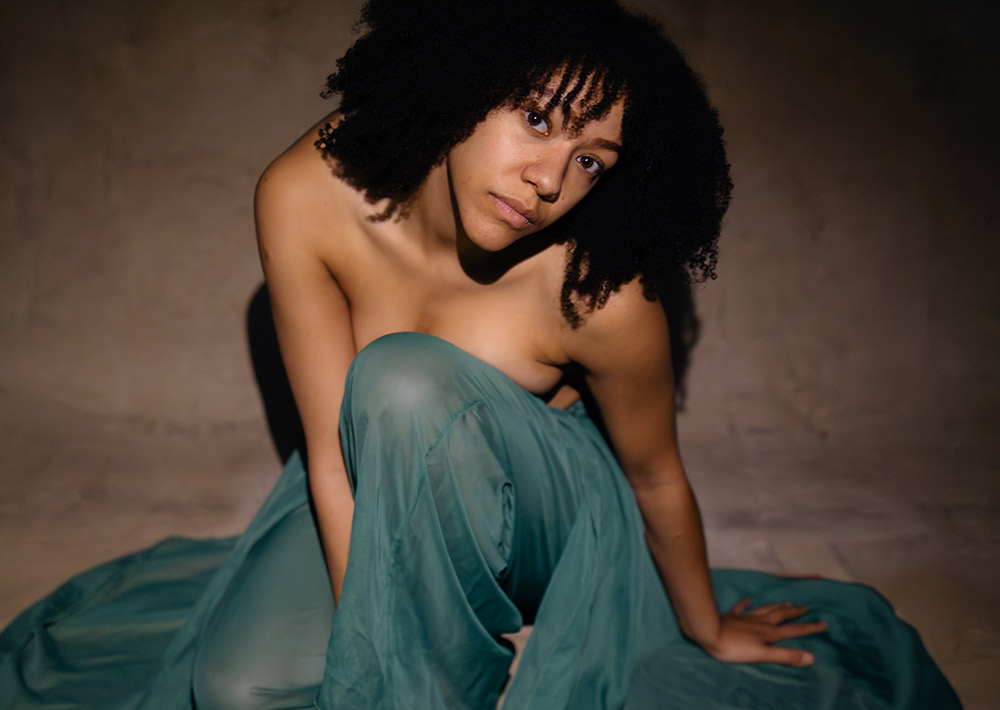
Sanyu: “I was in the habit of making voice memos in which I would recite my dreams immediately after waking.” Photo: Heidi Henriksen
The Norway-based musician’s meditation on future ruin and present complacency, shaped through jazz propulsion, fragmented dreams, and quietly political songwriting
Since the release of her 2024 debut EP Now You Hear It, Oslo-based musician Sanyu has attracted attention for a style that combines soulful composition with exploratory arrangements and sharply observed lyricism. Following the acclaim surrounding that release, which earned the Norwegian Lyricist Fund’s Lyspunkt Prize, her debut album Circumspect only enhances her reputation through songs shaped by political unease, fractured relationships and questions of personal responsibility.
Written across Oslo, Copenhagen and Berlin, the record balances intimacy with wider societal anxieties, drawing on improvisation, spoken word, and groove-driven arrangements. In the following feature, Sanyu examines the origins of album standout Future Display, a striking meditation on radioactive waste, collective memory and the unsettling legacies modern societies may leave behind.
Read more Song Deconstructed articles
INSPIRATION
This song was inspired by reading about underground waste stations built for radioactive waste. The waste, which will continue to be radioactive and highly dangerous for hundreds of thousands of years, is stored deep beneath the ground where nobody would venture nowadays, but the problem that arose was how to communicate this danger to future generations, especially as we have no idea what language they’ll be speaking – if any.
Experts within arts and science were appointed the task of trying to create such a warning sign. I found this idea fascinating and wrote this song based on this phenomenon, as well as an apocalyptic dream I had, in which humanity was becoming extinct.
LYRICS
As a starting point for this song, I was fascinated by the summary given by the Sandia National Laboratories to indicate what the intended message signalising the danger of the waste station should convey. The opening line of the song is a variation of one of the lines in their summary: “No highly esteemed being is dead or commemorated here.”
Also, at the time of writing this song I was in the habit of making voice memos in which I would recite my dreams immediately after waking. Some of the descriptions from one dream in particular – which had a similar quality to the lore of the article – became lines in the song.
“For some reason my unconscious mind was convinced of this: MIB’s with letters replaced by guns,” is a reference to a scene in my dream in which I found a ‘mail in bottle’ washed up on a shore, but instead of containing a letter it contained a gun. I interpreted this as an indication of which values and messages we as a collective society seem to be passing on to future generations through arms races and militarisation. At the same time as so many innovative developments occurring at a speed which is hard to follow, there still exist so many perpetual, unsolved issues which don’t seem to get the same urgent dedication.

A magazine to keep. An archive to explore.
Get the latest edition, 40+ back issues, 3,200+ website articles and expert insights for songwriters
As the album title Circumspect suggests, my lyrical approach to the themes in these tracks is often wary and heedful of potential consequences of my own and other’s actions. However, in the outro of this song I wished to take on another approach, questioning the basis for any scepticism or attributing certain outcomes with any specific value, good or bad, and rather viewing them as inevitable. After all, the current generation of humanity have taken seemingly no harm in “invading” or “exploring” (depending on how you view it) a long list of historical landmarks of which we have no certain knowledge as to their intended use or purpose – which may apply to the waste stations in the future.

Song Deconstructed: ‘Falling My Friend’ by Courting Ghosts
By following where the music wanted to go, the Bath band conjured up the ti... Read More+Song Deconstructed: ‘Animal (Acoustic)’ by Mogli
Stripped back and acoustic, what this reworked song lacks in bold electroni... Read More+Song Deconstructed: ‘Bird On A Swing’ by Cory Hanson
Soon returning with his fourth solo album, the Wan... Read More+


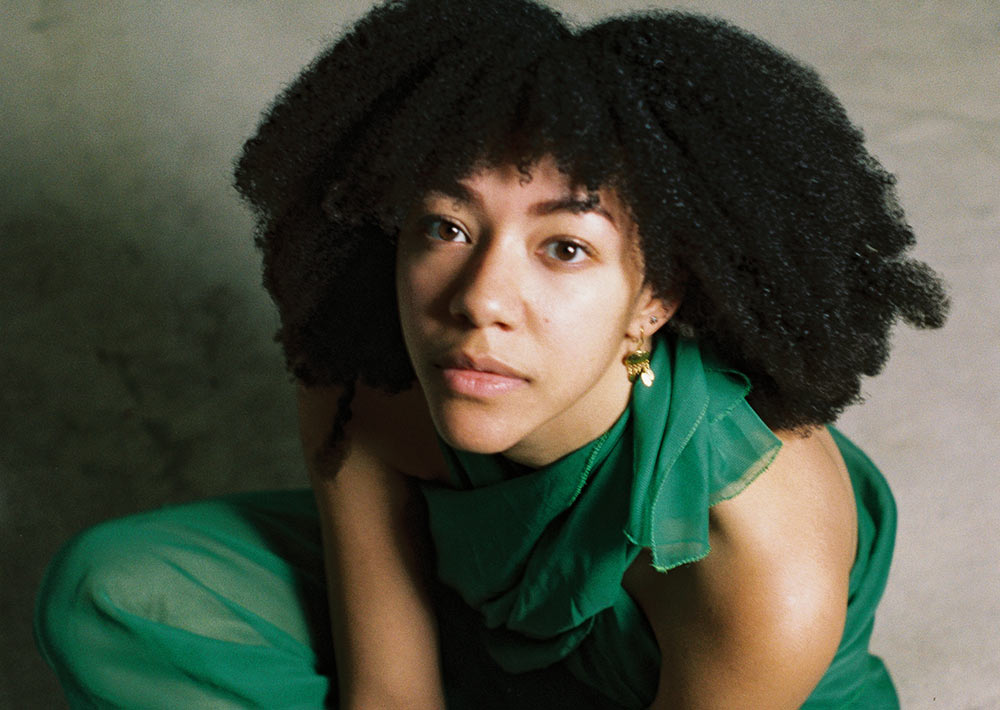
Sanyu: “I like to “borrow” and “swap” certain sections between recordings and songs.” Photo: Chai Saeid
MUSIC
When I first wrote the lyrics to this song and recorded a demo version it was far mellower than the version on this album. I had a rather calm voice when reciting the lyrics over a drum loop and enjoyed the idea of going into a robotic character seemingly unmoved by what they were describing. When I brought the song to my band however (at the time Rino Sivathas, drums and Rafal Rozalski, double bass), we tested out different versions, and adding a harder groove and tone eventually made more sense.
I was also listening to a lot of Sons Of Kemet at the time which I think influenced the direction the song developed in. There was also a line that I cut from the song which stated: “This message is a warning about danger” (another line from the example given by the Sandia National Laboratories). So, a part of me intended to carry the energy of a warning message into the musical side of the song.
The outro takes the song in a very different direction lyrically as well as musically. From a steady, pulsating vamp the song abruptly dives into a rubato harmonic progression with a tinge of medieval folk beneath vocal harmonies reflecting the likes of Björk and Susanne Sundfør. I think the retrospective glance present in the lyrical content here made me want to enhance a more traditional soundscape.

IN THE STUDIO
I had played this song live many times with my band prior to recording it, so the studio version is rather close to the live version. We recorded the foundational elements: drums – Rino Sivathas, bass – Joachim Mørch Meyer, and myself on vocals, live in the studio and I later added percussion elements, harmonies, and recorded Kristina Fransson’s trumpet sections.
There are also a few sections extracted from other live recordings we had made earlier. For instance, the processed trumpet in the intro, as well as some of its comments throughout the song, were from a live concert made over a year prior to working on this production. I often do this in my productions: my hard disk is full of so many cool sounds and recordings that I like to “borrow” and “swap” certain sections between recordings and songs. Such as the short “breath” samples in the 7/8 drum and rap break. These are originally from Make Some Noise, another single from the album.
The blend of electronic and acoustic elements was also important to me, so there are sections with dubbing of the double bass with Moog, as well as the acoustic drums being dubbed with electronic percussion and vocal samples. Kristina also originally recorded some guitar on the studio take which eventually was shaped more like a processed sample dubbing the synths.
FINAL THOUGHTS
This was one of the first songs I knew I wanted to include on the album, and so the album’s working title was actually What Do We Envision, a line from this song. We’re living in a time with so many rapid changes, so picturing hundreds of thousands of years into the future seems impossible and only getting harder with each year that passes.
This song intends to express a sense of alarming urgency questioning the link between the futuristic potential crisis described in the article with unresolved matters of our current age. Maybe the constant desire to expand and discover or “conquer” new fields could ultimately be to the detriment of our existence? If Silbury Hill had contained highly radioactive waste, would we have had the tools and knowledge to avoid the consequences of venturing into such areas?
Sanyu’s debut album Circumspect is out now listen to it at ffm.to/circumspect and find out more from sanyu.no
More Like This
Song Deconstructed: ‘Untie The Ropes’ by Komraus
The London-based cinematic electronic outfit’s singer and songwriter,... Read More+Song Deconstructed: ‘Falling My Friend’ by Courting Ghosts
By following where the music wanted to go, the Bath band conjured up the ti... Read More+Song Deconstructed: ‘Animal (Acoustic)’ by Mogli
Stripped back and acoustic, what this reworked song lacks in bold electroni... Read More+Song Deconstructed: ‘Bird On A Swing’ by Cory Hanson
Soon returning with his fourth solo album, the Wan... Read More+





More Like This