

Seafret. Jack Sedman: “You don’t know what it is you’re making at the time, but we seem to be aligned in where we’re headed.” Photo: Jennifer McCord
With a new album, anniversary reissue and Atlantis still casting a long shadow, the duo reflect on 15 transformative years
Fifteen years after forming in Bridlington, East Yorkshire, and a decade on from the release of their debut album Tell Me It’s Real, Seafret find themselves reflecting on a career shaped by both persistence and unpredictability. Following the release of their fourth album Fear Of Emotion, which features collaborations with James Morrison, KT Tunstall and Katie Gregson-MacLeod, singer Jack Sedman and guitarist Harry Draper are now revisiting the record that first introduced them with a 10th anniversary reissue of Tell Me It’s Real.
Both albums arrive after a remarkable second life for Atlantis, whose viral resurgence transformed a decade-old song into a global phenomenon and a UK Top 40 breakthrough long after its original release. A song that embodies the duo’s ability to hang their folk foundations inside a much bolder frame, its staggering streaming numbers (over a billion and counting) place it alongside some of the biggest names in music.
As Seafret balance renewal with reflection, Sedman and Draper discuss songwriting, longevity, collaboration, and the strange reality of watching an old song take the world by storm…
Read our 2016 interview with Seafret here
It’s now 15 years since you were formed. Are you people who stop and take stock, or are you always looking ahead, forging on?
Harry Draper: “We haven’t stopped. When Atlantis went a bit crazy, it gave us a bit of time, and we did sit back then and go, ‘Right, let’s have a bit of a breather here.’ But the last 10 years have flown by because we’ve constantly toured from one album to the next.”
Jack Sedman: “I’m always thinking about what we’re doing next. I think I always will. That’s what keeps us going, and writing – the love for doing it. We do it because we enjoy doing it and because it’s what people say we’re good at.”
When it’s writing or recording time, will you discuss how you want to change things up, or is it more of a gentle evolution of your process?

A magazine to keep. An archive to explore.
Get the latest edition, 40+ back issues, 3,200+ website articles and expert insights for songwriters
JS: “It’s been a lot of different things. When we started out, we wanted to be completely stripped back, acoustic. Everyone in our hometown, the people who had seen us at the time, were saying, ‘Don’t change.’ Then, we started working with producers, and they showed us what could be done with our sound while keeping its integrity.
“Give Me Something off Tell Me It’s Real – I never expected to have those electronic elements in it, but it really works and sits nicely in the mix. That was a bit of a door opening for us. We were like, ‘What else can we do?’ Harry plays guitar, banjo, piano… so we had a lot to dig into.
“Live influenced it as well. We knew that there was a bit of a lull if we had too many slow songs. You go into the studio thinking, ‘We need something that’s going to be bigger on stage,’ but it all came naturally as opposed to sitting down going, ‘We’re gonna write a song and we’re gonna write an album about this theme.’”
HD: “When we did Tell Me It’s Real, we hadn’t toured before. We’d done a lot of gigs, but we’d never gone out on the road for three or four weeks. Once we’d done that tour and we went into album two, album three, live did come into it a lot – thinking, ‘Do we need something a bit rockier here?’ It definitely influenced a couple of the songs. We still write lovely, soft, sad songs, it’s just the odd one.”


Songwriting Magazine Issue 31
Savan Kotecha, Sophie B. Hawkins, Freya Ridings, Seafret, Kent Blazy, Ines ... Read More+On The Stereo #10
Superb songs from Seafret, Childish Gambino, John Grant, Christine And The ... Read More+Interview: Martin Terefe
The award-winning Swedish producer, songwriter and musician talks about his... Read More+




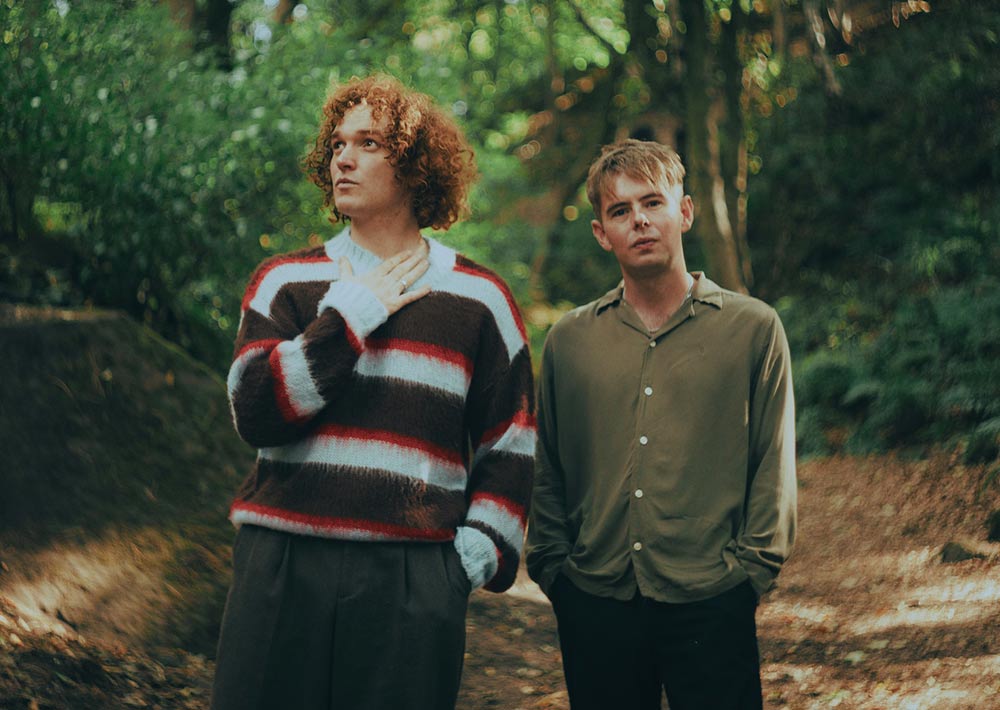
Seafret. Harry Draper: “I need to have that time to come up with something, and Jack’s the same with lyrics and melodies. When we do bring that together, that’s when we make it into magic.” Photo: Nat Michele
Has the actual process of writing changed?
JS: “It’s certainly evolved, but the base of it is the same, isn’t it?”
HD: “It normally starts with either my guitar part or piano part, and then Jack will write some lovely lyrics over it. We delve into each other’s worlds a lot more than we used to, but the bread and butter of it is still just us two. Jack’s still the lyric man, but Jack’s a good player now, so he’ll come up with parts.”
JS: “That’s just come with doing it for a long time and being more comfortable with each other, being open to say, ‘Why don’t we change that chord in this section?’ Or, ‘Try this, I want to hit this note.’ Harry will be like, ‘I love it, apart from this section.’ We’re happy enough to be able to do that and not be annoyed and storm out.
“We’ve got the same end goal in sight, subconsciously, without actually saying what it is. You don’t know what it is you’re making at the time, but we seem to be aligned in where we’re headed; whether we arrive at the exact thing we think it is, or we get to a point where we’re both satisfied. We are going in the right direction all the time.”
Do things work best when you’re constantly in each other’s company, or do you need time apart?
HD: “I think we need both. We’re better when we’re together and we get more done. But especially for me, coming up with guitar stuff, it’s when I’m sitting on the sofa at home on my own. I need to have that time to come up with something, and Jack’s the same with lyrics and melodies. When we do bring that together, that’s when we make it into magic. We wouldn’t necessarily get that magic on our own, but we’ve got the core of that first initial idea. We use voice memos a lot…”
JS: “Wonderland was all in lockdown. That whole album was WhatsApp voice notes, forwards and backwards to try and build these song ideas. It kept us busy. Harry studied production through lockdown, didn’t you…”
HD: “I produced that record. I guess it saved my mind during lockdown. It gave me a bit of a purpose. Those skills are priceless to me now because I can use them to my advantage. I think there are a lot of producers now. You look at Spotify credits, and it’s like, ‘Produced by the band,’ and a lot of it has come from that time. They still wanted to write and get stuff down. Everyone bought a second-hand MacBook Pro.”
Did the Atlantis stuff kick off around that same time?
JS: “It was creeping in. It’s still crazy now. It’s one of those things that you almost stop thinking about, because it’s taken on its own thing. Now, we don’t get any messages, because it used to be, ‘I heard it in Tesco,’ or ‘It’s come up on a video on my TikTok.’ Then, after a while, people just stopped caring.”
HD: “We didn’t have TikTok when it all started kicking off and it was Jack’s niece who said that it was going mad. So, we had to get TikTok. Then we watched it and got excited. The main thing it did was give us time and space to do this new record and not feel like we had to rush, because that took up such a large part of Seafret online. We didn’t have to worry about posts and we didn’t have to worry about new music. We took a bit more time on this new record and made sure we made it as good as it could be. It was a gift in that sense.
JS: “It’s what you want. The end goal of what you’re trying to do… you’re trying to make a song that a lot of people enjoy and share organically. It was released years ago, and it’s just sat there and done nothing, then all of a sudden, it lifts up.
“We work with Roy Stride from Scouting For Girls, a great writer, and he always said, ‘That song is going to be a hit.’ We nearly dropped it from the live set because we couldn’t make it work. Roy was like, ‘Keep it, it’s the big song.’ All of a sudden, years later, it had its moment. We’re so proud of it. It’s incredible. It’s hard not to compare it to your newer numbers of streams and listeners. It’s a monster at the top, doing its own thing. Everything else feels like a failure underneath it. But it’s not, because any of the songs could have a moment, and it shows it’s possible.”
And the streams that you have for new songs, there’ll be artists out there who would sell their parents for numbers like that…
JS: “When we first put it out, we watched Give Me Something do 100 listens, 1,000 listens, 10,000 listens… We sat in that little bedroom in London, in our crappy little flat, and we were absolutely buzzing. The first song that we’d ever put out, and we’d got this reaction from people listening to it. It’s like that now when we put a new album out. It lifts you up again.”
You’re not trying to forensically break Atlantis down to learn why it works and what people like about it so that you can do it again?
HD: “You can’t do that, because no one bloody knows: no record label knows, no writer knows. It just happens.”
JS: “If we wrote a song called Atlantis Two, even if it was crap, I’m sure it would get quite a lot of streams.”
When did you start writing the songs for Fear Of Emotion?
HD: “Most of that was started from scratch in a studio in London. We went back in with the producer that we did the first record with, Steve Robson, and a lot of them songs were written in a day.”
JS: “They all started to feel like a collection from the same family. We’d written a lot of songs outside of those sessions, but what came to us in the moment, together in those rooms, felt like it should all be together: acoustic songs, big songs, electric songs, and all different things we’ve been trying out.
“When River Of Tears came together, and the production was darker, and Five More Seconds, written with KT Tunstall, it started to feel cohesive. We just followed that train. We didn’t set out with a thing in mind of, ‘’This is going to sound like that,’ In the room, we played ideas, whatever came to us, or whatever we’d stumbled upon in our homes, and then tried it out in the room until people went like, ‘Oh, that’s good. What’s that?’”
Read Song Deconstructed: ‘River Of Tears’ by Seafret
Would you have a bank of lyrics already?
JS: “I write stuff all the time, on my phone. I used to have a pad, which is much more ‘artisty’. I’ve got books and books of written stuff, but then finding stuff is a nightmare. I write ideas in a book, and then it’s like, ‘Oh, what did I write the other day?’ I would just open it and write, so I can’t find anything. In the phone, I’ll put “concept” or something next to it, so that I can search it, and then they all come up. My voice notes on my phone, if I record anything, I put two little asterisks if it’s good, three if it’s better, and then I can search that, and the best ideas come up.”
Does the lyric ever prompt the music?
HD: “We’ve never done it that way.”
JS: “It’s probably something we’ll come to down the line, but it’s always worked lovely: there’ll be an idea, we’ll shape it, and then we’ll have this amazing piece of music with rough, scatty words, and a melody over the top until we’re like, ‘That melody is brilliant. We love it.’ And then it’s, ‘Right, now let’s write the song.’ Then you sit and write the song, or it sits in your folder for two years. Sometimes it happens in an afternoon, sometimes it takes a while.
“It all goes off the feeling of the guitar, whatever it conjures up inside me. I’m like, ‘That’s the song. That’s how it feels.’ I wouldn’t start trying to force a hard concept onto something that felt completely wrong, because it would be imbalanced.”
HD: “Yeah, you’re right. I’ve always thought you were the sad one, but maybe it’s me.”
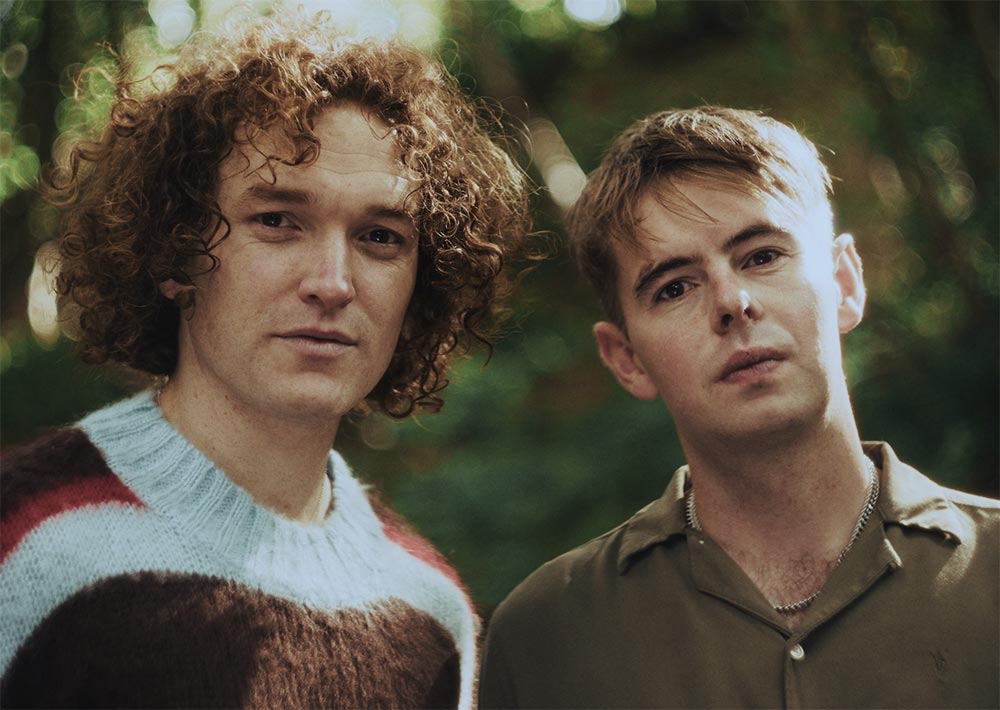
Seafret. Jack Sedman: “You’re trying to make a song that a lot of people enjoy and share organically.” Photo: Nat Michele
Do you ever talk about the meanings behind the songs?
JS: “I always write from a personal place that I can deliver live, not just make up some nonsense or crap that I hope sells. There’s usually something that’s gone on and it’s in the past – it could be a year or six months. It’s never that I’m going through it right there and then, like, ‘Oh my god, I’m so sad. I’m in a breakup. I’m going to write a song,’ because that’s insane.
“We’ve had people in the industry say, ‘Go out and take drugs,’ or, ‘Get your heart broken,’ it’s like, ‘You’re gonna get better songs,’ all that kind of shit. It’s crazy, all that’s still out there and happens. We’re not gonna do that. You’ve got to try and write the best songs you can, if you can get away with writing songs for a living and playing music for a living today… It’s getting harder and harder. I wouldn’t want to be starting now.”
Even touring feels harder than ever…
JS: “It’s so expensive it’s ridiculous, if you want to do anything properly. We used to just jump in a van and all share hotel rooms, and it’s fine, but if you actually want to put on a good performance and be rested and have a good time, then it costs loads.”
HD: “When Spotify came, it was like, ‘Oh, but I’ll still make my money on the road,’ but now everything’s so fucking expensive that even that’s been pulled away from you.”
JS: “The ticket prices go up, but the fees don’t go up for the bands.”
Do you feel any outside pressure from your label, publisher, or even your producers, because their livelihoods rely on you to write a successful record, or are you able to shield yourself from that?
HD: “We’re lucky that we don’t have people around us that specifically say that to us… We’ve got a lovely label now called Nettwerk. They don’t pressure us for songs and they believe in everything we deliver. Our management’s great too.”
JS: “Our management have got a couple of big bands. They pay the bills, so the pressure is off us in a way. We’re not the biggest name they’ve got, which is great. Obviously, you want success and I think it’s at a great level right now. We’ve both got families, we’ve got kids, so balancing all that work and time away and everything… Seafret is in a really lovely place; we’re able to do the music, we’ve got the tours, and we can push on after this, which will be great.
“We’re excited about the next record already. It’s going to be an organic, stripped-back, beautiful record. It will be really nice to go back to where it all started, which I think the fans will like. It’s been a journey of discovery for us personally, with production and stuff like that. Harry’s always loved country music and acoustic, real, raw stuff. It’ll be good to see what comes with that.”
HD: “I grew up watching this series called The Transatlantic Sessions. The best musicians from Ireland, Scotland, and England would go up to this big beautiful house in Scotland, and they’d sit around and play and record everything live. I’ve always loved that. There are some amazing John Martyn ones. That’s how I’m picturing the next record.”
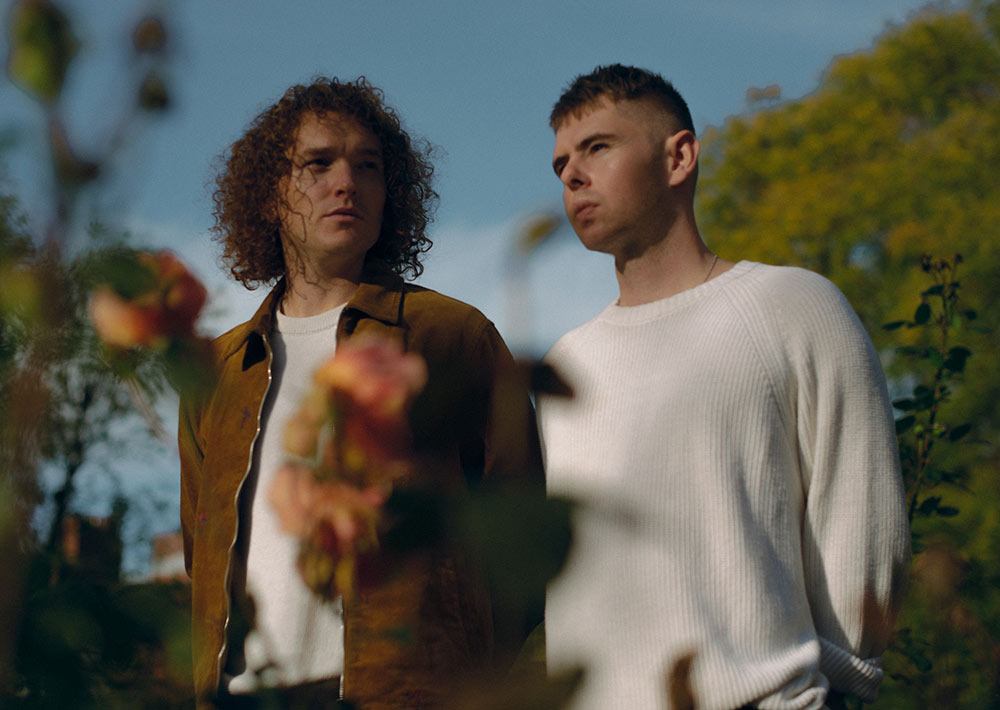
Seafret’s singer Jack Sedman and guitarist Harry Draper are now revisiting the record that first introduced them.
What was it like working with James Morrison and KT Tunstall on the new album?
JS: “James Morrison was a chance meeting in a double-booked studio. Steve [Robson – producer], who we’re working with, didn’t realise that he’d booked James in ages ago. We were on the train heading down, and he was like, ‘I’m sorry. I’ve got James in the studio today. I didn’t realise.’ Then he was like, ‘Do you want to see if you can write something together, whether for you or for him?’
“We were like, ‘Sure, see what he says.’ He said he wanted to, so we went down thinking we were going to go and record our stuff, and ended up in the room with him. We had a day to write a song and we were like, ‘Why don’t we write an end of the world song, an everything’s falling apart kind of thing.’ We wrote Driftwood with him. It was a great day.”
HD: “He’s a lovely guy, one of the lads. It was like we’d all been in that room for a week.
JS: “He was very influential for me when I was growing up. I listened to him a lot. The first song I played at an open mic night was a James Morrison song, the night I met Harry. So, I had to play it cool.”
Harry, from your point of view, does it alter things if you’re not just writing for Jack?
HD: “It kind of did. That chorus melody, a piano thing. I played that first and everyone loved it. Then after that, with the guitar, I was trying to be cool with that acoustic kind of slappy John Martyn thing, like, ‘Oh, what about this?’ Knowing what our songs are, and James Morrison songs have a little bit of a jazzy influence, like seventh chords and all that. So yeah, I think it pushed me.”
JS: “He’s a big Stevie Wonder fan, and you can hear it in the notes that he uses this.”
How about KT?
JS: “KT, we played on an ASCAP stage in Utah at Sundance Film Festival, really early on. Then, after our performance, an acoustic thing, she waited around and came over and was like, ‘So nice to meet you. I loved your performance. I’ll keep an eye on you.’ We just said, ‘Great, nice to meet you. I didn’t realise you were here.’
“Years down the line, when we were thinking about collabs for the album, we were like, ‘What’s an actual connection that we have?’ Rather than plucking names to try and get some streams, an actual thing. Her name came up, she was working on the Clueless musical and she had a spare day or afternoon, and was like, ‘Yeah, I’ll come down. It’d be great to see you all.’
“She arrived a bit late and was starving when she got there, so we had to have lunch. When we’d finished having our sarnies, Harry started playing, and we’re all listening in and chiming in with ideas, and we ended up with Five More Seconds by the end of the day.”
HD: “She’s such a muso is KT, like, she’s all about everyone sitting with an acoustic guitar, strumming it and just singing what you feel. It was a great day. She’s a great guitarist as well as a singer. It was really nice for me, because a lot of the time everyone’s looking at me for how this starts, how this will end up, why doesn’t the chorus hit? But because KT was there, she’s a great player, and it was great for me to vibe off her.”
Does writing in a different way bring out different things that you wouldn’t be able to find if it was just the two of you?
HD: “One hundred percent. A lot of the time, because it is just me and Jack, we always try and make the song work acoustically. I’ll always try and have it, not finger-picky, but I’ll try to do two things at once, or I’ll try to make as big a sound as I can from the acoustic. As there was me and KT both playing, we were just strumming, and it was lovely.”
JS: “Then it ended up on electric. I admire her for her balls. To stand in a room full of guys and own the room, and everyone’s just like, ‘Shit, she’s fucking good.’ We were just really impressed by her work. We were like, ‘This is why she’s known,’ because she’s good. She knows her shit. It was impressive. I knew she did that, but to see it in a room, you’re like, ‘That’s why she’s amazing.’”
What does the rest of the year look like for Seafret?
HD: “We’re going on tour next month, UK and Europe, and then we’re gonna have a few months to do some writing before we go back out on the road in November. We’re going to Australia and Asia. We’ll properly get stuck into the next record next year, but we’re always chipping away and sending each other voice notes.”
JS: “We’ve had a crazy month leading up to the release of the album – organising the album and the ten-year release, how it all works together, timelines, social media, all that stuff. When the album came out, we both were like, ‘Time to go to bed.’”
Do you guys have any big ambitions that you want to achieve as songwriters?
JS: “To be known as a good writer, that would be enough for me. I remember starting out, and all I wanted to do was get a song on a CD, because I used to think, ‘When I die, there’ll be a CD somewhere, and someone might find it.’ At that point, that’s all I wanted. Then it’s like, you have a viral song and you’ve got a billion streams. It’s just unbelievable in that sense. But yeah, to be a good writer.”
HD: “I’ve never really sat out and thought, ’This is what I want to achieve, and this is what I want to do’. I’ve not coasted through life; I’ve done everything the best I can. So, I think as long as I can just keep doing that…”
Is there one song in your catalogue that you’re proudest of?
HD: “It’s hard not to say, Atlantis. I really don’t want to.”
JS: “Atlantis or either Driftwood or Oceans, because Oceans is beautiful and simple – very Seafret.”
HD: “I’m gonna go for the song called To The Sea from the first record, because that’s the oldest song that’s out. It’s one of the songs that stuck from when me and Jack first met, and we were writing around my mum and dad’s kitchen table. It’s before we moved to London. It’s before we were working with some of the best producers, the best writers, but that song stuck – me and Jack, sat around the table, I think I was 15, you were 18.”
Seafret’s new album Fear Of Emotion is out now, with the 10th anniversary edition of Tell Me It’s Real to follow on 22 May. For music and upcoming tour dates, head to seafret.com
More Like This
Song Deconstructed: ‘River Of Tears’ by Seafret
We learn how an unplanned spark at the piano turned studio fatigue into a h... Read More+Songwriting Magazine Issue 31
Savan Kotecha, Sophie B. Hawkins, Freya Ridings, Seafret, Kent Blazy, Ines ... Read More+On The Stereo #10
Superb songs from Seafret, Childish Gambino, John Grant, Christine And The ... Read More+Interview: Martin Terefe
The award-winning Swedish producer, songwriter and musician talks about his... Read More+









More Like This