
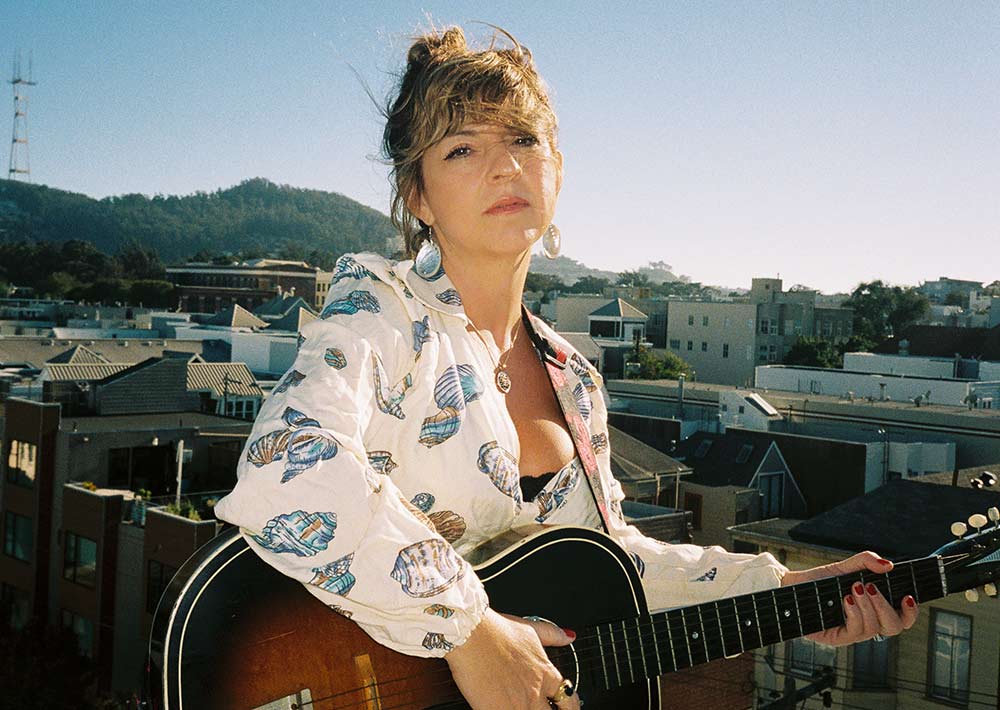
Morgan Nagler: “Acting was always very fun and rewarding (and I still think so), but I wasn’t connected to it on the primal level I feel when I’m alone with a guitar.”
From television sets to songwriting sessions with indie’s leading voices, a long creative apprenticeship culminates in a deeply personal debut
Morgan Nagler has spent much of her life moving between creative worlds. As a child actor, she appeared in television series including Frasier, Will & Grace and Punky Brewster, before turning increasingly towards music, fronting the Los Angeles bands Whispertown and Supermoon, and later becoming a sought-after collaborator for artists such as HAIM, Kim Deal, Margo Price and Phoebe Bridgers, with whom she shared a Grammy nomination for Kyoto.
Her debut solo album, I’ve Got Nothing To Lose, And I’m Losing It, produced by King Tuff, arrives after years spent writing for others. Recorded in Los Angeles, the record moves between fuzzed indie-rock on Cradle The Pain, a loose country stride on Grassoline, and the stripped-back folk of Heartbreak City. Nagler calls the mood “realist hope”. Here, she reflects on the long route to making a record of her own…
What first drew you to songwriting in those early days in your trailer with a guitar?
“In retrospect, I think I was really craving my own ‘voice.’ I had been working as an actress since I was five years old. Although there’s a piece of your true self in everything you do, ultimately, I was stepping into character and speaking through someone else’s words. I actually remember thinking I would love to audition for a part that was exactly like me, which is obviously ironic.
“Starting back then, and still currently, it really serves as a form of therapy as well. Often, it’s not even something I would want to share, but it’s something that needs to exist outside of my body in order to process and let it go. Free therapy!”
Before music took over completely, you were acting from a very young age. Do you think your early experience with scripts and characters shaped how you approach writing lyrics?
“Yes, I think often our life experiences shape us even more than we realise. In my case, I was exposed to story, timing and character development at a very young age. The first time I wrote with Madi Diaz, she asked if I thought my experience as an actor, embodying a character, was informing my co-writing and up until that point, I hadn’t thought of that. So, I think it’s even more apparent when writing with others when you’re essentially fully trying to walk in someone else’s shoes, which for me was unknowingly old hat.”
Was there a moment when you realised songwriting offered something that acting couldn’t?
A magazine to keep. An archive to explore.
Get the latest edition, 40+ back issues, 3,200+ website articles and expert insights for songwriters
“Yes, the very first moment I wrote my first song alone in the trailer. I felt connected to the ether in a way I had never felt before through acting or in any way shape or form. I felt like myself in a way I previously did not have the tools to express. Acting was always very fun and rewarding (and I still think so) but I wasn’t connected to it on the primal level I feel when I’m alone with a guitar.”
How did projects like Whispertown and Supermoon shape the songwriter you became?
“Whispertown and its many iterations has been my primary outlet up until now. I collaborated with so many musicians and producers, and sort of grew up through its phases. Supermoon was a collaboration with Jake Bellows, which helped shape my co-writing muscles that continue to bring me so much joy.
“When I started writing, I felt very under-qualified and deferred to the opinions of those with more experience. The journey has really been learning to trust myself fully. Not that I’ve wholly succeeded at that, but I’m closer to not giving a fuck than I’ve ever been before, and that’s all you can ask for.”





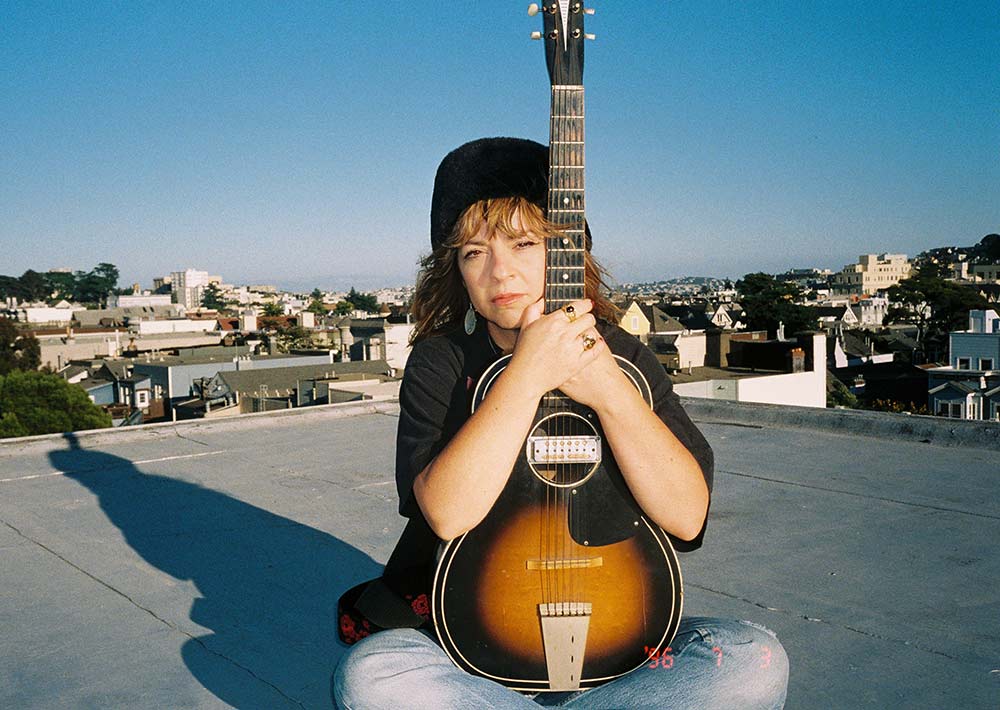
Morgan Nagler: “You can go back afterwards and edit, but the good shit is the shit you don’t know you’re gonna say.” Photo: Christian Stavros
At one point you stepped back from your own projects to focus on co-writing. What motivated that shift?
“I turned 40 and was really trying to re-evaluate what the fuck I was doing with my life and hone in on the very specifics of what made me truly tick, and why. For me, it all boils down to the writing. There’s a type of satisfaction involved that I just can’t find anywhere else.
“I find language to be inadequate. Almost every word can mean so many different things, or different shades of the same thing. Every feeling is so unique. Even the word ‘feeling.’ So, to use the toolbox of language that we have to work with, putting unlikely words next to each other, attempting to invoke a totally specific vibe in a new way that is also relatable, is like winning the game of chess for me… which I actually don’t know how to play. I hope someone teaches me soon! Don’t wanna go through life never playing chess.”
When you enter a songwriting session with another artist, how do you usually approach helping them find the core of their story?
“It does change day to day, but ideally it starts with a deep dive mini therapy session where you just pretend you’re best friends – and sometimes you end up becoming best friends. The goal is to get somewhere very real in a short amount of time. And I love drawing from that initial conversation… something the artist might say offhand that sticks out as a potential concept or opening line or whatever.
“But my goal is usually to try and help realise the unique fingerprint of an artist, just by listening and observing. Usually, when an idea is working, there’s a moment where everyone can physically feel that the song is doing ‘the thing’ you want it to do.”
What have your collaborations with artists such as HAIM, Phoebe Bridgers, Kim Deal and Margo Price taught you about songwriting?
“I honestly learn something of value in almost every single writing session… even the ones that don’t seem to be going well. I’d say my experience writing with Kim Deal has had a profound effect on my writing… and on my life. The first time we wrote together, on Lyric Avenue, she sat down where she had three drums set up and asked me to press record on her Tascam four-track cassette recorder. Which incidentally is the only type of recording I’m actually well versed in… so to speak.
“After I did so, she proceeded to play a sick beat for a few minutes and then motioned for me to press stop. So far, I was crushing my job. Then she said, ‘Okay, now you sing.’ At the time, it felt like psychotherapy. What? Just get up there? After she presses record on the Tascam? With no idea, no lyrics, and no musical pitch or key or anything? Yes. It was the best. So freeing to have no idea what’s gonna come, and then find out, in front of someone. And not just in front of someone, but in front of Kim Deal!
“I absolutely treasure all the time we’ve spent together in the throes of creation. It’s now my ultimate goal when writing to remove the analytical filter of the brain and find out what the fuck is actually inside… or outside and passing through … but without judgment or construction. You can go back afterwards and edit but the good shit is the shit you don’t know you’re gonna say.”
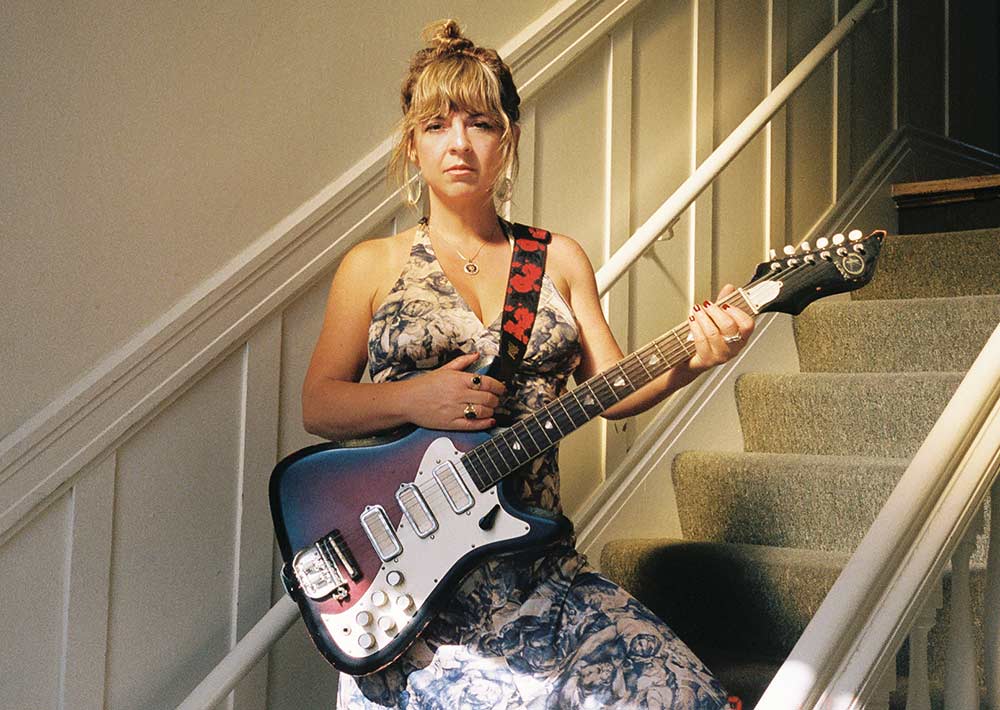
Morgan Nagler: “By day, I maybe am writing with another artist, and then I get home and pick up the guitar to see what comes out.” Photo: Christian Stavros
Did the experience of writing Kyoto and earning a Grammy nomination change how you saw your role as a songwriter?
“I give Phoebe all the credit on that one! I just helped in a spot she was stuck… but still the answer is yes. It absolutely changed my life and made me take myself a lot more seriously. Which sounds like a bad thing. But at the time I needed it, and it was a turning point. The kind where you never look back.”
After years of helping others tell their stories, what did it feel like to turn inward and start writing primarily for yourself again?
“Most of the album was written simultaneously to writing with others. I’ve just been deep in the practice of writing all the time. So, by day, I maybe am writing with another artist, and then I get home and pick up the guitar to see what comes out. I never sat down and said, ‘Okay, I’m gonna write an album now.’ It was more like, ‘Okay, I have a lot of songs lying around here… maybe we should put some of them out?’”
Did making a solo record feel liberating, intimidating, or a bit of both?
“It mostly felt cathartic, a kind of return to form, but after really having been through the wringer.”
You’ve said the songs for the album arrived in a rush during a difficult personal moment. What unlocked that burst of writing?
“Actually, that’s not accurate. They did not arrive in a burst; they came over time. The interesting thing is that, compared to co-writing, where, at some point, you need to identify the concept, when I write alone, I usually have no idea what I’m talking about at first. You might finish a version of a song, then look back and think, ‘Oh, maybe I’m speaking to this or that.’ “I had assigned those afterthought values, but then, after going through a major earthquake of a breakup, I realised I had been writing about it pre-emptively for quite some time. I find it fascinating and affirming that our unconscious knows so much before we are able to recognise it in our conscious minds.”
Did the emotional urgency of that period change your writing process in any way?
“Actually, the only song on the album I wrote post-breakup was Heartbreak City. When a situation is that intense, it usually takes me a good while and a lot of processing before I write more about it. And I’ve definitely written more songs about it since the album finished, but intimately, I think I had already written so much about it as I was processing it before it actually happened.”
The phrase “realist hope” is such a striking way to describe the album’s emotional tone. How did that idea emerge while you were writing?
“It wasn’t so much a preconceived notion, but more a reflection on my current standing perspective. I strive for a holistic mood where we acknowledge the truly catastrophic, horrible, backwards, heart-breaking, violent, murderous shit show we are living through, while also acknowledging the ancient oaks shading the birds and the bees and the ants and the sound of the frogs in the creek I can currently hear through the man-made walls of my home.”
Do your melodies usually suggest their own sonic world, or do you have a finished sound in mind first?
“For me, melodies and words dictate the sonic palette.”
How was working with King Tuff/Kyle Thomas?
“It was totally epic. He rules. For a lot of the songs on the album, I brought in sort of versions of finished songs and said let’s crack them open. So that’s what we did. As you can imagine, it’s a very sacred space when you have something you’ve been working on, and you open it up. That’s why it was so amazing to work with someone who I admire as an artist and human and whose taste I trust, which is hard to find. For example, on Orange Wine, he said, ‘What if we write five more choruses all with different lyrics?’ And I’m so glad we did. It’s so much more fun now.”
When you had so many demos, how did you decide which songs belonged on the album?
“I went through and narrowed down a bit, but then brought 20-30 songs to my manager, Christian Stavros, who is another rare human whose taste I truly trust and who is very creatively involved in all my projects, and to Kyle, of course. There were a few I knew I wanted on the album, but then I just went with what they were responding to and were excited about. For example, Cradle The Pain wasn’t on my shortlist because I didn’t realise how much it was gonna rule.”
With tracks like Cradle The Pain, Grassoline, and Heartbreak City spanning very different moods, how did you know when a lyric had found its right musical setting?
“I tried to let the songs themself dictate their musical setting instead of saying, ‘I’m gonna make a folk album or a rock album,’ or wherever… My taste varies wildly, and I think most people’s do, so why not? It was important to me to keep some songs acoustic and in their original, intimate form. And then some songs just need to rock. Grassoline obviously needed to be a little bit country, right?”
Did your experience writing for other artists influence how you edited or refined your own songs for this record?
“Not in a super conscious way, but yes. It all gets added to the soup. And in the case of Grassoline and Hurt, their original intention was to be for another artist, but then it was like … nah”
Looking back, do you see a thread connecting your early DIY touring days with the songwriter you are now?
“Absolutely. And I still strive to be as free as I was then. Recently, I saw some camcorder footage of a set I was playing back in the day solo and every single song had a tempo change and a key change. I hope to still bring that kind of badass energy to the table.”
How do you imagine your songwriting evolving from here?
“I hope to continue to get closer and closer to my true self. The more real we can be, the more we can feel seen in each other and connected. And the more we can empathise and have compassion. That is the only way forward I see for a world that reflects our true potential to be so much better.”
Morgan Nagler’s debut album, I’ve Got Nothing To Lose, And I’m Losing It, is out on 13 March on Little Operation Records. Find out more at morgannagler.bandcamp.com
More Like This

‘Something To Tell You’ by Haim (Album)
The sisters from The Valley return with their seco... Read More+
Interview: Jessie Jo Dillon [2025]
It’s been another hugely successful year for one o... Read More+Interview: Donna Lewis
The Welsh singer-songwriter has channelled her bat... Read More+Interview: Cassadee Pope
Former lead singer of rock band Hey Monday and 2012 ‘The Voice’... Read More+





More Like This