
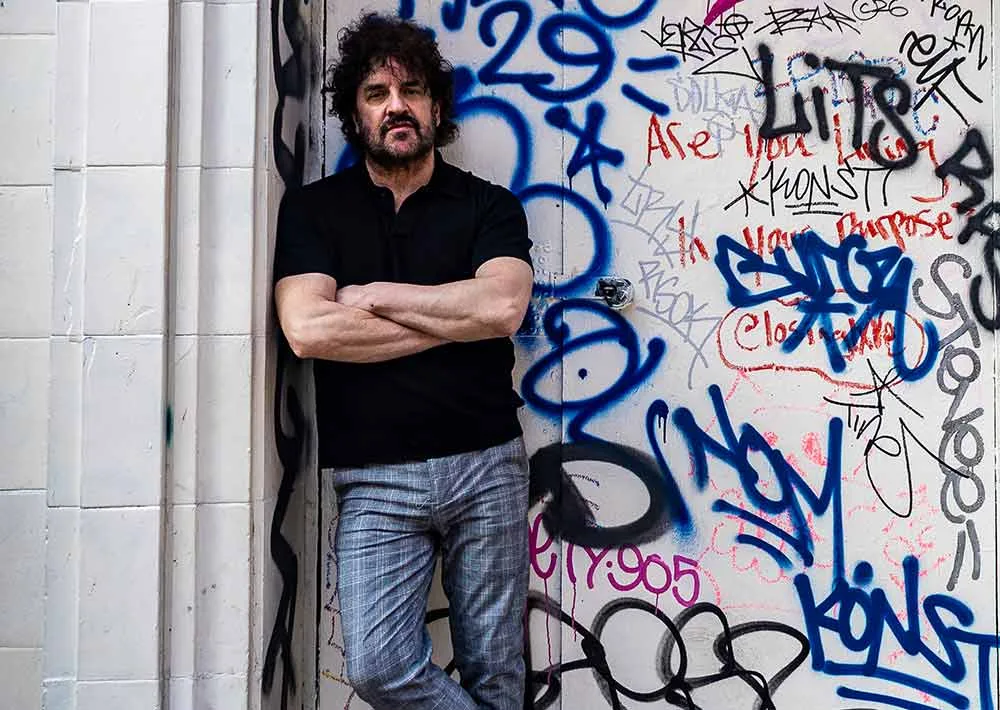
Ian Prowse: “By taking a famously political character and making them the hero of your song you can elevate his or her ideals to a universal state.”
The “Scouse Springsteen” Ian Prowse has mastered the art of writing social commentary that still works as great pop music
Often dubbed the “Scouse Springsteen”, Ian Prowse first emerged with high-energy fiddle-driven outfit Pele in the early 1990s before founding the Celtic-influenced Amsterdam, earning acclaim for his passionate songwriting and electrifying live performances. Inducted into the Liverpool Legends Hall of Fame, Prowse has built a career as one of Britain’s most fiercely political, proudly working-class songwriters, using his music to confront inequality, injustice and the lives of ordinary people. His twelfth album, No Names, continues that tradition, pairing uncompromising social commentary with deeply personal reflections and guest appearances from Elvis Costello, Steve Wickham and Damien Dempsey, making him an ideal guide to the art of writing protest songs…
Read more songwriting tips and techniques
Writing about what you see around you is as old as the concept of songwriters themselves – why the hell wouldn’t a songwriter, or band, sing about what their life experience is?
More often than not, the, ‘I went to be entertained not preached at,’ brigade are belying their own reactionary impulses. So, it can be a minefield if you’re not clever about it.
As a songwriter I don’t want to be painted into a corner as just a “political artist” like Billy Bragg tends to be. Life is so much richer and more varied than that. I reserve the right to be a writer about life, the great loves, the whimsical, the funny, the cosmic, and yes, the righteous…
THE CAMOUFLAGE TECHNIQUE
As ever, I will look to my spirit guide, Bruce Springsteen, to get it right. One of Bruce’s most globally recognised anthems employs a wonderful trick: make the chorus so strong, so potent and recognisable, that the listener takes scant notice of the verses – at least to begin with. Born In The USA is such a fist-in-the-air steamroller of a patriotic proclamation, married to a marvellous hook, that even non-Americans are likely caught up in its catch-all refrain. Except it’s not. The verses clearly lament that the American government is destroying the lives of some of its citizens. You can get in ideas under the wire whilst the listener is singing along to the mighty chorus. I’ve used this twice to strong effect.
My very first release in 1991 on Polydor Records. Raid The Palace motors along in a country/new wave romp, spitting anti-establishment lyrics that specifically take aim at the aristocracy and royalty. The chorus, though, has no words, just an infectious, “Na na na na na,” sing-along. So infectious that Radio 1 completely missed the revolutionary invective of “Line ’em up against a wall in Kensington or Chelsea,” and put it straight on the much coveted A List, for six weeks!
My latest release, Keynote Speech, is in much the same vein. A big singalong choir of a chorus heralding that, “Enough is enough is enough,” (we got the She Sings Wakefield Women’s Choir in to emphasise its catchiness). Whilst you’re caught up listening to that, a whole host of progressive subject matters are spat out in the verses: Period poverty, Gaza, charity provision, billionaires and the arms industry are all linked together. Like an angry Give Peace A Chance.
A magazine to keep. An archive to explore.
Get the latest edition, 40+ back issues, 3,200+ website articles and expert insights for songwriters
In either of these songs, at opposite ends of my career, did I think about the trick? No, I didn’t, they were made on impulse, I realised afterwards that’s what had happened.

The role of mischief in the Beatles’ songwriting
Author of ‘Help! 100 Songwriting, Recording And Career Tips Used By T... Read More+Principles Of Modern Songwriting
Experienced session guitarist Jake Gakovik takes us through the basic eleme... Read More+5 minutes with… Yoko Ono
Peace activist, artist provocateur, Beatle wife… Songwriter? In our l... Read More+



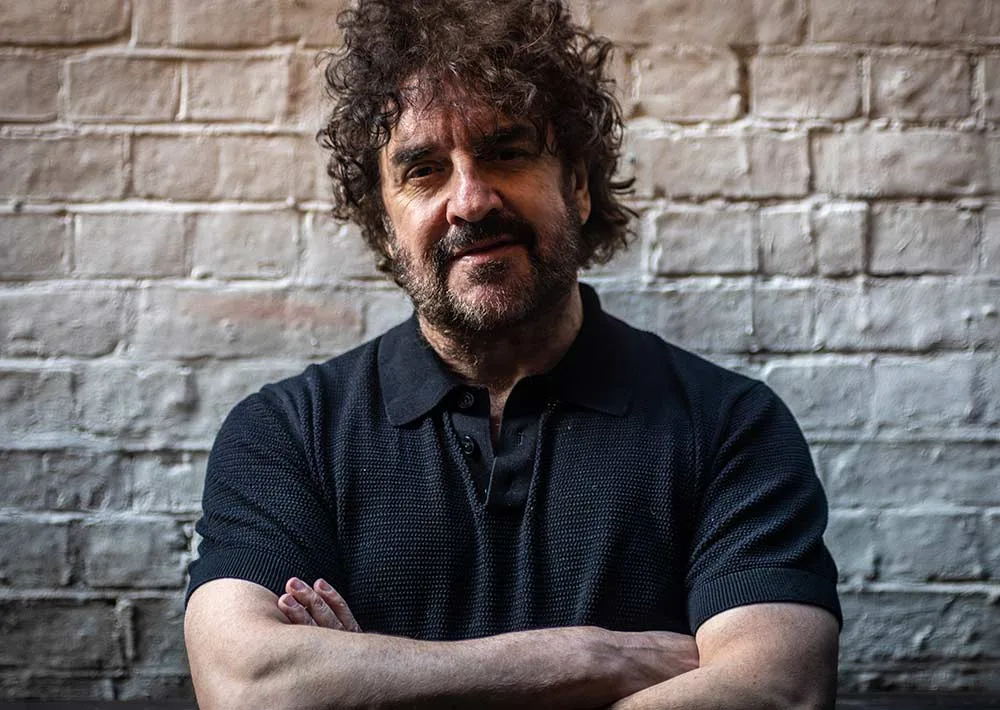
Ian Prowse: “The best words in the world will wither on the vine if you marry them to a pedestrian and uninteresting tune.”
THE CHARACTER STUDY
By taking a famously political character and making them the hero of your song, you can elevate their ideals to a universal state – Free Nelson Mandela being a fabulous example. The world had only a tenuous grasp of the horror of apartheid until The Specials’ song gave everyone a song to sing along to and a name to rally behind.
In my song, I Did It For Love, I took a Che Guevara quote (“At the risk of seeming ridiculous, let me say that the true revolutionary is guided by a great feeling of love”) and married it to a lyric about the everyday life and actions of a revolutionary.
As ever, you need a new and original melody to go with your fabulous new lyric; the best words in the world will wither on the vine if you marry them to a pedestrian and uninteresting tune. And if you’re aiming high, like a Che Guevara, you’d better do your subject matter justice.

Another magnificent song which literally describes the tragic life of an English socialist hero is My Name Is Dessie Warren by Liverpool songwriter Alun Parry. It’s a song we’ve been singing up and down the country for 11 years; it has the power to turn iffy gigs into barnstorming evenings, it can kickstart your lacklustre show into a triumph, such is its power.
The actual song itself is a pretty straightforward (albeit very well written) description of the deep injustice metered out to Dessie Warren by the state, for his part in the building strikes of 1972.
The reason it works so successfully is the duality of informing the audience of Dessie’s deeply held beliefs whilst chronologically telling the tale of his early death at the hands of the state, using our taxes.
The pay-off line of sheer defiance, which opens up the chorus, where Dessie refuses to accept he’s just a number in the prison system (because to him, he’s a political prisoner on behalf of the working class), is breathtaking and very emotional. I’ve seen it unify rooms with 1000-plus people thrusting their clenched fists in the air in a spontaneous act of solidarity.
It’s so literal it really shouldn’t work; music is often most effective when the listener is left room to put their own emotions into the meaning of the song, but this bucks that trend. The injustice is so well imbued in Alun’s song, and the chorus unifies us all so perfectly that it hits the nail on the head time after time.
CHRONICLING THE TIMES
Of course, your protest song can be a hybrid of all these methods. This is songwriting: there are no rules. When Lennon assembled Revolution 9, he was essentially saying, ‘Do anything you want.’
It might be that there is a particular modern issue that you feel so strongly about you want to directly address it. On our One Hand On The Starry Plough LP (2022), there were two songs concerned with how far right-wing discourses, for so long shunned and marginalised, are now entering the mainstream. Research is key for these types of songs. I’m lucky enough to have a BA in Modern History and a Master’s degree in Irish Studies which I could call upon to use terms such as “Useless eaters” and “T4”.
These are historical words used during the Third Reich thrown into my song No Trial in order to associate it with the type of ideas promulgated by modern fascists. You don’t need degrees though, just patience to read through texts and articles which might give more depth to your point of concern. This might include tracts that show a different viewpoint to the one you’re trying to get across; you must know your enemy’s argument as well.
Ian Prowse’s new album No Names is out now. For tour dates and more information, head to amsterdam-music.com/live
More Like This
Interview: She Drew The Gun’s Louisa Roach
The lead singer and songwriter of this uncompromis... Read More+The role of mischief in the Beatles’ songwriting
Author of ‘Help! 100 Songwriting, Recording And Career Tips Used By T... Read More+Principles Of Modern Songwriting
Experienced session guitarist Jake Gakovik takes us through the basic eleme... Read More+5 minutes with… Yoko Ono
Peace activist, artist provocateur, Beatle wife… Songwriter? In our l... Read More+






More Like This