
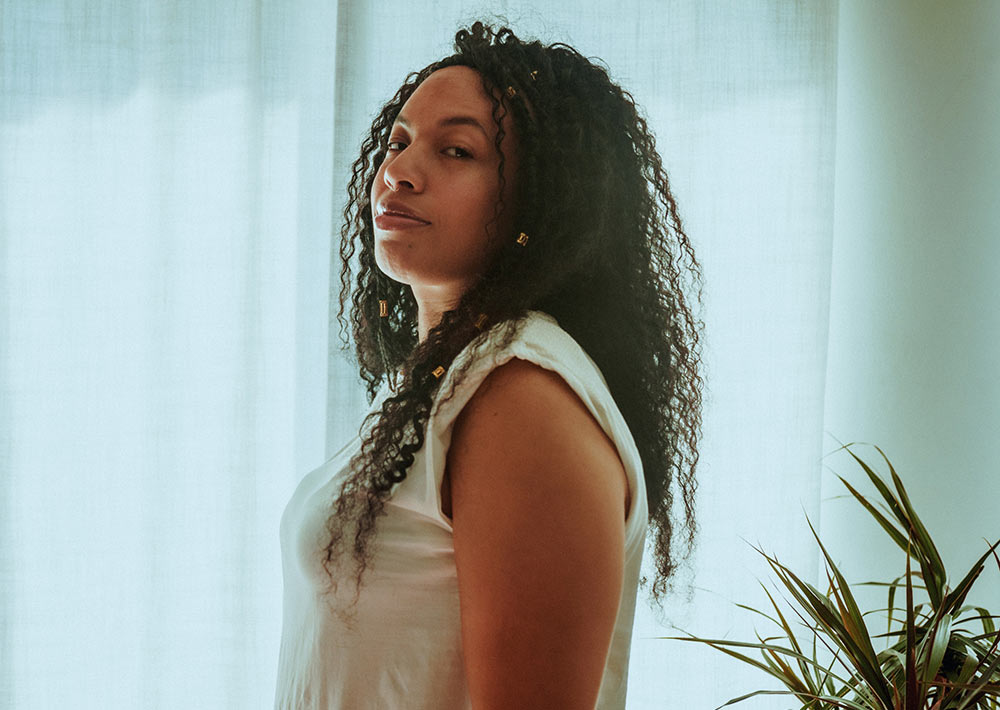
Lady Nade: “I always try and serve the song.” Photo: Arthur René Walwin
From family patterns to genre freedom, the acclaimed Bristol artist searches for her truest self across her fourth studio album
Lady Nade’s fourth album, Identity, takes its title from a question that runs through much of her songwriting: how do we reconcile the different parts of ourselves, particularly those we have learned to conceal? The Bristol-based singer-songwriter, whose heritage spans Black British, Caribbean, and white British backgrounds, has built a growing reputation across the UK roots, folk, and Americana scenes, earning a Song of the Year award for Willing at the 2022 UK Americana Awards along the way.
Released back on 2 October, Identity draws on folk, soul, Americana, jazz, and pop to examine self-discovery, sobriety, family patterns, and the challenge of self-acceptance. Co-written with Ivor Novello-nominated songwriter Boo Hewerdine, alongside Ferris & Sylvester and Katey Brooks, and produced by Archie Sylvester and Michael Rendall, the album considers what it means to be seen and accepted on your own terms.
In this conversation, Nade reflects on the experiences behind Identity and the difficulties of navigating a world keen to pigeonhole musicians…
How I Wrote Bristol: 8 local songwriters talk about their songs
How are you feeling with the album out and the songs no longer belonging to just you and a small group of allies?
“Oh yeah, I’m feeling super happy, and it’s funny you should say that, because, two days ago, when I got here, I took a moment to sit and make a video to my fans to say, ‘This was mine, and now it’s ours. It’s out there, and it’s all of ours.’ That’s what I love about being a songwriter, being able to take stories and my personal experience – and people are my biggest inspiration – and take what’s usually quite hard to say in a conversation and turn that into an easy way to communicate with someone through songs. I try to take heavy subjects and turn them into conversations that we can have with each other.”
You say that people are your biggest inspiration. Do you have that songwriter’s instinct where you’re always actively paying attention and conversations that you hear stick in your head, and you’ll think, ‘Actually, that might be a song,’ or is it more organic than that?
“It is a bit of both, actually. I think the duality is that both can exist at the same time. I will be having a natural conversation and then someone might say something in that conversation and I might then go, ‘Oh, that’s a really great line for a song,’ or, ‘I feel like I want to write a song about this.’ Or, I might feel that someone said something to me that’s quite weighted, and maybe this could be a song that can help someone feel less alone and break a stigma, it’s all about connecting and making people feel less alone in themselves.”
A magazine to keep. An archive to explore.
Get the latest edition, 40+ back issues, 3,200+ website articles and expert insights for songwriters
When you have those topics that are very personal and they’ve come from a specific place, are you then trying to broaden them so that they become more appealing to a wider audience, or is it actually the case of keeping them very specific?
“Yeah, I think it is actually keeping them specific because it’s in those details where people can see themselves that might not be addressed in a wider mainstream way – when you try and focus on writing songs that please everyone, you end up diluting the message and pleasing no one. Not that I’ve actually tried that. I’ve not ever sat down and gone, ‘Right, I’m gonna try and write a song that pleases everyone.’
“I’ve done what you say, like take something and try and focus in on the specific message that I’m trying to say, and if that message goes beyond the kind of person that it is going to resonate with, then it’s great because then it has reached whoever needed it. If it just reaches a small number of people and it does the job of serving the purpose of the song, then yeah, I’m happy with that as well.”
Was there one specific moment that ignited the writing for this whole album, was it more a case of writing enough songs until you had enough?
“I was actually thinking about this one concept: conversation, and having a conversation, and how conversation is dying out. We’ve got social media and this short-form entertainment. We’ve got concerts being put into cinema, and we use Instagram and Facebook… even podcasts are being put into shorts, and books are being made into audio that you can speed up.

Interview: Dhani Harrison
The son of the Beatles guitarist takes a break from his many projects to fi... Read More+Rosina Buck: On Song, On Location
A songwriter willing to mine the deeply personal, ... Read More+Interview: Luke Sital-Singh
The British singer-songwriter traces his path from nu metal to nu folk, alo... Read More+



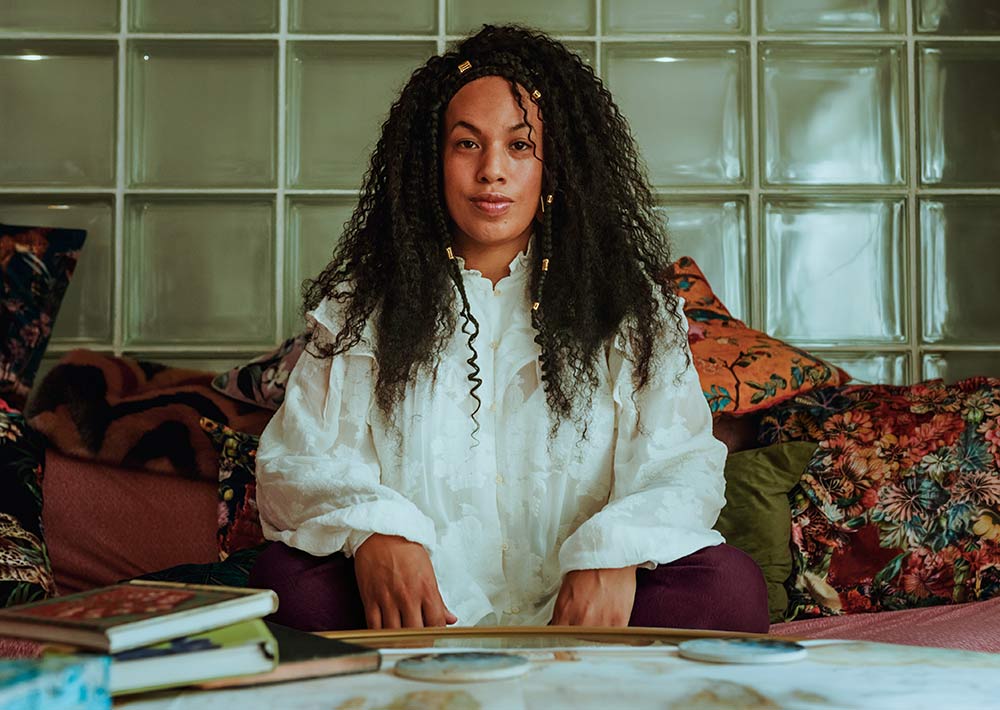
Lady Nade: “It’s all about connecting and making people feel less alone in themselves.” Photo: Arthur René Walwin
“For me personally, because it was in the stillness of the pandemic that I wrote most of this album, it was having conversations. I had a lot of therapy during the pandemic. In the stillness, I realised that I was being here, there, and everywhere with music, and I had a lot of grief. I had a lot of noise, and keeping busy was drowning out grief and anxiety. It all came to the surface, and I didn’t have the ability to find the stimulation of live music and being on the go to drown it out. So, I found that therapy helped me process.
“I’m an overthinker, so it helped me process my racing thoughts. It helped me realise that I was divergent. I also got sober in the pandemic, and I found fellowship. I found networks and conversations on Zoom. Conversations were my lifeline, and I realised conversations can be the lifeline of many people who are suicidal, who are lonely. All it takes to save someone’s life is someone being able to pick up the phone and have a conversation. Mental health is really important, and lifelines are really important, and that’s where this album stemmed from: finding the importance of conversation, and the importance of community.”
What was the process of taking something which is quite vast and heavy in some ways, and turning it into 10 soulful pieces of music that people can enjoy as songs?
“I used my journey of recovery, the ACA Twelve Steps programme. Children of alcoholics from dysfunctional backgrounds… some people might not ever pick up a drink but have alcoholism in their family, and they have characteristics of alcoholism, such as workaholism, or they’re addicted to excitement and drama. So, the steps of the fellowship and getting sober acted as a real template for how I was gonna take this concept and be able to have the conversation about mental health and character traits that we share, and about human experience, and about the myriad different emotions that we carry.
“Going through the steps of the programme: one step is talking about helplessness and powerlessness, and therefore, suddenly, Powerless was a song title that I could channel. Powerless is about actually realising that it’s okay to ask for help, and it sounds like a love song, but it’s about arriving at the doors of a counsellor and going, ‘Hang on a sec, I’m not okay,’ and how it’s okay to get some help.
“I know that grief has been with me since I was 10 years old. I’ve stood outside of the door of it, and I’ve not gone and sat down and gone, ‘Let’s do some grief work. How is it showing up in my life?’ Music’s the thing that I found as my therapy and my antidote. But in the pandemic, I couldn’t do as much music as normal, so I didn’t have the huge amount of therapy going on. I needed it through going to see a therapist. Powerless became all about that experience and it being okay to ask for help. If you don’t have a creative outlet, and you don’t have the access or the space to pursue a passion, or you’re feeling stuck, then it’s okay to ask for help, and I think it can be very scary admitting that you know that you are not okay.”
At what point did identity become important, in terms of the song itself opening the album and also being the title?
“That was the last song. I sat with the producer of the album, Archie Sylvester, and his wife, Issy Sylvester, who was Issy Ferris, and they are Ferris & Sylvester as a band… I loved his creative vision and we were listening to lots of demos. He was asking, ‘What do you want the outcome of the album to be, what are your goals?’ And I was like, ‘I really want people to get in touch with their feelings. I want to move people and I want to soothe people.’
“We realised that we had a lot of ballads, and I didn’t have too many songs that had movement, and so we were like, ‘Okay, let’s write two more songs, and have more movement in the songs.’ Identity is funkier; it’s more upbeat, it’s fast-paced and rootsy, and I didn’t have that before. I didn’t have Identity and I didn’t have Sober, which again was upbeat, retro soul.
“I realised I’d talked about sobriety metaphorically with Powerless, and maybe a little bit with Rainbow I’d talked about my experience, but I’d not called it out. I hadn’t actually said anything about being sober. I talked a lot about my emotions and human experience without actually calling out what that meant. So, Identity and Sober were the last songs that I wrote on the album and, subsequently, **Identity became the title.”
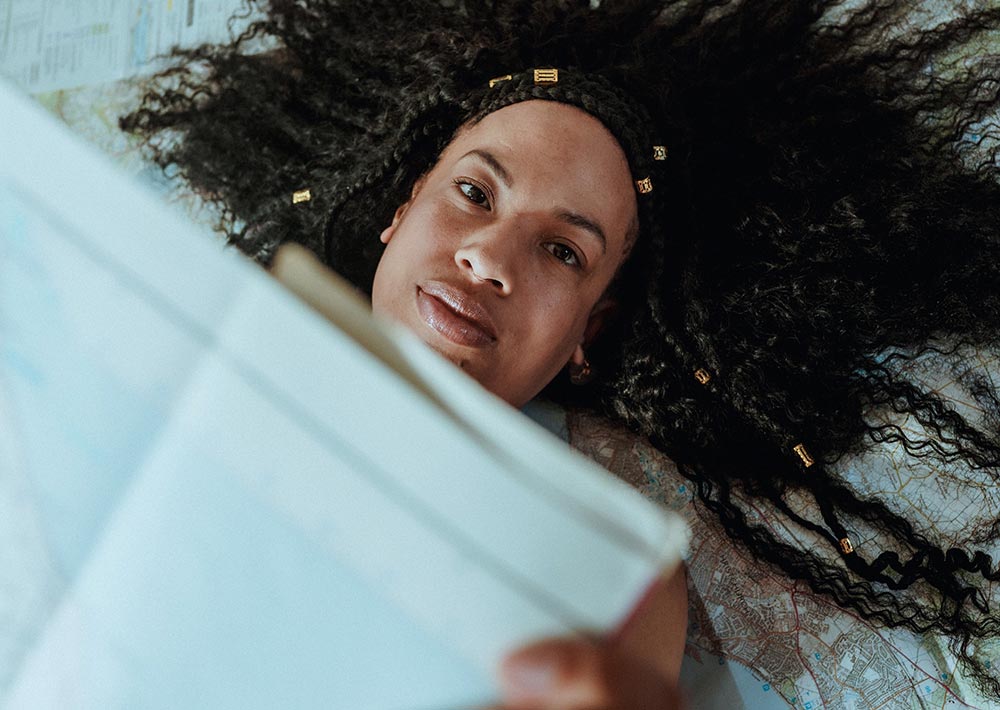
Lady Nade: “When you try and focus on writing songs that please everyone, you end up diluting the message and pleasing no one.” Photo: Arthur René Walwin
And Sober?
“I was a bit nervous, actually, as I hadn’t spoken about my sobriety journey before this. I felt a lot of shame and I thought that I was gonna feel alienated in the music industry, as it’s a way to socialise. It’s really normalised. If you’re out at an event and you’re not drinking, ‘Why aren’t you drinking? What’s wrong with you?’ There’s a stigma.
“We had this conversation about the importance of writing a song like Sober and all the amazing artists that we’ve lost. Amy Winehouse came to mind. I’m hugely inspired by Amy Winehouse, and how she was someone who battled drugs and alcohol, and what would it be if she’d lived – she wrote Rehab; if she had lived a little bit longer, would she have written something like Sober?
“We’ve got loads of songs about drinking. I was really nervous to talk about being sober, but I thought: I’m going to release it in Dry January, because people are obviously doing Dry January and a fellowship exists, and it saves lives. I released it in January, and it’s been absolutely incredible because people from all over the world have emailed me and said the song is helping them through their sobriety.”
How did that feel?
“It helped me realise that people need songs when it comes to their sobriety journeys as much as people need songs to talk about their drinking journey.”
Were there songs that helped you through it the way that Sober has helped other people through it?
“There are definitely songs about drinking: Mary Gauthier, I Drink – even though that was a song about generational trauma, and she puts it into perspective where her father drinks and then she ends up drinking. That was someone speaking in a song about how drink can carry over, and then White Winos, the Loudon Wainwright song.
“It’s funny, but he twists it in with these lines that hint that maybe he’s had too much drink with his mum, and they almost end up in bed together. You think that’s where it’s going, the way that he tells it, but then it’s not. And again, it talks about generational drinking. So, even though they’re drinking songs that aren’t about sobriety, what they did for me in terms of inspiration was highlight this kind of analogy – the man takes the drink, then the drink takes the man, because it’s a generational story that they’re telling between themselves and their parents.”
Do you make sure that the music and production is sympathetic to the theme, or do you not really want that to override writing the best song that you can?
“I think that’s been both my strength and something that may be potentially hindering me as well, because I always try to serve the song. So, I don’t just have the same musical genre songs through one whole album. On my first album, Hard To Forget, I had a bit of folk, I had a bit of jazz, and they’re all in coming in and out of each song rather than it all being folk songs and a folk album or all being jazz songs and a jazz album.
“Then with my follow-up Safe Place, I put an EDM song there because it felt like that was the right music for it, and then there was a country song, and that felt right too. I was trying to serve the songs, but again, another album where not all songs are folk or not all songs are roots. On the one hand, some of my fans are into eclectic songs, who might listen to jazz and also listen to folk, and I believe that’s true of anybody. We all listen to more than just one genre of music. If you like folk, you’re probably going to listen to another genre of music, like jazz. If you like blues, you’re probably going to listen to rock.
“Then, with Willing, I met a pedal steel player, Holly Carter. We were working together, and she was playing my nights in Bristol called Lady Sings. I spent a year and a half hosting a night and promoting female artists. It was off the back of a promoter who said that he would put more female acts on if only he could find them. I was like, ‘We are out here,’ and in that time I put 72 female artists on. I was really proud, and, as a woman of colour, I can see the barriers and the obstacles, and want to create opportunity.”
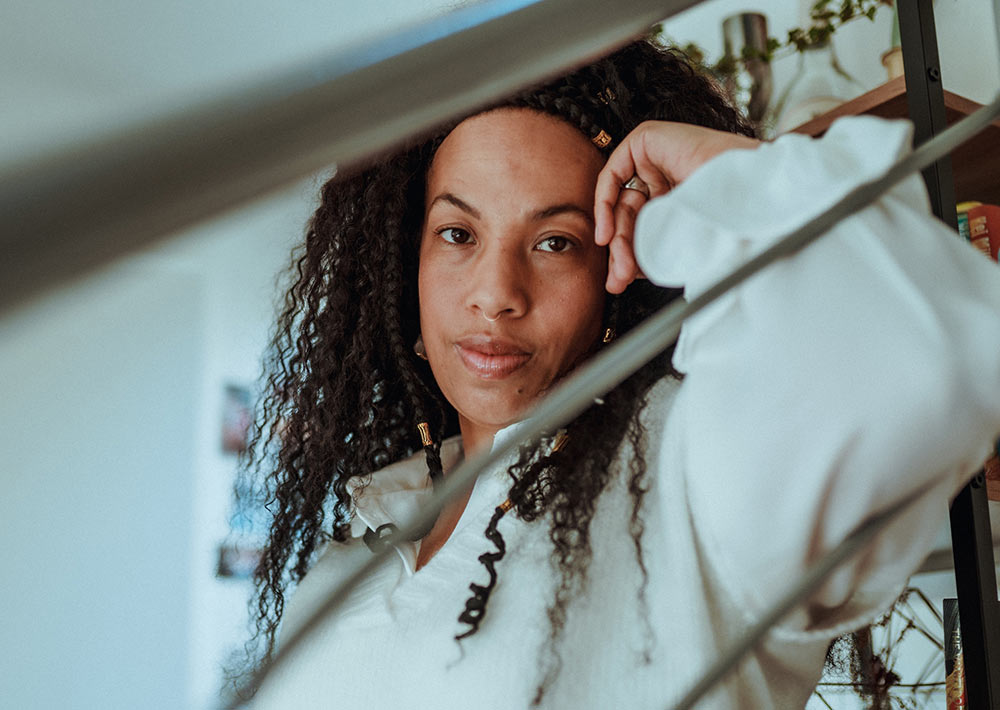
Lady Nade: “I want to move people and I want to soothe people.”
And Willing came out of that?
“Yeah, Willing was all about how we support each other, and because pedal steel was on that, that meant it was alternative country. So suddenly I went in a completely alternative country direction. The thing that makes it a strength is that I’ve served the song. I’m not trying to put myself in a box and I’m trying to be authentic to the song. I try to stick to what the song needs. But also, I think that, in navigating my music – because there are boxes – that’s not always worked in my favour.
“When my first album went out, the folky people were, ‘We love it, but it’s too jazzy,’ Or the jazz people would be like, ‘It’s not quite jazz, though, is it?’ So the formats of where my music sits in terms of how to get in the publications where people can understand…
“Labels obviously help to tell people, ‘You’re gonna like this,’ but there’s not a box that says this is a bit jazzy, a bit bluesy, and a bit rootsy. The problem then is you have to pick the nearest box and sometimes I’ve put myself in jazz, because it might not have the traditional folk structure, and I feel like my voice leans toward jazz. So, I put myself in that box, and then that’s the wrong box because it’s not standard jazz arrangements and actually, what I’m writing is folk because it’s my songs that have come from a guitar and me singing about my actual experience.
“It’s so funny because then Willing came out in the country category. Some people are like, ‘What’s country about Lady Nade?’ I’m not in a hat. I’m not doing typical country music, structure, or instrumentation. It can be hard to do the labels because each album I’ve got all of the different infused eclectic tastes serving the song, and that moves throughout the album itself, rather than it all being labelled under one box. I kind of say ‘roots’ now.”
It comes back to you being authentic and serving the song, as you say. The fact you’re continuing to do that feels like a much truer way of expressing yourself than cynically trying to put yourself in one of those pigeonholes.
“Yes, and I kind of land where I land. I’ve not been intentional about that. That’s why I say, I wonder if I should be intentional.”
But maybe you wouldn’t feel like the songs were a true representation of your experiences then?
“That’s the double-edged sword, and would I restrict myself? It’s like cancel culture where, ‘You said you were folk, we were expecting folk. Now you’ve gone and you’ve expanded, and you’re not one of us anymore.’ Then it’s scary, because it’s your life. It’s almost like, if I pin myself into a pigeonhole, then there’s an expectation, and I’ve got to live within that expectation, in that box.
“The easiest way is to say I’m a singer-songwriter, and I happen to have written an album which was folk and jazz, I then wrote an album which happened to be a soul album, I then wrote a third album which happened to be an Americana/country album, and now I’ve written this fourth album, which happens to be a soul album… I’m not a writer of genres. I’m a songwriter who happens to write music that can be genrefied.”
Bringing it back full circle, what is it you’re now hoping that the songs go out there and do?
“I hope that they empower people to celebrate who they are, celebrate their human experience, because Identity, the title track, its chorus is for people to sing along to. ‘Identity, identity, I’m all the things I’m meant to be. It’s good for you. It’s good for me.’ It’s a celebration of our human experience, and that stems from being a conversation, and let’s share our human experience with each other. We’re all different, and we’ve all got experiences, and it’s our differences that make us who we are. It’s no good all trying to be the same, all trying to fit into the same box, because we are all different. And I think that’s something to celebrate.”
Identity by Lady Nade is out now, and she has a UK headline tour running from 6–21 November. You can find tickets at ladynade.co.uk
More Like This
Introducing… Ailbhe Reddy
Getting to know a songwriter from Dublin whose captivating blend of indie-f... Read More+Interview: Dhani Harrison
The son of the Beatles guitarist takes a break from his many projects to fi... Read More+Rosina Buck: On Song, On Location
A songwriter willing to mine the deeply personal, ... Read More+Interview: Luke Sital-Singh
The British singer-songwriter traces his path from nu metal to nu folk, alo... Read More+








More Like This