
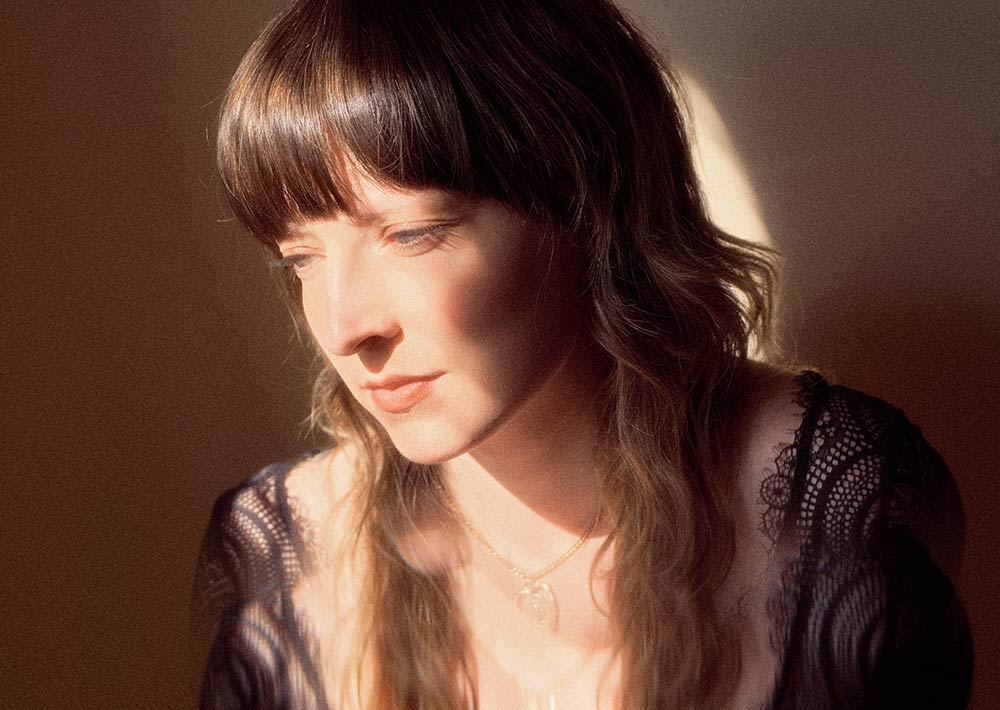
Melanie Radford: “I purposefully wanted the bass to function as the main source of the chord progression.” Photo: Travis Gillett
The Built To Spill bassist on a solo song created through slow grooves, sweltering Rio sessions, and layers of cello
Melanie Radford is best known as the current bassist of lo-fi indie legends Built To Spill, but her debut solo album, For The Sake Of Stillness, is a much quieter affair. Built around melodic bass, sparse arrangements and her distinctive, haunting voice, it’s music that feels made for slowing down a little after a life spent touring and constantly being on the move.
The album took shape over two years, with friends and collaborators in Brazil and the US, and has a warm, dreamy quality without ever feeling overworked. There’s plenty going on in the arrangements, but it’s the space between those elements that gives the record much of its character. Here, Radford takes us inside Sink & Swallow, from its slow-swinging groove to those final layers of cello…
INSPIRATION
I think I was inspired to write a song that had a slow, loosely swung groove, something that brought rhythm to the table but didn’t require too many voices to hold it together. After all, this is an intentionally sparse and minimalist record, so I wanted to be careful with the execution.
When I first started performing this song live, it was a little faster and more “on the beat,” feeling more like a mid-tempo indie song, which didn’t feel quite right to me. I’m a big fan of slow country ballads that let a pedal steel slink melodically back and forth, so when I decided to lean more in that direction, I finally found the spirit of the song.
LYRICS
In a general sense, Sink & Swallow is a song about physical and emotional distance. I can’t seem to pinpoint the exact moment when the lyrics came to me, but I know I had been feeling the impact of distance and needed to reflect on how it was affecting my relationships. Some grief, some acceptance, some moments of awe and wonder… It was a surreal, stream-of-consciousness moment that entered the room.

How we wrote ‘I’m Not In Love’ by 10cc’s Graham Gouldman
With an interesting title, a bossa nova rhythm and some studio magic, the s... Read More+Song Deconstructed: ‘Don’t Tempt The Shadow’ by Sailing Stones
The indie-pop songwriter, Jenny Lindfors, tells us how her new single start... Read More+Song Deconstructed: ‘Blue’ by Ayanna Witter-Johnson
The composer and songwriter discusses finding emotional truth through restr... Read More+




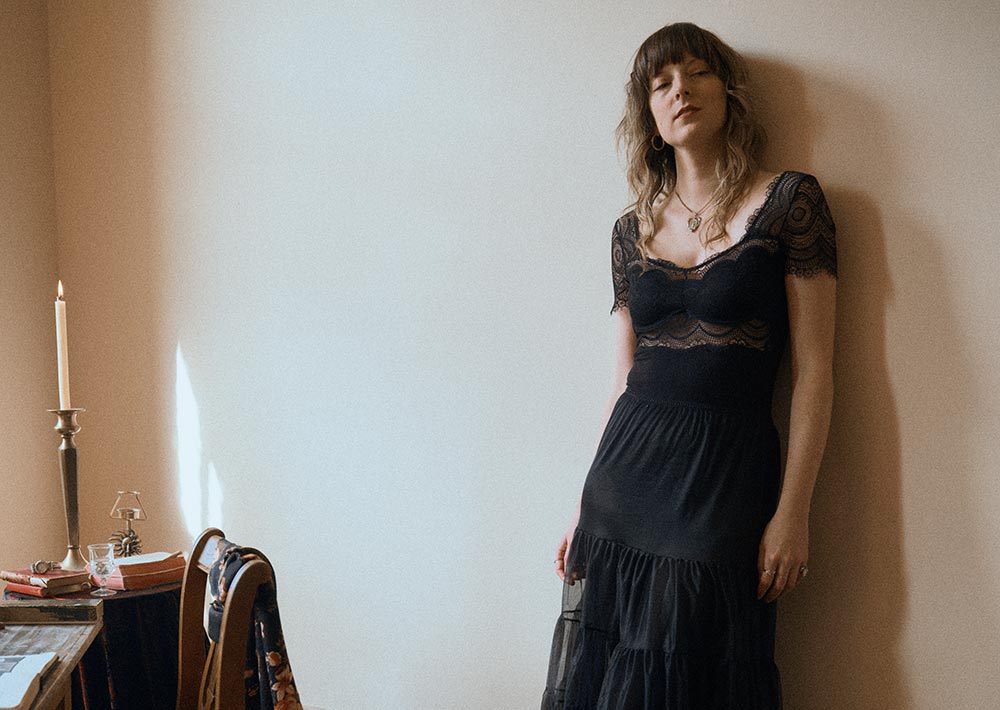
Melanie Radford: “The choruses have a kaleidoscope-like effect where all the voices open up and pour out together.” Photo: Travis Gillett
MUSIC
The whole thing is centred around the bass, strumming two notes that simply outline the basic chord structure. I purposefully wanted the bass to function as the main source of the chord progression so I could eliminate putting a guitar in the song altogether. Therefore, it inhabits both bass and rhythm-guitar spaces.
The groove is slowly swung – which Lê Almeida settled into nicely when we recorded it – and features a gliding pedal steel and a swelling cello arrangement. The choruses have a kaleidoscope-like effect where all the voices open up and pour out together.

A magazine to keep. An archive to explore.
Get the latest edition, 40+ back issues, 3,200+ website articles and expert insights for songwriters
IN THE STUDIO
The initial tracking process began with basic tracking of the rhythm section, recorded by myself on bass and Lê Almeida on drums in Rio de Janeiro, Brazil. We went to his DIY venue/recording studio called Escritório (which translates to “Office”) in downtown Rio, where it was an easy process to record the drums because they were already meticulously dialled in.
I remember it was a very hot day in Rio, in the middle of summer, and cooling fans were running at full blast in between takes. We would jam over the blasting fans to figure out the “map” of the song, come to an agreement, and then shut the fans off so the sound wouldn’t bleed into the microphones. Needless to say, it got pretty hot in that room.

Melanie Radford: “I’m a firm believer that we contain multitudes.” Photo: Travis Gillett
We played through the song, maybe once or twice, with a relaxed spirit, just me and him. A week or so later, we found ourselves staying at our friend Cacá Amaral’s cabin in Campos do Jordão. It was here that we conjured jam sessions that would find their way into my album. One of the jams turned out to be the album closer, Outro: A Walk Away. During downtime, Lê and I would add subtle overdubs to different songs, and it’s here that I decided to record all the synth overdubs for Sink & Swallow.
Months later, I brought the track back to Seattle with me and began recording vocal overdubs with Jim Roth in his home studio. I added my final vocal track, Jim added the pedal steel and Lori Goldston added multiple layers of cello harmonies and swells. Lê and I later combed through the multiple cello tracks and eventually sorted our favourite takes together once we entered the mixing process.

FINAL THOUGHTS
Creating the music video for this song was a way of extending the meaning of it for me. I worked closely with my friend and director Grant Osman and we came up with the concept of a symbolic approach to conveying the multiplicity of our inner selves. Without giving too much away, I wanted the viewer to witness a woman honouring different parts of herself.
I’m a firm believer that we contain multitudes. If we can witness all of the different characters we hold inside, with all of their different and contradicting wants and needs, we can learn how to honour ourselves better as a whole. In the music video, this eventually leads to freedom and finding true independence.
For The Sake Of Stillness, the debut album from Melanie Radford, is out now on Jealous Butcher Records. You can follow her on instagram.com/_melanieradford_
More Like This
Song Deconstructed: ‘The Canyon’ by Mackenzie Shivers
We learn more about a ballad which takes inspiration from the Rocky Mountai... Read More+How we wrote ‘I’m Not In Love’ by 10cc’s Graham Gouldman
With an interesting title, a bossa nova rhythm and some studio magic, the s... Read More+Song Deconstructed: ‘Don’t Tempt The Shadow’ by Sailing Stones
The indie-pop songwriter, Jenny Lindfors, tells us how her new single start... Read More+Song Deconstructed: ‘Blue’ by Ayanna Witter-Johnson
The composer and songwriter discusses finding emotional truth through restr... Read More+









More Like This