
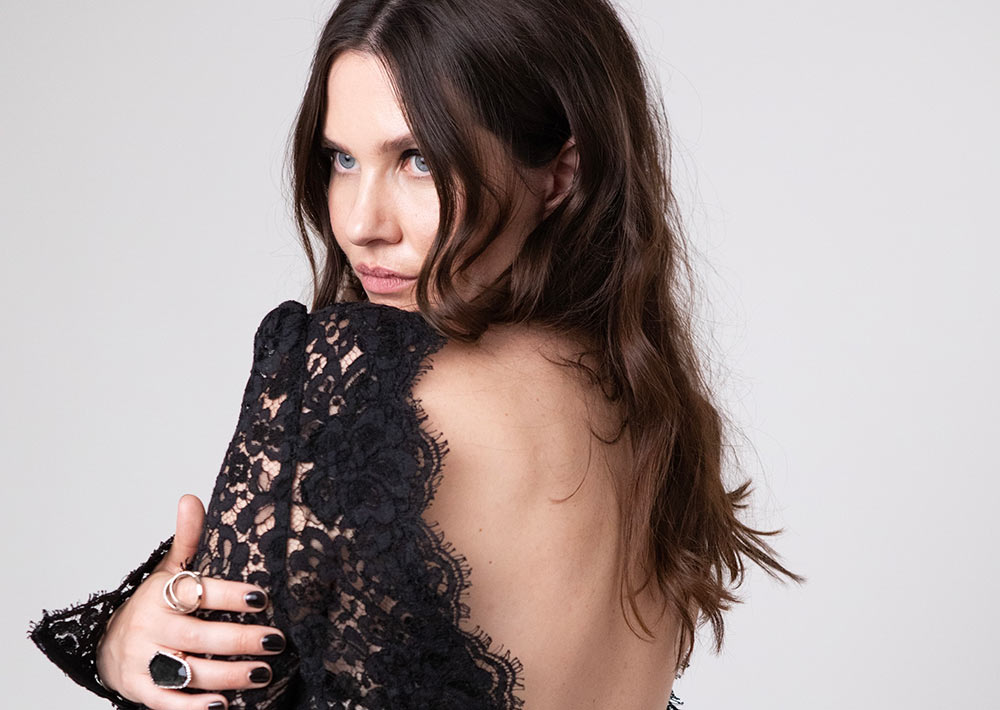
Josefin Öhrn: “With every language that you speak, there’s also the melody of the language.” Photo: Colette Slater Barrass
How the Swedish musician’s album was brought to life with the help of Bobby Gillespie, Andy Bell, and Anton Newcombe
London-based Swedish singer-songwriter Josefin Öhrn’s first solo album, Cherry, marks a slight departure from the hypnotic psych-rock of her former band, Josefin Öhrn + The Liberation, with whom she released three albums and earned a Swedish Grammy nomination. Produced by Kalle Gustafsson Jerneholm of Swedish rock band The Soundtrack Of Our Lives, the album also features Anton Newcombe of The Brian Jonestown Massacre on Lose Yourself, Andy Bell of Ride and Oasis on guitar, Björn Yttling of Peter Bjorn and John on piano and synthesiser, and Primal Scream’s Bobby Gillespie on backing vocals for Electrified.
The record began to take shape during lockdown and gradually developed into a collection of songs that moves between intimate pop and more psychedelic territory. Cherry Tree has a slow, hazy melancholy, while Electrified is more insistent, its pulse matching the song’s account of new desire. There’s also a lulling cover of Fred Åkerström’s Jag Ger Dig Min Morgon which finds Öhrn singing in her native tongue. We recently spoke to Öhrn about how the album took shape…
Discover more in-depth songwriter interviews
First of all, where did the decision come from to do a solo album, and how did that change the way you went about writing the songs?
“During the pandemic, my tour was cancelled and everything was so shut down. I actually studied photography for two years, but I couldn’t stop writing songs. All of a sudden, I realised, ‘Okay, I have a whole album. I have enough songs.’ I reached out to Kalle Gustafsson Jerneholm from The Soundtrack of Our Lives. He had co-produced one of my earlier songs, and I also really liked his studio and his sound. I was like, ‘Oh, maybe we should do something?’ So yeah, that’s how it all happened. I flew over to Sweden a couple of times to his studio and recorded there with him.”
What state were the songs in at that point?
“Most were at a demo stage, because I knew with Kalle that we had very similar references and the sound that we both wanted was aligned – so we built it all in the studio. Maybe two of them were more arranged; the ideas were already there… Electrified, and I think, The Shoreline.
“I showed Kalle references, and then we also played around quite a lot in the studio with some synths that I like, like a [Roland] Juno-60. But then, maybe he was like, ‘Oh, we could try this as well?’ He has so many instruments there, I felt like a kid.”
A magazine to keep. An archive to explore.
Get the latest edition, 40+ back issues, 3,200+ website articles and expert insights for songwriters

Interview: Of Monsters And Men’s Nanna Bryndís Hilmarsdóttir
The Icelandic indie-folk icons return with their first album in six years a... Read More+Introducing… Craig Stickland
A Canadian-born, Los Angeles-based country-rock artist who is showing great... Read More+Interview: Hard-Fi’s Richard Archer
The Staines band’s frontman on the album that turn... Read More+


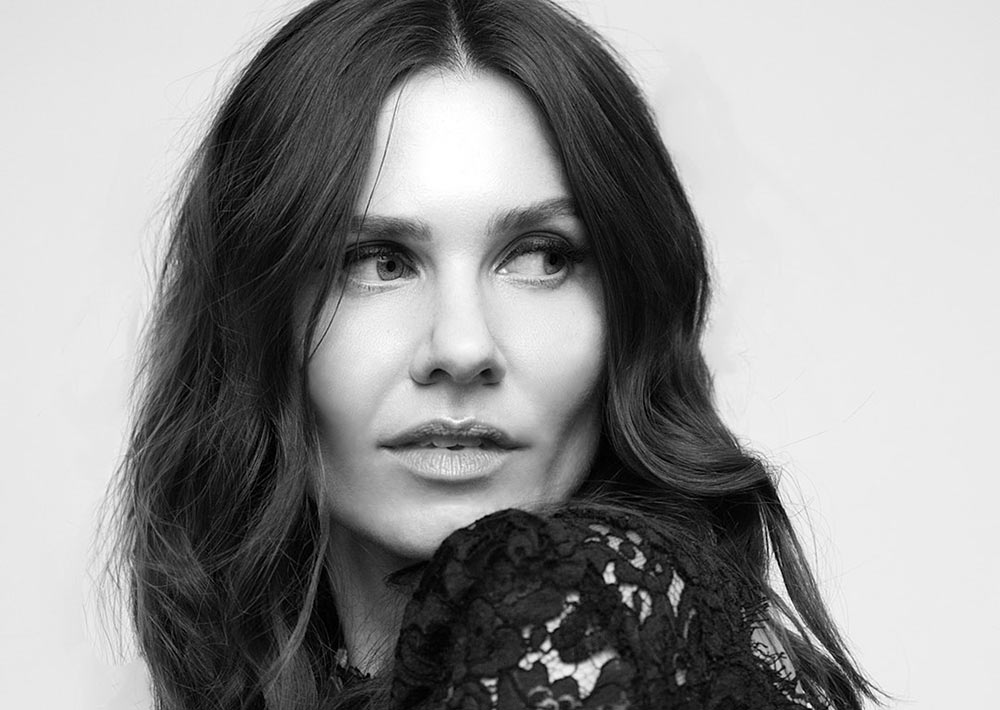
Josefin Öhrn: “It’s like it’s been waiting somewhere, and finally it’s time to burst through.” Photo: Colette Slater Barrass
Do you play a lot of instruments?
“I just play a few – guitar and piano, which I write the album songs on. I mostly hired really great session musicians. My main thing, I guess, is songwriting and then being a singer, I mainly get someone else to lay down my ideas.”
When you’re recording the demos, are you playing guitar or piano?
“Guitar and piano, and I have been playing guitar and piano live. Maybe I should play more instruments on future recordings as well.”

In the studio, is there a push and pull between letting the musicians be free but also getting them to play the songs how you want them to sound?
“The people I worked with are really talented and also had great ideas; it fit perfectly. For example, Andy Bell [Ride, Oasis] put guitar on some tracks, and I just loved what he did. Also, Björn Yttling, from Peter Bjorn and John, who also works with Lykke Li, added some synths. I’ve always loved his sound, so I was really happy when he added that layer. That was really fun, actually, getting these ideas from other people.”
Would you ever have to explain what the song’s about, or do you keep the meaning of the songs to yourself?
“I usually want to let them, and also the audience, have their own interpretation. I never want to be like, ‘You should feel like this or that.’ But sometimes people ask, especially if you’re in the studio… sometimes maybe they want to know a bit more. But I also like that everyone has their own interpretation.”
During that time when you couldn’t stop writing, was there one song that unlocked it all?
“I think it was Lose Yourself. I can’t exactly remember the order, but I think I worked on that one, Dreaming Of You, and Electrified at the same time. Those were the first ones, and I think The Shoreline, and then the rest came.”
How does the writing tend to work? Do you set time aside for it?
“I mix a little, or I jump between. Sometimes I definitely put time aside like, ‘Okay, I’m gonna write a new song this week,’ but sometimes I just have this idea, or I take up the guitar, and this melody comes out. It’s like it’s been waiting somewhere, and finally it’s time to burst through.”
Is there a time of day or a place that you find is best for that to happen?
“I think maybe evenings or mornings. During the day, if you’re out and about, you get all these impressions, but sometimes when you just wake up, or in the evening, your surroundings are a bit calmer. I usually write with pen and paper, and then on my laptop. But for melodies, I use voice recordings. It’s so like: overfill my phone with all these melodies.”
Which of the two tends to come first?
“Often, melody comes first. But I sometimes also have a lyric idea – a theme or something that I want to write about, and then I start. But then, with the lyrics, when you have the melody, you have to see which phrases work rhythmically. Or, if you already have lyrics, you try and match with them. If you’ve got the rhythm, you’re trying to write the lyrics that fit that rhythm.”
Is it difficult to write in a second language?
“I don’t think it’s hard, but I wonder sometimes if, because it’s not my first language, maybe it becomes quite creative for me because sometimes I need to be like, ‘Oh, how can I say this?’ I don’t think I’ve written anything in Swedish, but yeah, I’m doing a Swedish cover on the album, Jag Ger Dig Min Morgon.”
What are the challenges of singing in English versus singing in Swedish?
“In Swedish, because it’s my first language, I feel like it’s a little bit more vulnerable, or it hits deeper in a way. It’s more raw. But because so much music that I like is in English, you’re so used to hearing it, and then, all of a sudden, doing it in Swedish, it’s like a different experience. My voice still sounds similar, but with every language that you speak, there’s also the melody of the language.”
Were there any specific sounds, artists, or albums that inspired your sound this time?
“I listen to so much music. I guess that you do too, and everyone that’s in the music industry. Some of my inspiration has been the same for so many years. I will never really grow tired of Velvet Underground, Nico, and also Mazzy Star and that 90s era, and also Neil Young and great songwriters. At the moment, what have I listened to lately? Some French, late-60s/70s stuff, like Jacqueline Taïeb. What else have I listened to? Kurt Vile, Stereolab, I can just go on…”
Are you someone who likes to have to listen to other people’s music whilst you’re writing and recording, or do you find that you don’t want to listen too much because you don’t want it to colour what you’re doing?
“No, I think I’m inspired. I listen daily to music anyway, so I’ll still do that when I’m recording or writing. It’s always good for your brain, helping it to make new things.”
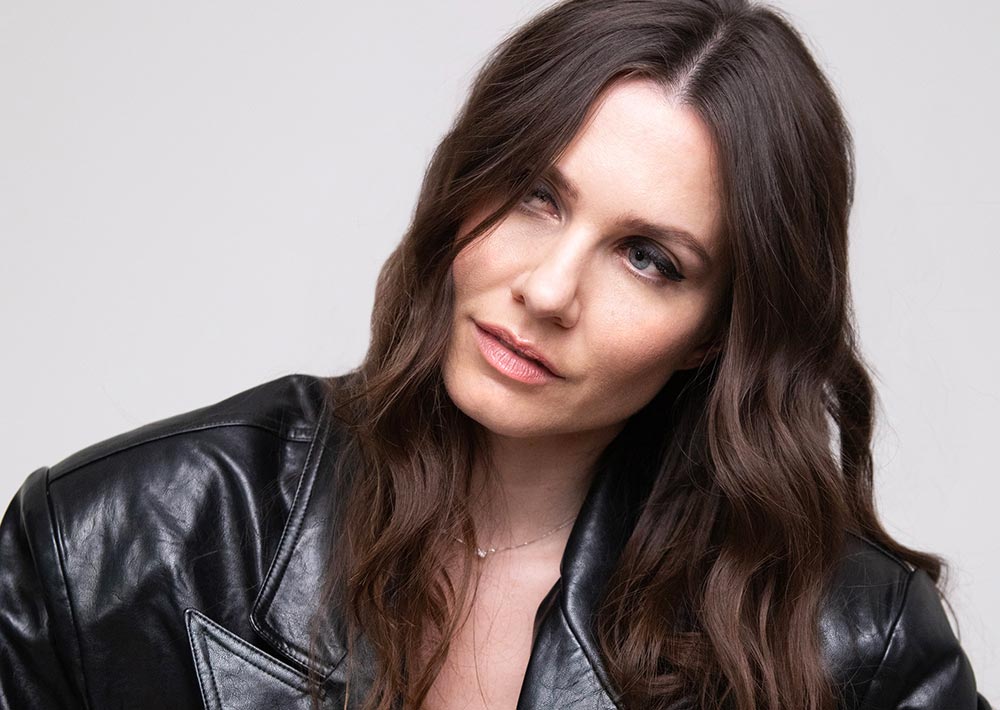
Josefin Öhrn: “I wanted this album to be like a film, like a journey.” Photo: Colette Slater Barrass
What other things do you do to conjure up creativity and inspiration?
“I think, usually, it just comes. That sounds so new-agey. Or I sit down and just play some chords. Sometimes I switch between guitar and piano – try out different ideas on the piano, and then I pick up the guitar. That can make me think of other types of chords, progressions, and other types of melodies.”
Let’s talk about a couple of the songs. We really liked The Real Thing with its rippling synth. How did that one come about?
“Thank you. I’m so glad you like it. That was the last song that was added to the album. Me and Kalle had this idea: we had done all the other songs, and then we thought we should have something more dancey. We wanted something 70s, a bit like Donna Summer, something you could dance to, a party song. Then, the lyric was just a comment on this dating-app era.”
That suggests that you’re aware of an album being one entity that ebbs and flows rather than just a collection of individual songs…
“I wanted this album to be like a film, like a journey. I do also like albums where the songs are maybe more similar in tempo, or it doesn’t matter that much to me. It’s about having an interesting atmosphere, or an interesting experience when you listen to an album. We wanted the album to keep the attention.”
The only other song we wanted to talk about is Electrified. What was it like to work with Bobby Gillespie, and how did that collaboration happen?
“Most of the songs we recorded in Gothenburg in Kalle’s Studio, then we had one day at RAK studio in West London. I’m a fan of Primal Scream and just love their music. I just reached out and asked if he was interested in doing some backing vocals, and then yeah, he showed up in the studio and laid down his vocals. We had a great time.”
Any final thoughts about the album?
“I’m feeling really good. I’m really happy that I got to work with these amazing people, like Kalle, my producer. I’m really happy with the production and arrangement, and how it sounds. I feel like it sounds quite lush, if I may say so. Then I’m also really happy to have Anton Newcombe [The Brian Jones Town Massacre] work on Lose Yourself because he’s such a great songwriter, and I think that song turned out beautifully. I’m really excited for people to hear it.”
Josefin Öhern’s debut solo album Cherry is out now. For new music, tour dates and more, follow @josefin_ohrn on Instagram
More Like This
Interview: Matt Owens
The Bath-based musician, festival organiser and founder member of indie-fol... Read More+Interview: Of Monsters And Men’s Nanna Bryndís Hilmarsdóttir
The Icelandic indie-folk icons return with their first album in six years a... Read More+Introducing… Craig Stickland
A Canadian-born, Los Angeles-based country-rock artist who is showing great... Read More+Interview: Hard-Fi’s Richard Archer
The Staines band’s frontman on the album that turn... Read More+







More Like This