
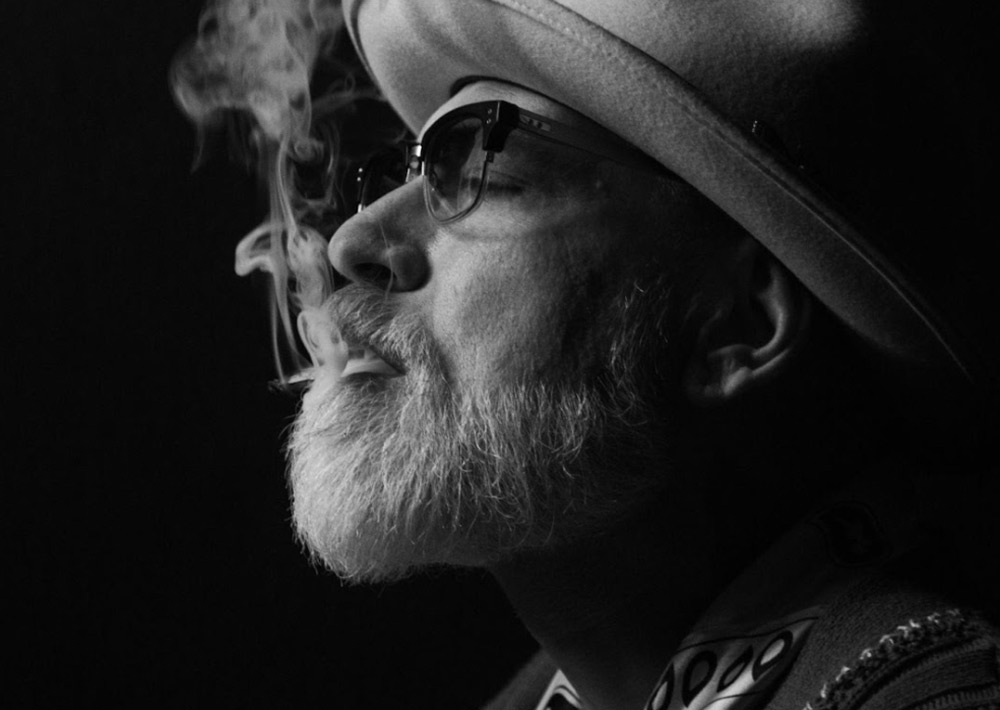
Everlast: “I know how to tell a story in a way that’s earnest, connectable, and relatable.” Photo: Lisa Franchot
The House of Pain veteran on writing in Nashville, seeing songs as pictures, and finding inspiration after eight years away
In some ways, Everlast and Nashville seem like strange bedfellows. The Long Island-born rapper first made his name with House of Pain, whose 1992 hit Jump Around remains one of hip-hop’s great party records, before reinventing himself with 1998’s Whitey Ford Sings the Blues, a landmark record whose fusion of rap, blues, rock, and acoustic songwriting remains hugely influential.
But Music City may have been waiting for him all along. On Embers To Ashes, his first album in eight years, Everlast turns his attention to the kind of songs country’s finest have always understood: stories about loss, regret, survival, and the things people do to get through the night.
It is an album shaped by the years since his last record, during which his Los Angeles home was destroyed in the Woolsey fire, the pandemic upended life, a health problem left him unable to play guitar, and his marriage ended in divorce. Produced by Yelawolf and co-written with writers including D-Ray, Aaron Lamb, and Jackson Nance, the album moves from the stark opener Losing Man’s Game through murder ballads like Never Coming Home and the autobiographical 1987, finding truth in all of them.
Across 17 songs, Everlast draws on three decades of experience without sanding away the rough edges that have always made his work distinctive and his voice so memorable. Here, he talks us through the making of Embers To Ashes, from the Nashville sessions and unlikely co-writing partnerships to his ability to see songs as pictures…
More interviews with songwriters
Congratulations on the new album. What are your reflections on it at this point?
“I brought in a couple of cats. Well, Yelawolf brought in a couple of co-writers to work with me, that was a new experience in a lot of ways, and that will always make these songs a little different than the previous songs I’ve done for the last five or six albums.
“I was really heavy about writing my own lyrics, but the couple of cats that Wolf brought in were the right cats. They grew up on Whitey Ford… They got it. We got to know each other and it all became parts of my story; even stuff they would bring to the table and be like, ‘Hey, I was thinking of this,’ and it would obviously be about something we had talked about, so it worked well. It was a good combination of folks.”
A magazine to keep. An archive to explore.
Get the latest edition, 40+ back issues, 3,200+ website articles and expert insights for songwriters
Was it the first time you’d been to Nashville for songwriting?
“No, I went to Nashville a long time ago, but I didn’t like it, it was like some old guard. It wasn’t the young cats that it is now. In fact, a lot of these writers that I’m talking about, and the likes of them, a lot of them credit Whitey Ford Sings The Blues with changing a lot in the country scene, which kind of blew my mind. I guess it just gave all these cats the permission to like both country and hip hop.
“So, taking it to Nashville was something that… I’ve been making records out of my own house studio for God knows how long, and I just felt like mixing it up, taking it back to the old school, locking out a real studio somewhere, and having to work every day, or else you’re paying money for nothing.”
And did the songs all come together in the same way?

“I showed up with a bunch of songs, and maybe only two of those actually made the album because we just wrote new songs every day. We went in, we wrote songs, and then we turned around and there was like 17 of them, and we liked them all, so we cut them.
“You write them and then you cut them. We liked all the songs, we cut them all, we liked all the records – everything we wrote. I came home with a bunch of songs that didn’t even make my own album, my own songs, but it wasn’t because they weren’t good enough, it was because they didn’t fit what was going on and what happened, the group being there all together, and that’s the way I like records. I don’t like sending records back and forth via email and all that.
“We all got in the studio for a couple months, made what we made, and that’s what it is. There’s something to that, you know. You capture something and you move on. I think we got lucky and we captured a lot of good shit.”
There are some songwriting elements we’ve picked out that you do so well. For example, you have very specific verses that relate to your life or the life of a character, and then you manage to bring it together in a chorus that is more universal. Is that something you’ve learned to do consciously, or does it happen naturally?
“Well, I think in the best songs, that’s what happens. At this point in life, as far as songwriting is concerned, the only point is finding these points of highest common denominator that we can all say like, ‘Oh shit, me too.’ Or, ‘I didn’t know anybody else felt like that.’ There is no thing or feeling that any of us have experienced that others haven’t. It’s main character syndrome. We all got it. It might be in a different shape or form, but if you express the idea in the right way, everybody will say that, ‘Oh shit, me too,’ and that’s really what a song is for to me.”

5 minutes with… Kelsea Ballerini
The two-time Grammy Award-nominated songstress from Tennessee talks about h... Read More+Interview: Colbie Caillat
The singer-songwriter and former Gone West member ... Read More+Interview: Sugarland’s Kristian Bush
One half of the American country music duo reveals how he has transformed h... Read More+




Everlast: “It’s like slapping clay on a sculpture; sometimes you’re going to take some away, sometimes you’re going to add some.” Photo: Lisa Franchot
Do you have a radar for things that happen in your everyday life, or on the news, that make you think, ‘That could be a song,’ or is it more that they somehow come out when you’re writing?
“You know, there’s no particular formula for me. It could be a phrase that caught my eye on a billboard, or I overheard a stranger say, or something that happened to me. Or it could start with a simple little chord pattern that I like the rhythm of, and I then start filling it in with words.
“It’s like slapping clay on a sculpture; sometimes you’re going to take some away, sometimes you’re going to add some. I don’t know how I do it, bro. I’m a lucky, fortunate guy who knows how to turn a phrase here and there, and I know how to tell a story in a way that’s earnest, connectable, and relatable.”
When you see those things, the billboards, or hear those conversations, are you making notes on your phone or writing them down at all?
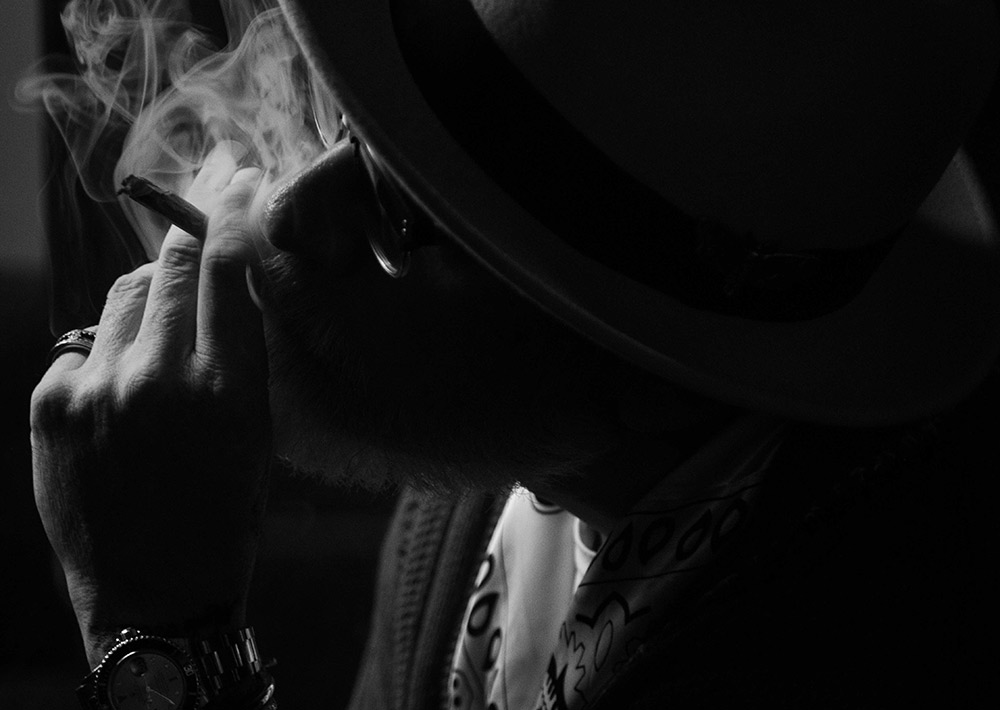
“I have this weird… I don’t know what it is, it’s not OCD, but I don’t know if it’s a mental disorder or something… everything is pictures to me. I’ve never written down a rap or a song lyric. There’s something about the picture; when I commit the words to paper, they become two-dimensional, and they’re not the picture anymore, and I’ll lose complete and total interest in it.
“Even in the aftermath of making records, where there are places you have to submit the lyrics, I have to have other people do it because it’ll ruin it. It’s a bizarre thing. That’s why I don’t know if it’s some sort of disorder. But yeah, I don’t write things down. It’s like picture books or photo albums.”
I’ve heard of synaesthesia before, where people see music as colours…
“I mean that’s the same realm. I also equate songs to little animals; if I can’t train them to stay close by then they’re not mine. If I’ve got a song… I’ve got to play it probably a couple hundred times before I fall asleep, just to make sure. I’ve had it happen before where I know I had something but then woke up to like, ‘Argh’… but I would have lost it anyways if I wrote it down. You dig? It’s that serious.
“If I write it down, I’ll hate it. I don’t know if it’s to do with homework/related to schoolwork or just the fact that I see it as pictures. I see everything as a movie. If you listen to my music, it’s pretty visual. The lyrics are visual, and I think that’s the reason why, because I’m literally seeing and describing picture albums, photobooks, or sketchbooks of stuff.
“There’s one thing I saw that was close to it… there used to be a show called Oz about jail and there was a poet [called Poet and played by Craig Grant AKA muMs the Schemer], and he always had his poetry book around. You didn’t find out for several episodes that in his book it was literally drawings. He would look at them and read the poems and I remember seeing that and being like, ‘Oh my God, that’s the closest thing ever to how I feel about lyrics.’ It’s like, if I’m talking about a person, I’m seeing that person in my head. If I write their name, it’s just a name. I don’t deny that it’s weird, but it works for me.”
Are you as relentless in the studio, or is there a little bit more experimentation at that point?
“I’ve always had collaborators on the musical side, but it’s always been like, once you get the idea… Hey, I’m a power chords and cowboy chords guy. That’s the extent of what I do, but when I’m turning those around and I get a song going, the song will start telling you how to dance around it.
“That’s why I always have a really good keyboard player or another good guitar player around to help dance around these ideas and make them come a little more to life. I was never taught how to properly write a song, so I just do it. I build it almost like a rap song, samples and layers and parts in that manner.”
Is it easy to find a common language so that you can get what you need from the people you’re working with?
“Musically, it’s really easy, because at the end of the day, you can just start humming shit… it’s that simple. If you’re working with the right guys, you keep working until you hit the right spot. Lyrically, I would imagine it could probably be very difficult. This was a fortunate experience. The people that we brought in, I hit it off with very well. They’re good friends of mine now.
“The reason I like to point it out so much is because they did such a good job at times that it’s seamless. There’s nothing on there you wouldn’t have thought I wrote. Don’t get me wrong, I was involved in the entire thing, but there’s definitely a bunch of songs that they pulled up with. Like, ‘What about this idea?’”
Any examples we could delve into?
“I mean, Stones: D-Ray [David Ray Stevens] brought me that, and it felt like he was telling my life story right there at that moment. We took away a little bit, added a little bit, but for the most part, that’s a concept and an idea he walked in with and played for me. In fact, that’s the first song I ever said, ‘I’ll cut that,’ to that wasn’t mine. I was like, ‘I will cut that record right now.’ And that’s what opened the door.
“My Hollywood is another one of his records. He literally pitched it to me like, ‘Hey, I got this record. It’s pretty corny, but for some reason, I feel like if you do it, it won’t be corny.’ I think he waited purposely till we were pretty deep into the record to pitch that one because he had my trust, and so I did it. I just said, ‘Fuck it. What’s the harm? If I hate it, we press erase.’ I wound up liking that song a lot because it’s a little poppier than anything I normally do, and it’s got a little bit more of an upbeat thing going to it, even though it’s still dark. That’s the kind of thing I’m talking about. If I just showed up and said, ‘I wrote all these songs,’ nobody would have questioned it.
“I’m not reaching out or trying to do what youngsters are doing or anything. The right couple of guys were curated to sit with me and understand the assignment and they fucking nailed it. Everybody in this project nailed it. Wolf producing it, nailed it. I had a blast. It was an easy record for me because I was just there to do. I was the guy playing some guitar and singing a few songs.”
It must have been a fine line for them to walk between knowing your material well enough that they could write something that you would sing and then not writing a parody of an Everlast song…
“Well, I mean, most of the songs we wrote together on the spot. Losing Man’s Game was the first day. We walked in and Chief [Aaron “The Chief” Lamb] was playing with some chords and toying around with some words. I sat down next to him and next thing we know, we had Losing Man’s Game. I was like, ‘Wow, okay, I guess that’s what we’re doing. We’re going to write different records every day and see where we wind up in a few weeks.’
“It was a blast, you know. I then went home for a little bit to see my kids, and then went back out and we actually cut the records – it was a fun experience.”
Do you see the songwriting and the cutting of the song as two distinct elements?
“For me, there’s never really been a line between them because, like I said, for the most part I just cut records here at my home studio. You could be cutting a record and then be like, ‘I’m bored right now. I’m gonna go upstairs and watch the basketball game.’ You know what I mean?
“We went out there to Nashville purposely. Like, ‘All right, we’re gonna write for this much time, and then we’ll know what we have at the end of that period, and then we’ll go back and we’ll actually cut a record.’ It was planned. Going to Nashville, putting yourself on a different time and a different clock because you’re not cutting a record at your home studio, you’re paying $2,000 a day to lock out a studio for a month. You get a little bit more serious about getting it done.”
What studio was it?
“We cut it at a place called East Iris in Berry Hill over there in Nashville. It’s where the old school house studios are. Wolf had his own residential studio there for a while. Yeah, so we wrote 80 percent of that album in the first two weeks or so.”
Everlast: “Everything is pictures to me. I’ve never written down a rap or a song lyric.” Photo: Lisa Franchot
And are you going to continue writing songs and making albums in this way?
“I don’t know. I don’t write a lot, but I came home from that trip and went on a spree myself. I think it did something for my inspirado. I got a lot of songs. I’ll go out there all the time and sit with these few people that I like to sit with and write songs with the full intention of trying to pitch them to other people, but then it’s like, ‘No, I want them. That’s my song.’ I’ve probably got another album ready to go, oddly enough, which isn’t like me.
“Like I said, some of these ideas, even as I listened to them myself, could have been mine and felt like they were mine. There was still stuff that I needed to purge, and working with the musicians and writers, you learn a few tricks here and there that you might not have tried before, and that gets worked into some of the new stuff you’re doing. It’ll be interesting, I might cut it. There might be one more record left in me after this. We’ll see.”
Talking of those tricks, do you have any songwriting tips that you could share with our readers?
“I know so many cats that know so much more than me about music. I credit most of my lyrical abilities because I started as an MC, and we had to fill songs with eight times as many words. This is, I don’t want to call it easy by any means, but it’s much more freeing to be able to be like… you don’t even have to rhyme; you just have to be able to express an honest idea.
“Most of the music that’s pop music; it’s really based, lowest common denominator energy. I’m not hating as an old guy because I hear it while my daughter’s playing music in my car. I don’t tell my kids they can’t listen, because I know they’re gonna go do it anyways. But what I try and do is the opposite of that, which is to go and try to find the connection, the highest common denominator of communication where you can actually be decent and not preachy. It’s a connection of like, ‘Wow, I didn’t think anybody else thought that.’
“Money, fame, all that shit is awesome. It’s great, but some of the best moments of my life have been getting a message from somebody like, ‘Wow, this song changed my life because I thought nobody else felt like this.’ It’s that there. You’re leaving this life with that on your record. You know what I mean? Like, somewhere you’re gonna get a little credit for that. It’s very rewarding if you can understand how deep that is, and how all you really did was talk about yourself, but yet it became about that other person because there is no other person, there is no self.”
Plus, it means you’re permanently relevant because whatever you’re going through in life, whatever stage of life you’re at, there’ll always be people going through those same things…
“Well, I don’t start or stop. I just do it when it comes. I always have a guitar on me. There’s a guitar within three feet of me right now. Even in all these eight years, I’ve had a guitar in my hand all the time, sometimes playing a cover, having some fun, playing a song or two.
“Then, there’ll be nights like George Floyd a couple years ago, where I wrote Rubber Bullets. That was one of the first ones that I was like, ‘Oh, something’s about to happen for me record-wise.’ Creatively, that felt like the beginning of something. It’s just a matter of that little stray animal wandering up and I give him a little piece of food and ask him his name and ask his story and see if he’ll stick around.
“I’m a blessed person to be doing what I’m doing. At this point, I really am here to take everything that’s ever happened to me – good, bad, ugly, pretty, whatever – and lay it out there and be like, ‘Yo, anybody else, is this helping?’ What’s the thing they do on the internet, ‘I don’t know who needs to hear this but…’ that’s kind of where it is, in a weird way.”
Everlast’s new album Embers To Ashes is out on 28 August and he will also be embarking on an intimate run of UK in-stores starting at Brighton’s Resident Records on the same date. Find out more at ffm.bio/everlast
More Like This
Interview: Lukas Nelson
With the new POTR album ‘Sticks And Stones’ on the... Read More+5 minutes with… Kelsea Ballerini
The two-time Grammy Award-nominated songstress from Tennessee talks about h... Read More+Interview: Colbie Caillat
The singer-songwriter and former Gone West member ... Read More+Interview: Sugarland’s Kristian Bush
One half of the American country music duo reveals how he has transformed h... Read More+







More Like This