


Hannah Friedman’s Technique article first appeared in Songwriting Magazine Autumn 2023
Drawing on years of experience working for the likes of Disney, Pixar and Lucasfilm, this accomplished songwriter offers invaluable advice
1. DON’T BE AFRAID TO PIVOT
[For me], it’s never been one big break, it’s really a series of little breaks that build on each other – continuing to pivot and do things that I’m interested in. It’s easy to be pigeonholed, not because people are jerks, but because it’s easier to see someone in one way. So when I was in comedy, I would also do music for those shows. And then I would do animation and I created an animated show. And I would also do drama. Even at Pixar, I was working on a musical theatre.2. DO BUILD YOUR SKILL SET
Being multi-skilled is a huge asset. I think I beat myself up a lot as a young artist for not being the greatest jazz improviser on piano or not being the greatest vocalist. But ultimately, what I’ve experienced is that I do have unique assets in the constellation of things that I love. All those different facets, you can triangulate into something that’s more unique than just being one thing. And I’m glad now to have that experience.
3. DO BE PLAYFUL
Adaptability is a huge part of it, but also playfulness. There was an episode of The Muppets Mayhem where they were only writing songs that were terrible, and it was very freeing. I thought, okay, I can write a terrible song! So that was just me being playful, thinking it would be hilarious if they sang this very bad song about minestrone soup. Oftentimes, an idea can come that seems silly, and it’s very improvisational. And it’s not because you squeeze it out of yourself under great duress, it’s because you were having a good time.



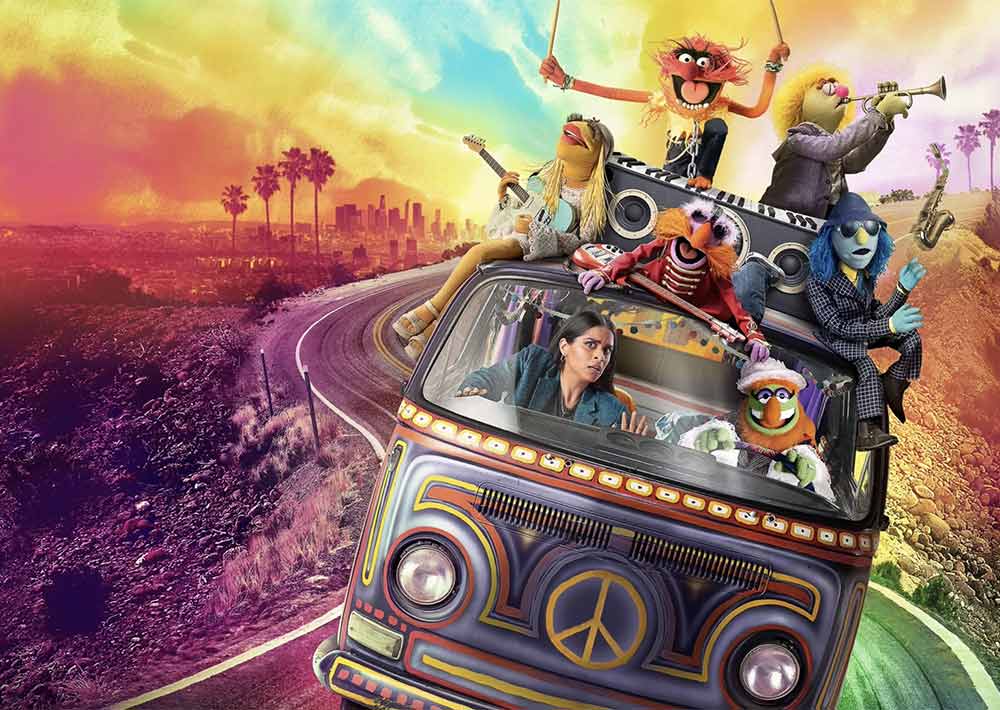
Hannah Friedman: “There was an episode of The Muppets Mayhem where they were only writing songs that were terrible, and it was very freeing. I thought, okay, I can write a terrible song!”
4. DO A BRAIN-DUMP
What I’ve learned is to do a brain dump – with no judgment or expectations – really putting all your ideas on paper. Good ideas, bad ideas, rhymes, no rhymes, images, pieces of dialogue… I just kind of vomit it down for about 10 pages. It looks like I’ve gone insane! If anyone found the document, it would make no sense. But then, once I have that amount of material, usually I’m able to comb through and bold the things that I think are really good. Then I make a new document and transfer over the ones I want, like panning for gold. It’s usually a Word document on a computer. It’s a little bit more focused [than stream of consciousness], but it’s not structured.
5. DON’T FORCE IT
All you can do is show up and do your best job with the information that you have that day. Then you might not be done yet, you might not have all the answers, and that’s a really uncomfortable feeling. But get comfortable with that feeling, because it doesn’t mean that the song is bad or that you’re bad, or that it’s not a good idea, it just means that you don’t have enough information yet. And that might come from a collaborator…
6. DON’T GO ALONE
Making a lot of content is really important because you have to prove you have the material. So I would also say collaboration is super-important. If you’re a great guitar player, but you’re not a great producer, find a great producer and do some free guitar riffs for them. At first, when I moved to LA, [networking] sounded like a dirty word, but in my experience, it’s really just been from a genuine place of creative collaboration. So it’s really crucial to find people who you’d like to work with and try to be helpful to them. And hopefully, they’ll be helpful to you too!
7. DO RESEARCH
[When you’ve found them] figure out what those people are doing. Do they have studios? Do they have songwriting sessions? There are jams all over the place, where you can meet people and share what you’re excited about. So I think of it as ‘mutual enthusiasm’. If you love New Orleans jazz, find that community and then learn from that community, and be of service to that community.8. DON’T SELL YOURSELF SHORT
I think learning to self-advocate, but not in a creepy way, is really important. You want to be confident and enthusiastic, but not off-putting. I think that’s a fine line. It comes from experience and also being respectful of people’s time. But it’s important to put yourself out there because nobody’s going to know what you are passionate about – and good at – unless you tell them.
A magazine to keep. An archive to explore.
Get the latest edition, 40+ back issues, 3,200+ website articles and expert insights for songwriters
9. DON’T WAIT (FOR PERMISSION)
Don’t wait for someone to make you something. For example, I always wanted to be a theme song writer, but I didn’t wait for someone to come and say, “Hey, I think you have a theme song in you.” I had to really put myself out there, use my enthusiasm and share what I was capable of.
Then take notes and ask for feedback. Usually, if you’re polite about it, people will be generous about giving you feedback. You don’t always have to take it, but you learn every time you hear something.
10. DON’T WAIT (FOR PERFECTION)
When exposing your music, it’s better to have a B+ finished track than an A+ track that never gets there because it’s never done. As an artist, I love it when things are great and I admire other people’s work, and it’s easy to think things have to be perfect. But the problem with that is it doesn’t result in a finished product. I think it’s okay to turn in a song that’s not your best because you’re getting better. So finish things for the sake of finishing them, so that you can then do new things.
11. DO SET DEADLINES
Working on a deadline is such a gift for me because it’s one of the only things that results in my finishing things. [Rather than] waiting around for it to be the perfect moment and for inspiration to strike, I need to have deadlines, and I can’t fake them. So give yourself external deadlines or set a date with a producer where you’re going to rent studio time, and you’re putting money into it.
12. DO YOU
Songwriting is so individual. It’s not like becoming a barrister or a doctor, where it’s really regimented and there are clear steps. This art form is so personal; everybody’s journey is personal, which can be scary, but also it’s so helpful and beautiful. Allow yourself permission to take whatever is happening in your life and channel that into your unique perspective.
Hannah is a writer, producer and musician with a long list of high-profile credits, including the Disney+ show The Muppets Mayhem. Find out more at hannahfriedman.com
More Like This

Mike Batt on finding meaning in your songs
The man behind the music of The Wombles and Katie Melua shares his tips for... Read More+Songs In The Key Of… Montreal
Canadian eight-piece collective Busty and the Bass select a genre-hopping p... Read More+How to tap into the unknown by Jason Gould
The New York singer-songwriter on the power of collaboration, and how to co... Read More+









More Like This