
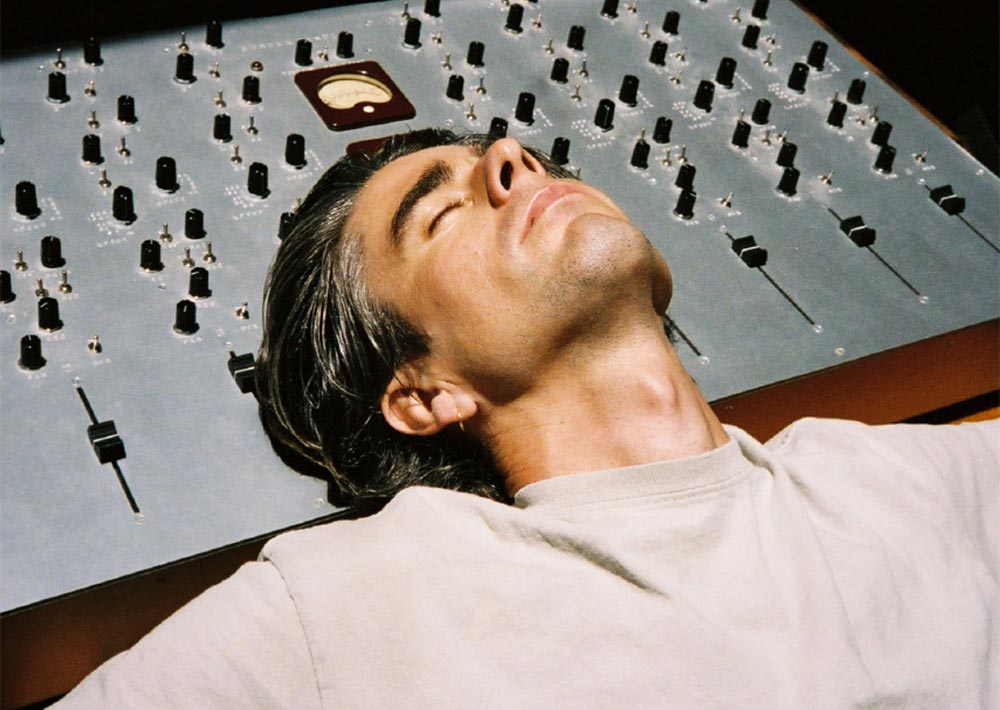
Leroy Clampitt: “Every record you make, you get better at making records.”
The songwriter and producer behind some of pop’s biggest records on the instinctive process behind new solo album ‘Get Happy’
New Zealand-born, Los Angeles-based Leroy Clampitt has spent much of the past decade helping shape the sound of modern pop, working behind the scenes as a songwriter, producer, and multi-instrumentalist for artists like Madison Beer, Lily Allen and Sabrina Carpenter. While his career has largely centred on helping other artists release their own music, Clampitt has always kept a collection of his original song ideas in his voice memos. These were written in spare moments, without a particular artist in mind, and sometimes too unique to pitch to anyone else. Those ideas eventually became Get Happy, his debut solo album, released through his independent label, Sorry Susan Records.
Across 10 tracks, the album explores love, work, burnout, and the small details that make up everyday life. Written and largely performed by Clampitt himself, it is an opportunity to follow his songwriting instincts without compromise or overediting. Talking to Clampitt, what stands out isn’t simply the move from working behind the scenes to releasing music under his own name, but how little he sees it as a departure from the career he has built. For him, Get Happy is a way to scratch a “creative itch” before returning to the studio to co-write songs alongside the top artists he admires…
Discover more interviews with top songwriters
Can you start by telling me about the idea behind releasing your own album as an artist?
“I was thinking about some kind of project I could do where I could be isolated for a little while and see what happens creatively when I’m truly alone. It’s a real big push and pull collaborating with artists and other songwriters. That’s the way it should be. You should really like letting them come up with as many of their own ideas as possible and then you fill in the gaps, which is what I do and what I love to do.
“But at the same time, I thought it’d be an interesting experience – an experiment, basically – to be alone and try to see what happens with purely my own ideas. It became clear that the easiest thing to do was to go make a record. Every record you make, you get better at making records. So, I was like, ‘At the very least, if nothing happens, and it’s not good and I don’t want to put it out, then at least I’ve learned something.’”
Was this your first time writing alone in a long time, or has that always been a part of your personal songwriting practice?
“I would always have these songs after sessions or on days off or on the weekend and stuff, where I would have an idea that I just like to come up with, and I think a handful of them have been like in a world where I could actually like to pitch them out to people. I had a few placements that way. But, most of the time, they’re way too weird for anyone to like. People would always be like, ‘Oh, that’s cool, but no one’s gonna put that out.’ It’s always been something I’ve done, but mostly just for fun and to scratch an itch creatively.”
A magazine to keep. An archive to explore.
Get the latest edition, 40+ back issues, 3,200+ website articles and expert insights for songwriters
Your music as an artist sounds very different from the music of your collaborators. Was there any intimidation or hesitation to release something that sounds so different?
“Yeah, totally. There are two ways to look at it. Earlier on, I thought if I’m gonna put out my own album, it needs to be the most impressive and innovative production that accentuates what I do as a producer, and everyone needs to think it’s cool and impressive. Then it was really interesting to see how this shook out because my album is very much not pushing the envelope, production-wise or anything like that. I think that’s a direct reaction to what I do, as you know, in my day job, where I’m working with Madison Beer or Lily (Allen) or Sabrina (Carpenter).”

Interview: Guy Chambers
As Robbie Williams’ creative partner, Guy Chambers... Read More+5 minutes with… Jenna Andrews
As a co-writer, producer and publishing company head, this talented Canadia... Read More+5 minutes with… Payton Smith
The teenage rising country sensation talks about his impressive self-titled... Read More+



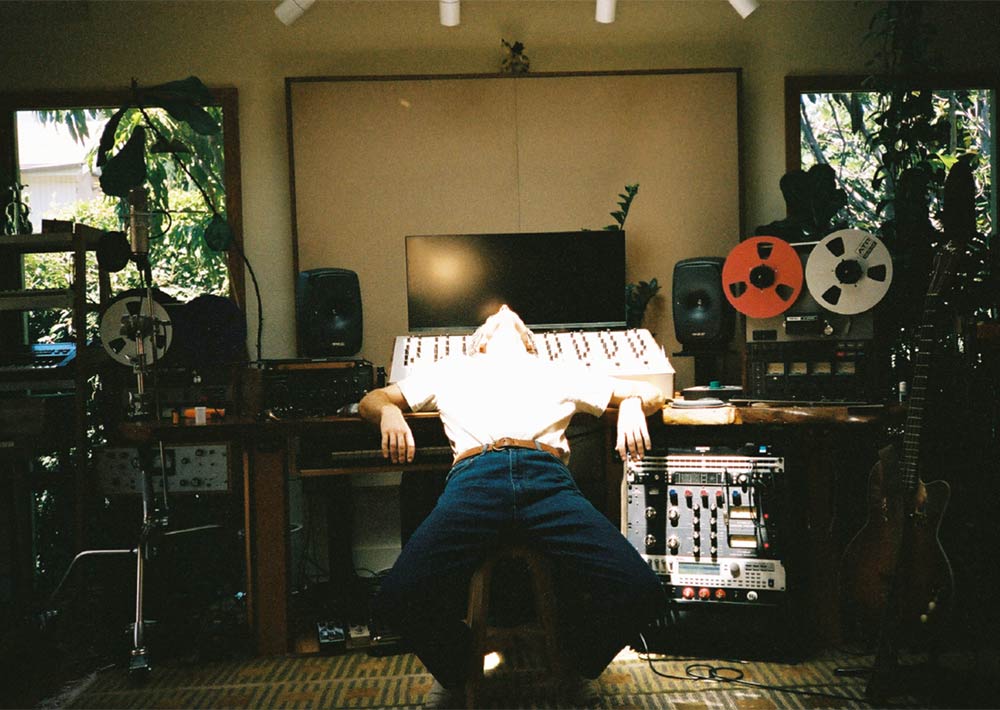
Leroy Clampitt: “I had the idea of wearing a tape machine because I use a tape machine to make music a lot of the time.”
Can you speak more about how your artist sound differs from the artists you work with?
“These artists are trying to be on the cutting edge, this thin line of innovative but familiar in a way that becomes like mass appeal. My reaction was, I want to make the most effortless, good, tasteful-sounding music that feels like you didn’t really try. But effort went into making the songs as good as possible.”
And how did writing and producing this album feel different from your normal work?
“It was freeing because I’m not competing with any of the artists that I’m working with. It’s very much its own thing that serves me working with them because I’ve scratched this itch creatively. I don’t need to bring my own preconceptions into an idea that they might have. It can be a completely separate thing that doesn’t take time or energy or love away from the other thing.”
And was there any songwriting project, artist, or album that inspired that?
“Ah, really good question. Well, I think there’s been some amazing examples in the past of people doing side projects, which is what this is, even though I got my main name on it. But it’s really a side project for me, and I feel like a great example of that is Damon Albarn with The Gorillaz and everything else he’s done from Blur.
“Then, I got really into 60s and 70s Japanese J-pop music. I collect those records, and a lot of the inspiration for this album and setting up my own record label was looking at the back of those records and being like, ‘Oh man, this guy’s from that band, and he put out her album on his label there, and she works with this person, and yada yada…’”
The album’s titled Get Happy; why did you choose that song as the title track and what are some of the overall themes?
“I just thought it was a funny statement because you could read it however you want. But the way I see it is kind of like a demand, where it’s like you’ve got a gun to your head and it’s like, ‘Get happy now!’
“But it was also a statement on the world with social media. You gotta look good and be happy. Everything you post is positive parts of life and stuff like that. And if you’re feeling down, at the same time, the whole world around you is looking so happy and good.
“It was kind of funny because that song is a bit different from the rest on the album. But I made a lot of music like that, whereas the swampy, organic, big-sounding thing, and the songs that ended up on the album were a lot less like that. But I really liked that one song. The character and the energy of it felt like a great thing to have in the middle of an album.”
Was there a specific song that was most cathartic to write?
“All of them were very cathartic to write. Most of them just came to me, or at least the initial idea came to me. Then, I got to sit with the initial idea for a second, and slowly chip away at what it could be, which is quite nice because usually, as a career songwriter, you go in for one day and start something from scratch, and you finish that day, and then it is what it is. I would say everything came pretty easy.”
If the ideas came easily, was there a song that felt the most rewarding to finish?
“The song Ricky Martin took the longest to write, but ended up being the most satisfying. I got the verse really quickly, and I was really happy with how it sounded and flowed. What I was saying was really interesting. It sort of intimidated the chorus. That song had so many different chorus ideas. I battled with it for a while.”
“Actually, when I recorded the album, I hadn’t quite figured it out. I was still chipping away at it. It wasn’t until I got home from recording the album, like the week afterwards. I was playing it for my partner, and she said, ‘Oh wait, you can’t figure out the chorus? It should just go like, you know, “living a crazy life.”’ And I was like, ‘Wait, what? Okay, wait…yeah.’ She really helped me crack that, and then it became like this big epic thing.
“I like if you’re just hearing that song in the distance, you’re like, ‘Oh, cool, that’s a big, epic, emotional song.’ But when you listen to the lyrics, what it’s talking about is kind of funny, I suppose. I like it when songs can be dimensional in that way.”
It reminded me of the Nashville style of songwriting, where there can be so many dimensions to the story and references. Was there any inspiration from that?
“Yeah, I got really into country music when I moved to Los Angeles because they didn’t really have it in New Zealand in the same way. Well, they have it in New Zealand, but it wasn’t on the radio like it is here. I just got really into the songwriting.
“I think a lot of current country is so trash, but I really love Alan Jackson and John Anderson and stuff like that. They’re always telling stories like they’re in on the joke, but the character that’s singing the song isn’t. It’s so brilliant.”
You wrote all these songs by yourself, but at any moment did you think about adding another songwriter or co-writer?
“Well, that was the whole beauty of the project, and again, I don’t want to sound antisocial… it was an opportunity to get away and be by myself. It would have defeated the purpose.”
Are there any tracks that you removed from the album that might come to light in another project, how did you edit it down?
“Every project that I’m on as a producer, I’m like A&R in some way or another. Like with Madison, me and her are the A&R, essentially. I think there was one song that I took out and then one song that I added in at a certain point, but it was a pretty low creative waste project. I basically had my playlist of my ideas, which was probably 50 or 60 voice memos, and I picked the 10 that had stuck around in my heart for that long.”
And how long did the album take you from start to finish?
“Basically, most of this album was done in two weeks, so I didn’t have time to overthink and overcomplicate anything too much. That was such a great experience for me, because, quite often, I’m working on an album for a year or two and overthinking everything.”
Did you go in with that timeline in mind, or did it just happen that way?
“I had a week in a studio in Northern California on my own, and then I had the week afterwards blocked out to finish everything. It was just the time that I carved out for myself in between other projects.”
You use your real name for the artist project, but in the cover art your face is hidden. Was that intentional, because you wanted to remain behind the scenes?
“I did think it was cool. I’m a really big fan of a lot of those… Daft Punk, I guess this is the best example, where there’s this mystique to it. I had the idea of wearing a tape machine because I use a tape machine to make music a lot of the time. So, I thought it was this cool character I could create.
“God forbid the music does well, the last thing I want in my life is to be famous. I think it’s the worst thing that could happen to a person, and that was like part of the reason why I covered my face for most of it, just in case. But yeah, it worked out well because I think it’s cool.”
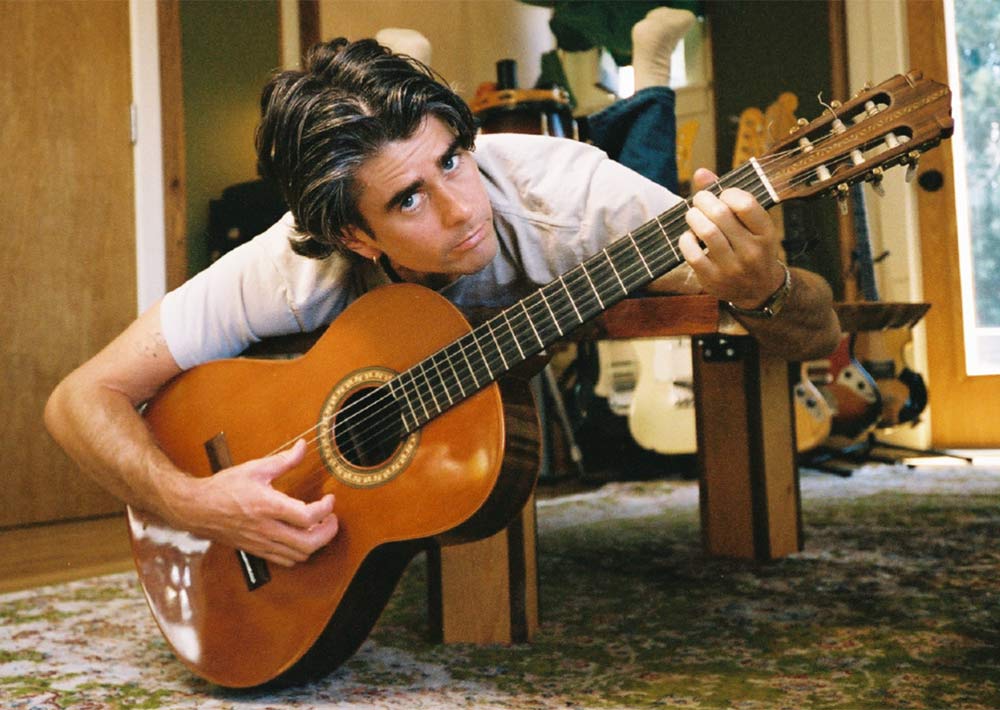
Leroy Clampitt: “Most of this album was done in two weeks, so I didn’t have time to overthink and overcomplicate anything too much.”
And was that part of the album-making process that you enjoyed?
“I really appreciate and love working with artists who know how to make the sound world into a visual world. I think that’s such a good skill that so many great songwriters and artists just don’t have, and then it’s not as appealing for the audience, for true fans to really invest in. It was cool to prove to myself that I could make a cool visual world.”
Would you ever consider embracing other parts of being a performing artist, like doing live shows?
“My full-time job is being a producer/songwriter, and then I’m able to squeeze in making records for myself because I’m good at it, and I can do it in a pretty efficient way. Doing a live show takes a lot more work and a lot more commitment – there needs to be a lot more people involved and stuff. It’s a lot more admin, and if I got to a stage where, as an artist, I was actively trying to perform, I think it would change the way I would have to negotiate my career. I’d have to be exponentially putting more time into me as an artist, which at this point I’m not really interested in doing.”
“I like records. I go to concerts and I love concerts. But I love when people put out a record and I can sit with it, drive around and listen to it. I’m really stoked that, now, people can do that with my stuff.”
But do you see yourself doing more work as an artist without live performances?
“Totally. I don’t know when the next Leroy Clampitt-specific album will come out, but I have the next album for the record label that has just been mixed, and it’s me. It’s a band, me and another artist, which I’m really excited about. Because again, that was a creative project going away from my job per se. But I was actually with someone to bounce back and forth… someone who I love and has been with me for a long time. In a way, it’s not my second record, but the same amount of love and personality went into it that my record did. It’s just more collaborative. That’ll be the next thing we focus on, and we’re putting that out next year. So super excited for that.”
And with Get Happy being so well received already, were there any reactions that surprised you?
“Yeah, I’m stoked on how well it’s done. I got some cool write-ups from magazines I really respect, and magazines that have done great articles on artists I’ve worked with and stuff like that. I was really surprised at how… I was explaining to you earlier how unambitious it was. I really love that people, without saying that they understood, might have come in with some expectation that it was going to be this big, impressive thing, but it doesn’t feel like I needed to do that because of the work I do with other people. So, it was nice for people to actually sit down and listen to something that wasn’t challenging. I really loved that people understood that, and I’ve been really grateful for the support that it’s had.”
Leroy Clampitt’s album Get Happy is out now via Sorry Susan. Find out more at sorrysusan.com or follow @leroyclampitt on Instagram
More Like This
Interview: Cass Lowe
After working with everyone from Take That to Rudimental, the acclaimed son... Read More+Interview: Guy Chambers
As Robbie Williams’ creative partner, Guy Chambers... Read More+5 minutes with… Jenna Andrews
As a co-writer, producer and publishing company head, this talented Canadia... Read More+5 minutes with… Payton Smith
The teenage rising country sensation talks about his impressive self-titled... Read More+








More Like This