
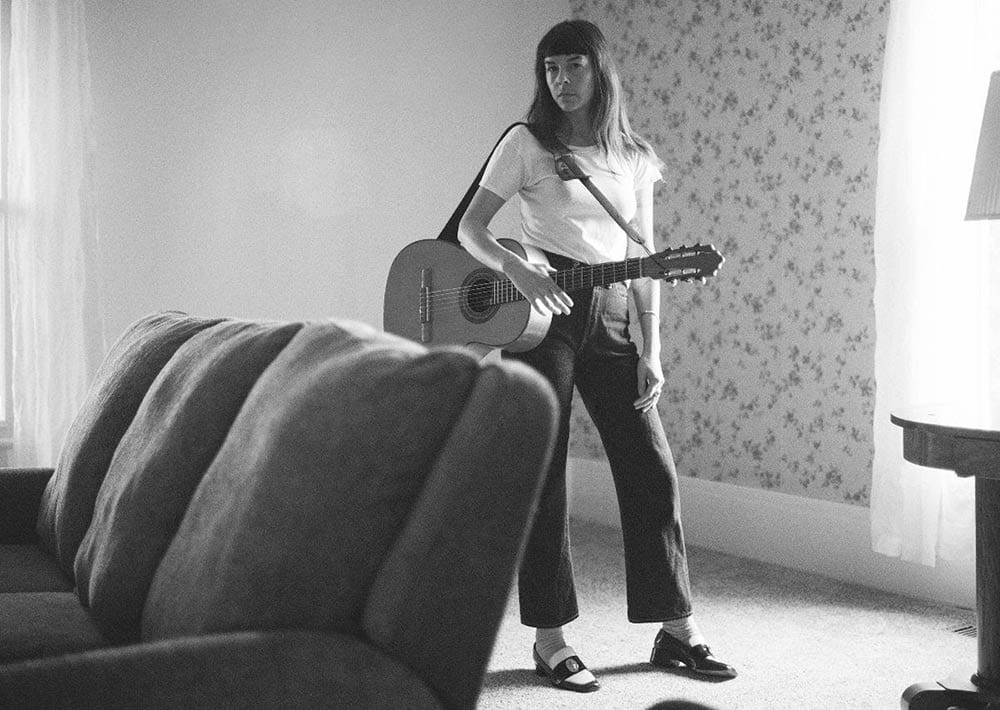
Madi Diaz: “I leaned into the simplicity in a big way.”
The Nashville-based singer-songwriter on presence, restraint, and the power of honesty on ‘Fatal Optimist’ – her most revealing record yet
After years of writing, touring, and redefining her sound, Madi Diaz has emerged as one of indie music’s most emotionally resonant voices. From the cathartic storytelling of History Of A Feeling (2021) to the hopeful reckoning of Weird Faith (2024), her songwriting has consistently balanced self-reflection with unfiltered honesty, even gaining her GRAMMY nominations last year. Now, with her latest album, Fatal Optimist, Diaz reaches what she calls her “Mount Everest” – a stripped-back collection of songs that places her voice and lyrics fully at the centre.
Mostly inspired by journal entries while on tour in Europe, Fatal Optimist finds Diaz writing from what she describes as “The heavy place,” choosing to sit with emotion rather than escape it. Across the record, she explores heartbreak, frustration, and hope, even when optimism feels impossible.
In our conversation, Diaz discusses the making of the album, what it means to create without hiding behind production, how her time alone shaped her songwriting, and the tracks on the record that felt almost too vulnerable to release (but the melodies were too good not to) …
More ‘5 Minutes With…’ Interviews
How do you see this record in the context of your last two albums, and maybe what’s next?
“I actually did this podcast the other day, and this woman put it so well that I have to use it. She said sometimes you have the ‘fuck around’ song, and then you have the ‘find out’ song. I feel like Weird Faith was written in the throes of falling really hard in love – I was in a deep, committed, wonderful partnership for a few years.
“When I was practising songs for the Fatal Optimist tour, I was sitting at my kitchen table playing through everything from Weird Faith, and it all has such a different meaning now. The hopefulness of it hits me in such a profound, sad way.
“Then I followed that with This Is How a Woman Leaves, which had originally been cut by Maren Morris. It really felt like the flip side; Weird Faith was me moving into someone’s house, and This Is How a Woman Leaves came to me as I was vacuuming my ex’s house. A lot of the songs on this record feel like that; a flip side to the anxious, hopeful love songs.”
A magazine to keep. An archive to explore.
Get the latest edition, 40+ back issues, 3,200+ website articles and expert insights for songwriters

Interview: Michael Tighe
From ‘Grace’ to songwriting success, the New Yorker reflects on... Read More+Interview: Gabrielle Aplin
The teenage internet sensation who burst onto the scene with her hit-laden ... Read More+Interview: The Cranberries’ Dolores O’Riordan
The Irish rock band’s frontwoman speaks candidly about coping with bi... Read More+




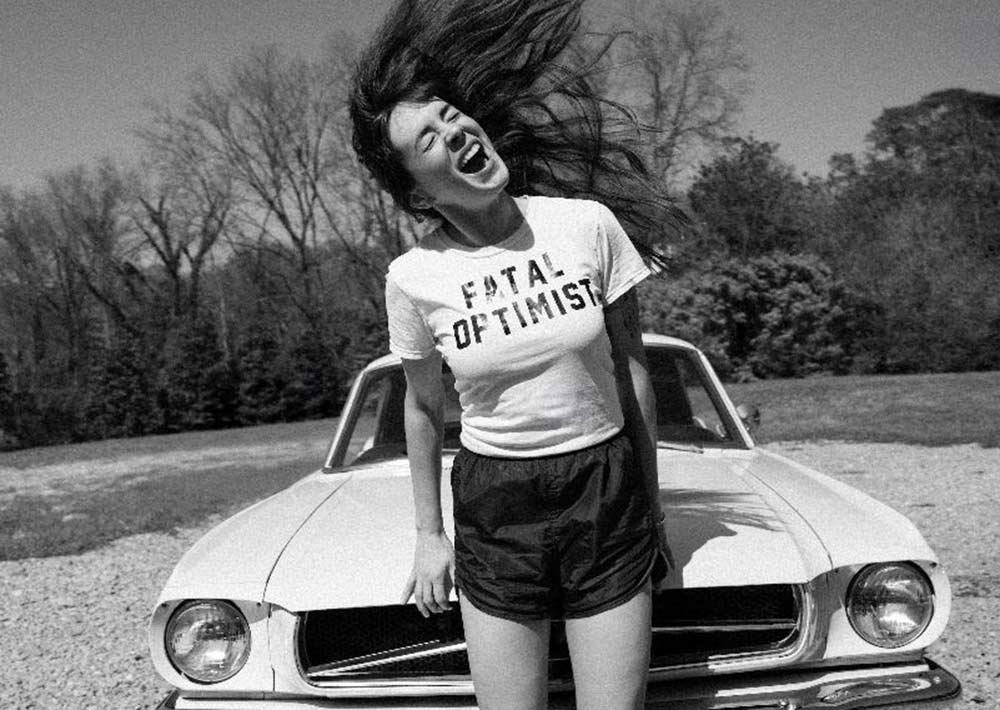
Madi Diaz: “Every time I tried adding layers or a band, it didn’t work. It had to stay stripped down.”
And you wrote some of this album in Nashville, but a lot of it elsewhere, like Nantucket and on tour?
“Yeah, a lot of the song titles came from journaling while I was in the UK and Europe during summer 2023. I did so much journaling, really trying to ground myself every day.
“I was far away from everything in my normal world and my relationship – and being on this huge crew and being the only new person in this huge crew of people was incredibly isolating. It was like my human island.
“I went to a small island off the coast of Italy for eight days afterwards because I just couldn’t go right back to my reality. I was living in a fantasy land. I cracked a lot in Nantucket. It was probably the quietest place I’d been in a long time.”

The album’s been called your rawest work to date. Do you agree with that?
“I do agree. My hope as a songwriter is always to come closer to myself, and I’m glad that’s the take. Sonically, it’s the most sparse – there is just nothing else aside from the song. I leaned into the simplicity in a big way.
“I’ve always wanted to make a record like this. It’s my Mount Everest. I just needed to do it at some point in my career. Every time there was a band in the room, or every time there were more lawyers, I wanted to get rid of it. Growing up, I loved records like Patty Griffin’s Living with Ghosts, Joni Mitchell’s Blue, and Jeff Buckley’s early work. Those were touchstones for me; just voice and feeling.”
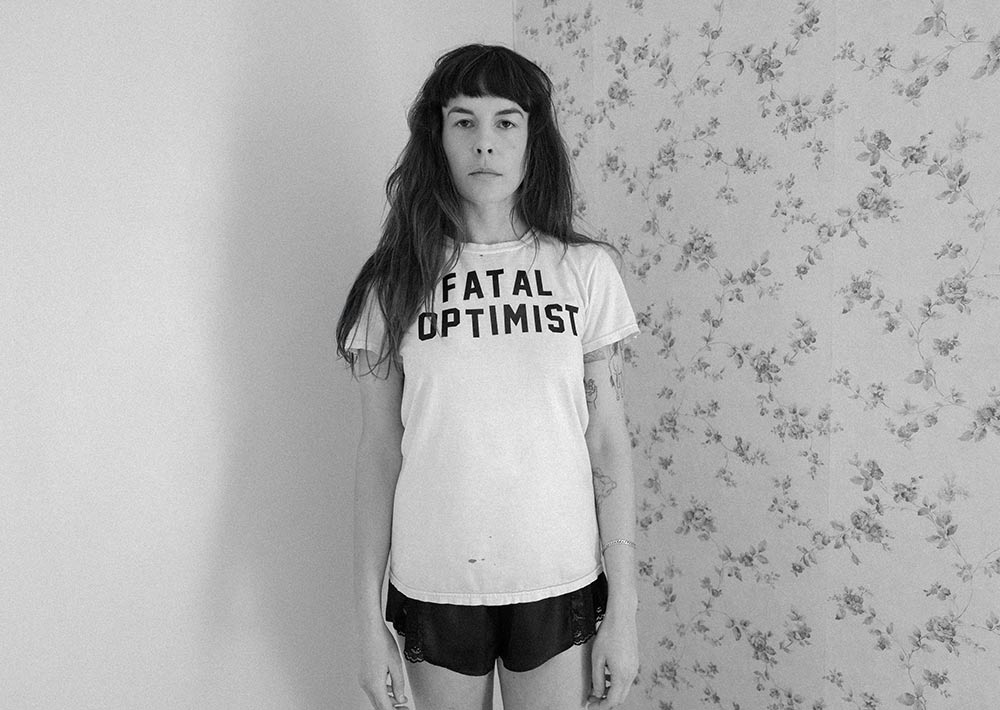
Madi Diaz: “I don’t know where songs come from. It’s always just trying to catch lightning in a bottle.” Photo: Allister Ann
Did the success of your last two records give you the freedom to make something this stripped back?
“Maybe, but honestly, it was just what the songs wanted. If they’d wanted to be big pop songs, I would’ve let them. But this batch needed quiet, and I had to listen to that.”
You’ve said before that, “Success is a funny thing.” With Grammy nominations and more recognition now, has that changed how you see yourself as a songwriter?
“I don’t know. I still feel like I have no idea what I’m doing. I don’t know where songs come from. The older I get, the more obvious it becomes that it’s always just trying to catch lightning in a bottle. Every day’s a mix of what you eat, what you hear, what you feel, and somehow that turns into a song. It’s just this weird alchemy of what you’re trying to capture.”
There’s one track on this album you wrote completely alone, Why’d You Have To Bring Me Flowers. Can you talk about that one?
“Yeah. When I started out, I only wrote by myself, but the industry just sweeps you into co-writing. I love collaboration. I’ve been trying to be in a band for 20 years, but sometimes you need that solitude.
“Why’d You Have To Bring Me Flowers came after meeting my ex for the first time post-breakup. He had the audacity to bring me flowers. I was so mad. I needed to go home and write about it immediately. I didn’t plan to show it to anyone, but I sent it to my manager, and he said, ‘This is one of your best.’ It’s funny because usually I overthink and self-edit a ton, but this one just existed: no editing, no walk around the block. It just fell out.”
Do you ever feel too vulnerable putting songs like that into the world?
“Oh, totally. At least three songs on this record scared me to release: Why’d You Have To Bring Me Flowers, Lone Wolf, and Flirting. Flirting specifically is in this touchy and potentially scary feeling where you’re admitting that even though I am in love, I still want to flirt and shine and tell a lie. That is scary stuff. But if the melodies are good, they’re good.”
You said this was the first time you, “Stayed in the heavy place,” after leaving the studio, instead of escaping it. What did you mean by that?
“Yeah, this process really haunted me. With past records, I could tap in and out, build the songs up in a kinder way, without it consuming me. But this one demanded that I stay with the material, which is totally heavy. It’s not a bop – well, it’s a heavy bop. I needed to go all the way down to the bottom, to make sure I unearthed as much diamond as possible before I could snap out of it.”
Right now, do you have a personal favourite song?
“I think If Time Does What It’s Supposed To is really special to me right now. It feels forward-facing, about trusting the process of healing and moving through things, or admitting maybe you won’t. It’s one of the most honest songs on the record.”
And do you still consider yourself a fatal optimist?
“Oh my God, are you kidding me? It’s how I move through the world. It’s crucial – especially in 2025. You have to hold on to optimism.”
So what comes next?
“Right now I’m working on this fun side project, a full cover of Blink-182’s Enema Of The State, top to bottom, just a sad girl acoustic version. I love it so much. I’m so excited about it. My manager says it’s my coping mechanism. But yeah, I just really just want to try to walk with my ‘fuck around and find out’ foot, be present in my life, and look in the mirror.”
Fatal Optimist by Madi Diaz is out now via ANTI- and she is currently out touring the US. You can find music, tour dates and more at madidiaz.com
More Like This
5 minutes with… Kelsea Ballerini
The two-time Grammy Award-nominated songstress from Tennessee talks about h... Read More+Interview: Michael Tighe
From ‘Grace’ to songwriting success, the New Yorker reflects on... Read More+Interview: Gabrielle Aplin
The teenage internet sensation who burst onto the scene with her hit-laden ... Read More+Interview: The Cranberries’ Dolores O’Riordan
The Irish rock band’s frontwoman speaks candidly about coping with bi... Read More+





More Like This