

Keaton Henson: “My motto is, ‘Get to the finish line, come back for anything you dropped on the way.’” Photo: Danielle Fricke
The English songwriter reflects on revisiting his early influences, balancing distortion and restraint, and translating memory into layered, candid songs
Keaton Henson’s musical path has taken him from early days spent in hardcore and emo groups to the restrained, folk-centred records that first marked him out in 2010. Over time, he has expanded into film composition, electronic work and classical writing, yet formative touchstones such as grunge, garage rock, and the suburban indie of his adolescence continue to shape his sensibility. Parader, his ninth album, revisits these influences with a maturity grounded in long practice. Although he remains known for his reserve and his infrequent live performances, this new record signals a deliberate return to the sounds that helped define his musical identity.
In the following interview, he reflects on the process behind Parader…
Read more interviews with songwriters
How did you know where Parader would start and end thematically?
“I don’t tend to try and see the forest for the trees when I start a record. I just focus on each tree. So, I just started writing songs, really. As a collection of songs starts to mount up, I guess I start to see common themes or a broad landscape and then will maybe lean further that way. But when I start to try and think of an album as a whole, it can limit me in the insanely difficult task of just starting a song.”
Did the shift toward grunge and garage-rock affect the way you approached lyrics?
“Definitely, I think it subconsciously allowed me to be way more snarky. I see a lot of snarl in the lyrics of these songs. It’s self-loathing and sad as I can tend to be, but with a sort of, ‘Screw you!’ that I haven’t had as much in previous records. I quite enjoyed playing with the idea of sarcasm in song form.”
When writing a song, do you begin with melody, chords, or words first?

A magazine to keep. An archive to explore.
Get the latest edition, 40+ back issues, 3,200+ website articles and expert insights for songwriters
“I tend to try and do it all at the same time. I guess I always start with guitar or piano and find something I like as a base, but then I try to start singing over it as quickly as possible. I think you can get somewhat frozen sometimes when you have a riff or some chords you really like; I try to strike before I get precious about the chords.

Songwriting Magazine Autumn 2020: The Quotes
We pick out some wise words from 10 of the fine songwriters who are all fea... Read More+Interview: Gabrielle
Returning with her first new album in over a decad... Read More+How to become an artist songwriter
Nashville musician and songwriting coach Mark Cawley talks from first-hand ... Read More+




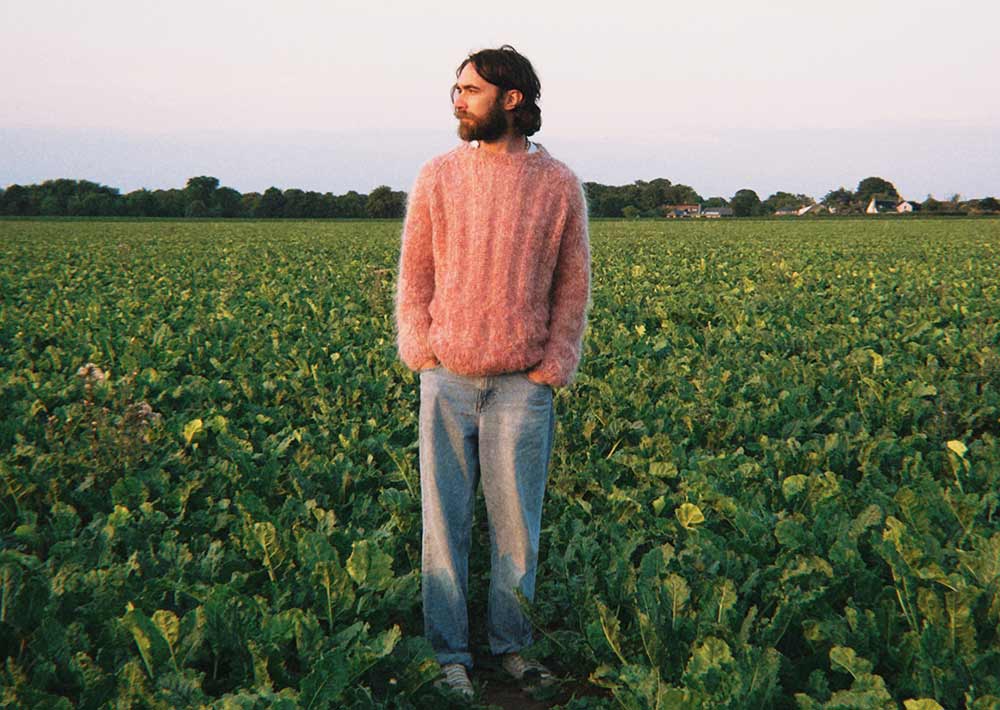
Keaton Henson:“I definitely make a silent pact with myself when I’m writing that I won’t censor myself and that if something really personal comes out.”
“Then for me, it is about seeing what falls out in that moment, letting some words come out, but just in order to help me find a melody, then examining what I might be saying as I go, and without forcing it, just letting that lead me onwards, still trying to remain unthinking, safe in the knowledge that once it’s done, I can come back later for anything I don’t think works.”
How do you decide which personal memories to turn into songs?
“Again I think it’s often decided for me by whatever words I sing when I’m feeling around in the dark at the start of the writing process. But I definitely make a silent pact with myself when I’m writing that I won’t censor myself and that if something really personal comes out, I have to go with it. I think honesty is the most important element of my songwriting. I’ve always felt you can sense when someone is trying to make themselves look better in a song, or write a false honesty that feels cool or heroic.”

Which track challenged you the most to capture its intended mood?
“This album had few major struggles to be honest, as all my collaborators were so open and kind and there were no egos involved. I guess the song Operator was perhaps the one I fiddled with most, just because it was so dark but also so melodic and almost poppy that I had to try and find a balance.”
How did collaborating with your wife Danielle Fricke change your approach to songwriting?
“Writing with my wife was a really interesting creative experience because we talk every day, but writing songs is like a completely different kind of communication. Especially writing something as odd and stream of consciousness as the song we wrote. I think songwriting with others can be like having the best conversation of your life, but it can also be really vulnerable and exposing. You have to put an unformed idea out into the ether, and it always feels a bit like the other person’s going to point and laugh at you. And because my wife knows me so well as a human, it felt even more weird to be doing that with her. But I think the weirdness of it (and us both) made something really unexpectedly dark and guttural.”

Julia Steiner, Keaton Henson’s collaborator. Photo: Amanda Specht
How do you balance raw emotional honesty with the album’s more aggressive sound?
“I think it does exactly that and brings balance. It reframes a lot of that emotive stuff as not just sad but frustrated and angry and all the other complicated elements that make up those feelings.”
Did recording in different locations influence the compositions or arrangements?
“I tend to record most of my stuff at home (so the vocals and guitars/pianos), so my part is done when it comes to recording the other parts at other studios. I just don’t know if I’m a confident enough musician to get my best stuff out of me in another space. But that might not be true and I might just be used to that comfort blanket.”
How do you approach layering guitars and distortion to create tension in your tracks?
“That is very much the result of fully trusting the producers, it’s such an art form. I think when I’m writing something I know I want to be on the heavier side I will try to write guitar parts that have some tension within them but also keep them simple enough that there is some space to be stacked up without getting messy.”
Are there instruments or pieces of equipment on Parader that shaped the sound in a surprising way?
“It’s not that crazy, but prior to starting to write the record, I bought a Hagstrom baritone guitar, and I think writing in that lower register definitely leaned me more towards a darker place sonically. There’s also a surprising amount of lap steel performed by Luke (Sital-Singh), sometimes in places where I don’t think you would register it as lap steel, put through distortion, etc.”
How do you decide when a song needs restraint versus a more explosive delivery?
“I think it can depend on the context lyrically, but also certain melodies and instrumental parts can just cry out to be loud.”

Keaton Henson: “If you get to a small block of, ‘Where do I go next?’ that probably means it’s time for a middle eight.” Photo: Danielle Fricke
Do you experiment with song structure, or do you tend to follow a natural flow?
“I honestly try to just let the song be whatever it needs to be. If it feels like I’m telling an interesting enough story to just keep telling it, I will forgo any structure at all. But often traditional structure can be a helpful tool in keeping you moving forward as a songwriter, if you get to a small block of, ‘Where do I go next?’ that probably means it’s time for a middle eight.”
How has your perspective on performing publicly influenced the songs on this album?
“I think there are definitely moments on the record where I explore my place as an artist, and frustrations with having not conquered certain demons, and my inability to play live is one of those. So, I think mostly in that sense.”
Looking back on your career, how do you know when a song is finished?
“I’m not one to try and work into a song too much. I think of it as working with hot wax, you have limited time to form it into the shape you want, you can always come back when it’s set and carve away the bits you don’t like, but every time you do so it removes some of the organic natural look. So, you can always edit, but you can always tell the sound of a song that just fell out in one go – I think.”
What’s the most important songwriting tip you would give to someone starting out?
“It may be apparent from the previous answers, but for me, momentum is the key to songwriting. My motto is, ‘Get to the finish line, come back for anything you dropped on the way.’ I think it can be really easy to hit a wall when you reach a moment you’re not sure about lyrically, or use a chord that feels trite, and just stop in your tracks to try and figure it out then and there. For me, this can kill the momentum and I think it’s important to just keep moving forward. Before I started really following this, I would just leave really promising songs unfinished strewn behind me, and could never get myself back into the zone to finish them. I think it’s better to have a finished imperfect thing you can play with than a perfect thing half done.”
Parader by Keaton Henson is out now on Play It Again Sam. Find out more from keatonhenson.com
More Like This
5 Minutes With… Jack Conman
The Manchester-based singer-songwriter talks to us about his latest album, ... Read More+Songwriting Magazine Autumn 2020: The Quotes
We pick out some wise words from 10 of the fine songwriters who are all fea... Read More+Interview: Gabrielle
Returning with her first new album in over a decad... Read More+How to become an artist songwriter
Nashville musician and songwriting coach Mark Cawley talks from first-hand ... Read More+









More Like This